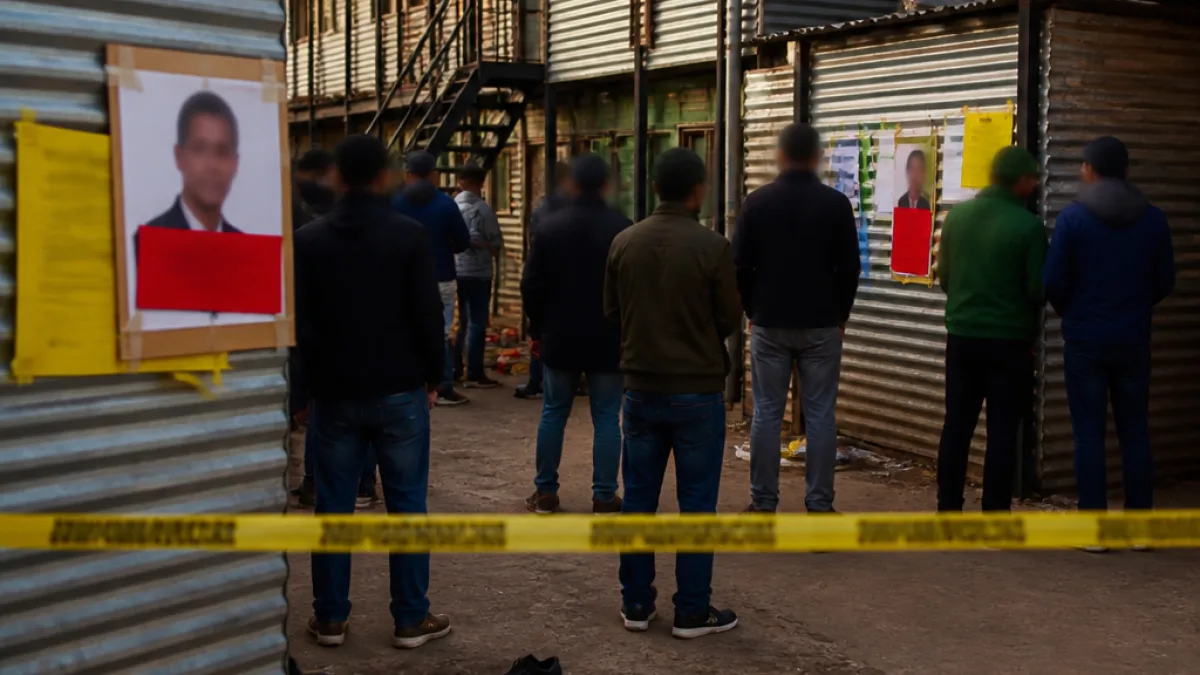
Nearly a year after the fatal shooting of MK Party (MKP) member Thokozani Nzuza near the Dube Hostel in Soweto, the case remains unresolved and political tensions around Johannesburg’s hostels have not eased.
Investigation and political fallout
Police have not announced any arrests in connection with Nzuza’s killing in November 2025, and investigators have reassigned the matter within the service, according to recent reporting. The unresolved status has left family members, party activists and residents searching for answers while the MKP and the Inkatha Freedom Party (IFP) exchange conflicting narratives about what happened.
The MKP has publicly alleged that the shooting followed a disruptive intervention by a hostel induna aligned to the IFP at an MKP campaign event. The party says an altercation at the hostel precinct preceded an armed attack that claimed Nzuza’s life.
“No political violence happened at the hostel,” the IFP said, adding that Nzuza’s body was found on an open field near the hostel and that the incident was not politically motivated.
Both versions of events remain contested. Residents approached during visits to the area described heightened anxiety around political activity at hostels since the MKP increased its campaigning in 2024.
Hostels as political battlegrounds
The Dube Hostel, established in October 1956 under the apartheid-era hostel system, has long been a densely populated and politically visible site. In the May 2024 election the MKP gained traction across Gauteng’s townships, securing 9.79% of the provincial vote compared with the IFP’s 0.87%. That result — an outpolling of the IFP by more than 11 to one in the province — coincided with intensified MKP operations inside hostels across Johannesburg.
Analysts and community leaders say the shifting political loyalties help explain why hostels, once seen as predictable party strongholds, have become more contested and, at times, volatile.
What residents are saying
Some hostel residents say they welcome more active political engagement and see it as a sign that parties are competing for their votes rather than taking support for granted. Others worry that aggressive campaigning and factionalism raise the risk of violence and intimidation.
- Security concerns: Residents reported a heightened police presence around elections but said investigative follow‑through after violent incidents has been uneven.
- Political realignment: The MKP’s growth in Gauteng has drawn former ANC supporters and others disillusioned with traditional parties.
- Community impact: Families of victims and ordinary hostel dwellers continue to call for swift, transparent police work and community‑level conflict resolution.
Police response and public confidence
Police handling of high‑profile political killings affects public confidence in the criminal justice system. With no arrests announced and the case reassigned, resident groups are seeking clearer updates from law enforcement on investigative progress and witness protection where needed.
Local councillors and civic organisations have urged SAPS to provide regular briefings on developments and to work with community structures in hostels to reduce the chances of retaliatory violence. They say sustained engagement is necessary to rebuild trust after a year in which a political activist was killed and questions about motive and responsibility remain.
Wider political context
The MKP’s gains in urban townships reflect broader national realignments following splits and defections from older parties. Meanwhile, the IFP has been grappling with shrinking support in both KwaZulu‑Natal and Gauteng, and the increase of MKP activity in former IFP strongholds has intensified competition on the ground.
| Party | Gauteng share (May 2024) |
|---|---|
| MK Party | 9.79% |
| IFP | 0.87% |
These figures underscore why both parties are intensifying outreach in densely populated urban areas where even small swings in support can influence ward and provincial dynamics.
What comes next
Community activists and local leaders say preventing further bloodshed will require a mix of policing, community mediation and accountable political conduct. They also call for urgent transparency from the investigative authorities handling Nzuza’s death so residents can have confidence that justice will be pursued regardless of political affiliation.
As the next election cycle approaches, hostels such as Dube will remain key political terrain in Gauteng. For now, the lack of resolution in a killing that occurred at the intersection of political campaigning and hostel life leaves more questions than answers for residents who demand safety and accountability.