A new council takes shape
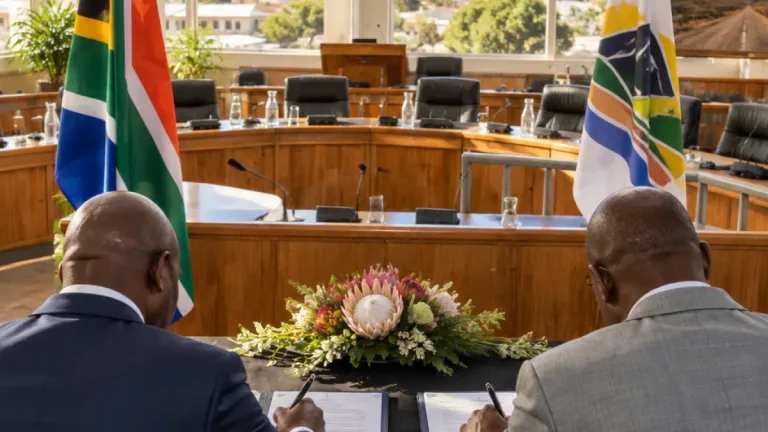
Geordin Hill-Lewis has been re-elected as executive mayor of Cape Town, beginning a second five-year term after the Democratic Alliance retained its outright majority in the city’s newly constituted council.
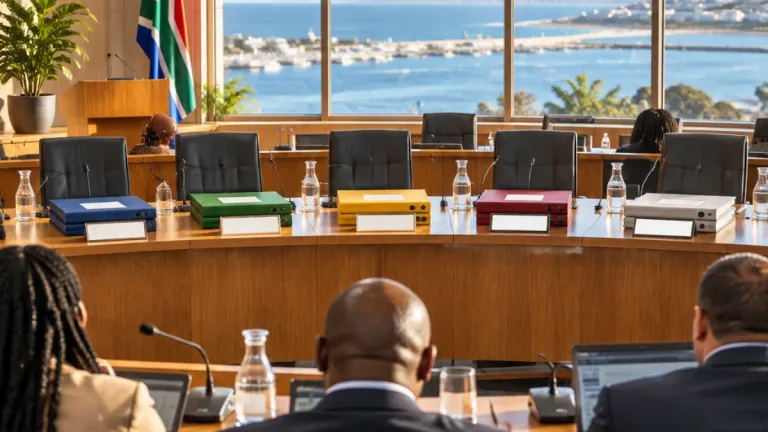
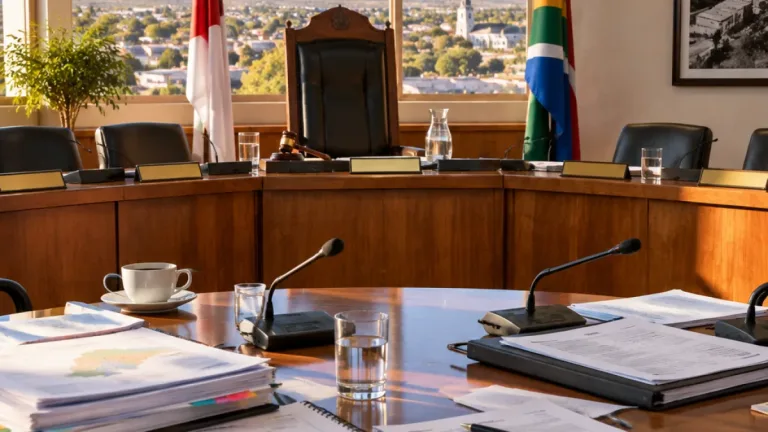
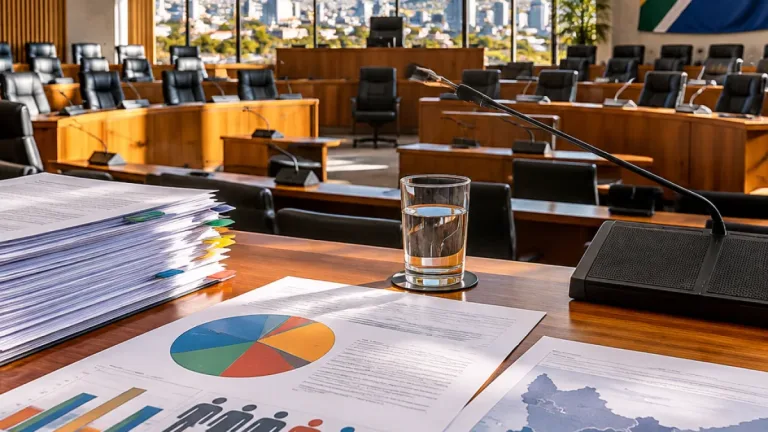
The re-election took place on Thursday, 19 November 2026, during the City of Cape Town’s inaugural council meeting at the Civic Centre. The sitting also formally installed Felicity Purchase as Speaker and Xanthea Limberg as executive deputy mayor. The proceedings marked the start of a new term following the local government elections held on 4 November.
Hill-Lewis received 131 votes in the mayoral contest. African National Congress councillor Lwazi Phakade received 48 votes, while Al-Jama-Ah’s Shameemah Salie received seven. Purchase was re-elected Speaker with 133 votes, ahead of ANC councillor Banoyolo Yawa, Al-Jama-Ah’s Khan Dalwai and Freedom Front Plus councillor Emre Uygun.
| Position | Candidate elected | Result |
|---|---|---|
| Executive mayor | Geordin Hill-Lewis | 131 votes |
| Speaker | Felicity Purchase | 133 votes |
| Executive deputy mayor | Xanthea Limberg | New term leadership |
DA retains control
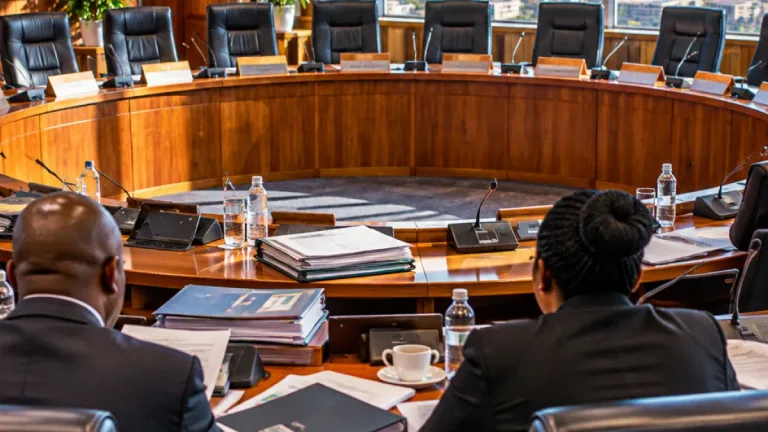
The DA holds 133 of the council’s 235 seats, well above the 118 required for an outright majority. The ANC remains the official opposition with 33 seats, while the chamber includes representatives from 22 political parties. Smaller parties now represented include the Patriotic Alliance, uMkhonto weSizwe and ActionSA.
That balance gives the governing party room to pass its programme without negotiating a coalition agreement, a position that distinguishes Cape Town from the country’s other seven metropolitan municipalities. According to Hill-Lewis, each of those metros now requires coalition government, while Cape Town remains the only metro with an outright majority.
The mayor presented the result as evidence of changing political choices in the city, pointing to support for the DA in townships including Khayelitsha, Gugulethu, Langa, Nyanga, Philippi, Crossroads and Mfuleni. He said voters had challenged political assumptions that had shaped South African politics for three decades.
“I am humbled and blessed by this extraordinary opportunity. I intend to make every single day count,” Hill-Lewis said.
Mandate brings responsibility
For residents, the significance of the new term will lie less in the ceremony than in how the administration uses its stable numbers. An outright majority can provide continuity in decision-making, but it also places responsibility for the City’s performance firmly with the governing party. The next five years will test whether the administration can translate its electoral mandate into improvements across a city marked by major differences between established suburbs, townships and informal settlements.
Hill-Lewis described the mayoralty as “the best job in the world” and spoke of building a City of Hope for all. He also welcomed returning councillors and those entering the chamber for the first time. The wider representation in council means the governing party will face opposition from a broader range of political voices, even though it does not need coalition partners to remain in office.
The council’s first meeting therefore combined continuity with a changed political landscape. Hill-Lewis, Purchase and Limberg will lead an administration with a clear numerical mandate, while opposition parties will have to use the council chamber to scrutinise how that mandate is carried out in communities across Cape Town.
- Geordin Hill-Lewis was re-elected mayor for a second term.
- The DA retained 133 of 235 council seats.
- Felicity Purchase remains Speaker, with Xanthea Limberg as executive deputy mayor.