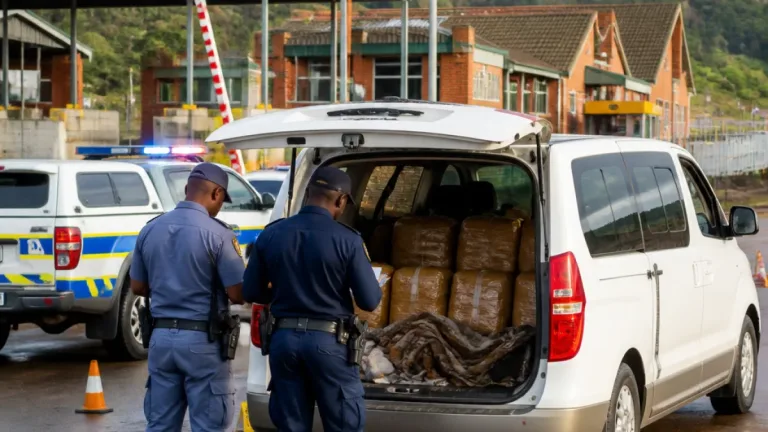

A man from the Northern Cape has been convicted after he admitted to possessing unpolished diamonds discovered by police in Springbok in 2021. The Springbok Magistrate’s Court approved a plea and sentence agreement that ended a case which lasted several years.
Search in Springbok led to arrest
Members of the Springbok Flying Squad stopped the man in March 2021 and, with his consent, searched his vehicle. Two items found during that search were later confirmed to be uncut diamonds valued at R77,016 after they were submitted for evaluation, the Hawks said.
“After numerous court appearances, the suspected entered into a plea agreement with the State, pleading guilty and the court sentenced him,” Hawks spokesperson Lieutenant‑Colonel Tebogo Thebe said.
Following the laboratory assessment, the 40‑year‑old man was charged. The matter proceeded through the lower courts until the State and the accused reached an agreement on plea and sentence earlier this year.
Sentence and conditions
Under the terms ratified by the magistrate, the accused was ordered to pay a fine of R15,000 or face 30 months’ imprisonment. The custodial sentence was wholly suspended for three years on conditions set by the court. In addition, the court declared him unfit to possess a firearm, and the diamonds were forfeited to the State.
| Item | Detail |
|---|---|
| Value of diamonds | R77,016 |
| Fine / alternative imprisonment | R15,000 or 30 months imprisonment |
| Suspension period | 3 years (wholly suspended) |
| Firearm status | Declared unfit to possess a firearm |
| Forfeiture | Unpolished diamonds forfeited to the State |
Background and local context
The Northern Cape remains central to South Africa’s diamond industry, with legal and illegal activity closely monitored by law‑enforcement agencies. Cases involving the unlawful possession or trade of uncut stones often involve multiple agencies and lengthy court processes due to valuation, chain‑of‑custody and tracing requirements.
In this instance, the initial stop and search by the Springbok Flying Squad led to laboratory confirmation of the stones’ status and value, and eventually to criminal proceedings. The Hawks, who publicised the conviction, emphasised the importance of following due process in handling mineral recoveries and prosecutions.
What the court order means
The suspended sentence means the accused will not serve time unless he breaches the conditions set by the court during the suspension period. The forfeiture order transfers ownership of the seized goods to the State, which is typical in convictions where items are linked to criminal offences.
- The fine or prison alternative provides a final sanction, but the suspension applies conditional freedom for the specified timeframe.
- Forfeiture removes the items from private hands and places them under State control.
- Declaring the person unfit to possess firearms restricts lawful access to firearms while the suspension is in force.
Practical considerations for residents
Motorists and travellers in diamond‑producing regions should be aware that law‑enforcement stops can result in searches; consenting to a search does not negate the need to seek clarity about subsequent steps if items are found. Anyone facing similar charges should seek legal advice promptly and make use of court processes to address valuations and evidentiary questions.
The conviction concludes a matter that began with a routine stop in Springbok but underscores continuing enforcement efforts around protected minerals in the Northern Cape. The court record now reflects the forfeiture of the stones and the suspended sentence imposed on the accused.