TAMARAC, Fla. — The fallout from Florida’s recent congressional redistricting has landed in Broward County, where Rep. Debbie Wasserman Schultz’s decision to seek another term in a newly drawn district has sparked sharp discussion about racial representation and the meaning of constituent trust.
Contest rearranged by new maps
Wasserman Schultz, a veteran Democratic congresswoman and former national party chair, is campaigning in a reconfigured Broward district where she is the only white contender on the ballot against four Black Democratic challengers. The shift followed a statewide redrawing of congressional lines driven by Republican legislators earlier this year.
The change forced Wasserman Schultz to cross district lines from her Fort Lauderdale-area base to seek a 12th term in Congress in a seat that for decades has been a pathway for Black Democrats to representation in Washington.
Local leaders voice objections
Some community leaders and former officeholders have criticized the congresswoman’s move. Former Rep. Sheila Cherfilus-McCormick, who resigned from the seat in April amid an ethics inquiry and now seeks to regain it, described the decision as erasing a long history of Black representation in Broward.
“For her to come in like this is just another Broward seat, it's a complete erasure of our history, our fight for Black access,”
The comment reflects broader unease among some local activists and voters who say the district has been a reliable vehicle for Black leadership since the early 1990s.
Candidates and context
Wasserman Schultz’s opponents include Cherfilus-McCormick and several other Black Democrats, among them 27-year-old organizer and substitute teacher Elijah Manley, who acknowledged that the Republicans’ redistricting effort created the opportunity but argued Wasserman Schultz chose to run in the district rather than remain in her new home district on Florida’s Gulf Coast.
Manley told reporters that while the redistricting maneuver was orchestrated by Republicans, Wasserman Schultz "had other options." That claim underscores a political calculus: incumbents must decide whether to follow constituents into new districts, run where they live, or seek other offices.
- Debbie Wasserman Schultz — incumbent Democratic congresswoman, running in the redrawn Broward district.
- Sheila Cherfilus-McCormick — former representative who resigned in April and is running to reclaim the seat; raised concerns about representation.
- Elijah Manley — 27-year-old progressive organizer and substitute teacher, also a candidate in the race.
| Candidate | Notes from reporting |
|---|---|
| Debbie Wasserman Schultz | Incumbent; running in the new Broward district where she is the only white candidate. |
| Sheila Cherfilus-McCormick | Former rep, resigned April; criticizes Schultz’s choice as erasing Black access. |
| Elijah Manley | 27, progressive organizer and substitute teacher; says Schultz had other options. |
Broader legal and political backdrop
The contest in Broward comes after a U.S. Supreme Court decision that weakened key provisions of the Voting Rights Act, a ruling that statewide politicians and mapmakers have cited while crafting new lines. Critics of the revised maps say the changes allow partisan actors to redraw districts in ways that can dilute or reshuffle minority voting strength.
In Florida, that translates into incumbents and challengers reassessing where they can best compete and voters confronting new choices about who will represent communities historically consolidated under single districts.
What’s at stake for voters
Voters in the redrawn district will consider several factors: continuity and seniority in Washington offered by an experienced member of Congress, versus the symbolic and substantive importance of electing a representative who reflects the community’s demographics and history. The debate highlights tensions between practical political experience and community representation.
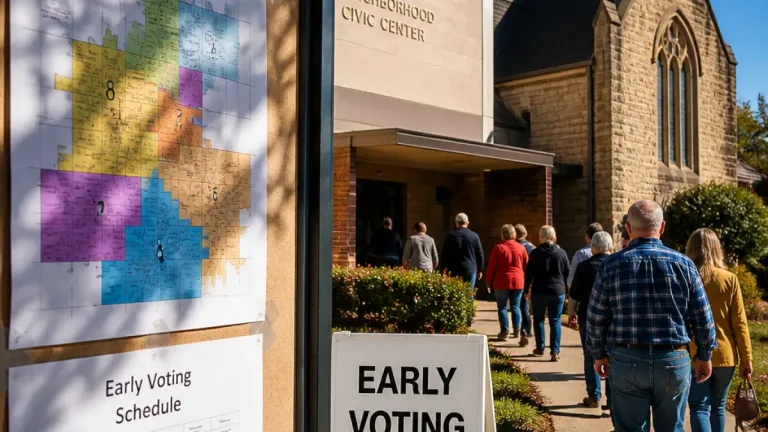
As primary voting proceeds this week, the race is likely to draw attention from national donors and party operatives monitoring whether the long-standing pattern of Black representation in parts of Broward County will persist under the new map.
For many residents, decisions about representation are rooted in history, trust and access to power. The outcome of this primary will be an early indicator of how Florida’s new congressional map reshapes the political map on the ground.
Reporting for this story relied on contemporaneous accounts from campaign events and statements made by candidates and former officeholders as they faced voters in the lead-up to the primary.