
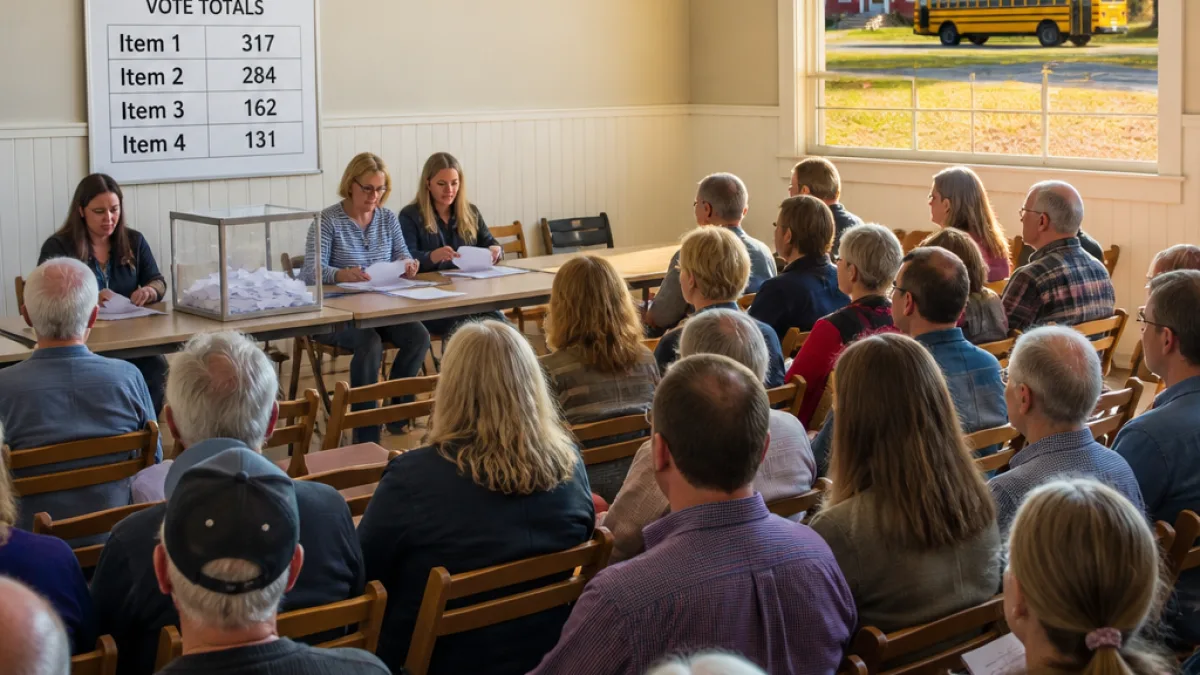
Voters across the Washington Central Unified Union School District narrowly approved a measure Tuesday that transfers the final authority to close a small school from the town where the school sits to the district as a whole. The ballot measure passed by a margin of 1,711 to 1,365, marking the latest chapter in a debate over declining enrollment and the future of small-town schools.
What the vote changes
Under the newly approved article, all five towns that belong to the Washington Central district — Berlin, Calais, East Montpelier, Middlesex and Worcester — will participate in the decision to close a small school. Previously, the town that hosted the school held the final veto. The article also requires that a majority of the school board approve any closure.
The revision overturns part of the merger agreement the towns signed when they formed the district in 2019, a provision that had given home towns significant control over closures. Supporters argued the change is necessary to address shrinking enrollment and the financial strain of maintaining under-enrolled buildings.
Reaction from supporters and opponents
"The parents who worked hard to get this passed are glad to see it get across the finish line,"
said Zach Cockrum of Berlin, a parent with two children in the district, who framed the vote as a pragmatic step. He cautioned that the change does not solve every challenge the district faces and said discussions on school configuration and budgetary impacts will continue.
"We are way more organized,"
said Ross Andrews of Calais, a longtime opponent of closing small local schools. Andrews acknowledged that his side secured nearly 45% of the vote and pledged to keep mounting resistance, including political organization aimed at protecting neighborhood schools and minimizing lengthy bussing for young children.
Vote results and context
The tally — 1,711 yes and 1,365 no — reflects a closely divided district. The total of 3,076 ballots cast shows a high level of community engagement on the issue. In February, voters in both Worcester and Calais had previously rejected a proposal to close small schools, demonstrating the deep and sustained local concern.
| Result | Votes | Percentage |
|---|---|---|
| Yes | 1,711 | 55.6% |
| No | 1,365 | 44.4% |
| Total | 3,076 | 100% |
What comes next for the district
With the article now approved, the school board must still act before any building is closed. That means any closure proposal will require a majority vote of the board in addition to the district-wide policy change. School leaders will likely need to produce analyses on enrollment projections, educational impact, transportation changes and budget implications before moving forward.
Local residents opposed to closures say they are especially concerned about the prospect of sending very young children on long bus rides. Advocates of the change counter that maintaining underutilized facilities is unsustainable and that consolidation can preserve educational quality and services.
Why this matters to Vermont communities
The Washington Central vote highlights a statewide challenge: Vermont’s rural demographics are putting pressure on town and district budgets and forcing communities to revisit long-held arrangements for neighborhood schools. How Washington Central moves from policy change to practical action will be watched closely by other districts confronting similar dilemmas.
For parents and local officials, the immediate weeks and months will be focused on board deliberations and the development of concrete proposals. Regardless of the outcome of any future closure plans, the vote demonstrates both the depth of feeling around small schools and the growing willingness of some communities to consider structural changes.
- Towns involved: Berlin, Calais, East Montpelier, Middlesex, Worcester
- Vote count: 1,711 yes — 1,365 no
- Requirement: Majority of school board must still approve any closure
District officials did not immediately announce a timeline for potential closure proposals or board votes. As the process unfolds, families and local leaders will have further opportunities to engage in the conversations that will determine the future of neighborhood schools in this central Vermont region.














