
St. Petersburg police have turned small unmanned aircraft into a routine tool for public-safety operations, deploying drones in missing-person searches, crime-scene work and potentially dangerous confrontations as the department expands its aerial capability.
From crowd monitoring to search-and-rescue
What began as a way to monitor large gatherings and manage traffic has evolved into a broader set of missions across Tampa Bay. Law enforcement agencies in the region started flying drones in 2019, and St. Petersburg’s program has grown to include 14 drones, according to officers on patrol.
One July afternoon on the southern edge of the city, a detective monitoring 911 calls was dispatched to find an 11-year-old boy reported missing near Lake Maggiore. Within minutes, the detective pulled a compact control case from his vehicle, unfolded the aircraft and sent it aloft with a handheld controller.
- Response speed: drones provided immediate aerial reconnaissance when a child ran from a home after losing access to a phone and video games.
- Sensors: operators used thermal imaging to detect heat signatures that might be missed by ground searchers.
- Tactical uses: drones are tasked with documenting crime scenes, tracking suspects and helping assess threats in active incidents.
Equipment and capabilities
Officers describe the equipment as compact but powerful. The deployment in the Lake Maggiore response involved a portable case roughly the size of a carry-on suitcase and a controller similar to a consumer gaming pad. The drones carry cameras with significant zoom and thermal sensors, enabling officers to survey neighborhoods and scan areas for heat signatures.
| Agency | Reported number of drones |
|---|---|
| St. Petersburg | 14 |
| Tampa | 6 |
The program’s backers point to several practical advantages: faster situational awareness at a scene, the ability to see into locations that would be risky for officers to enter and the capacity to gather photographic evidence from angles previously unavailable without helicopters.
"They're little tanks with wings. And the cameras are great," a detective involved in drone operations said, also noting the ability to zoom and read distant details.
New Real Time Intelligence Center downtown
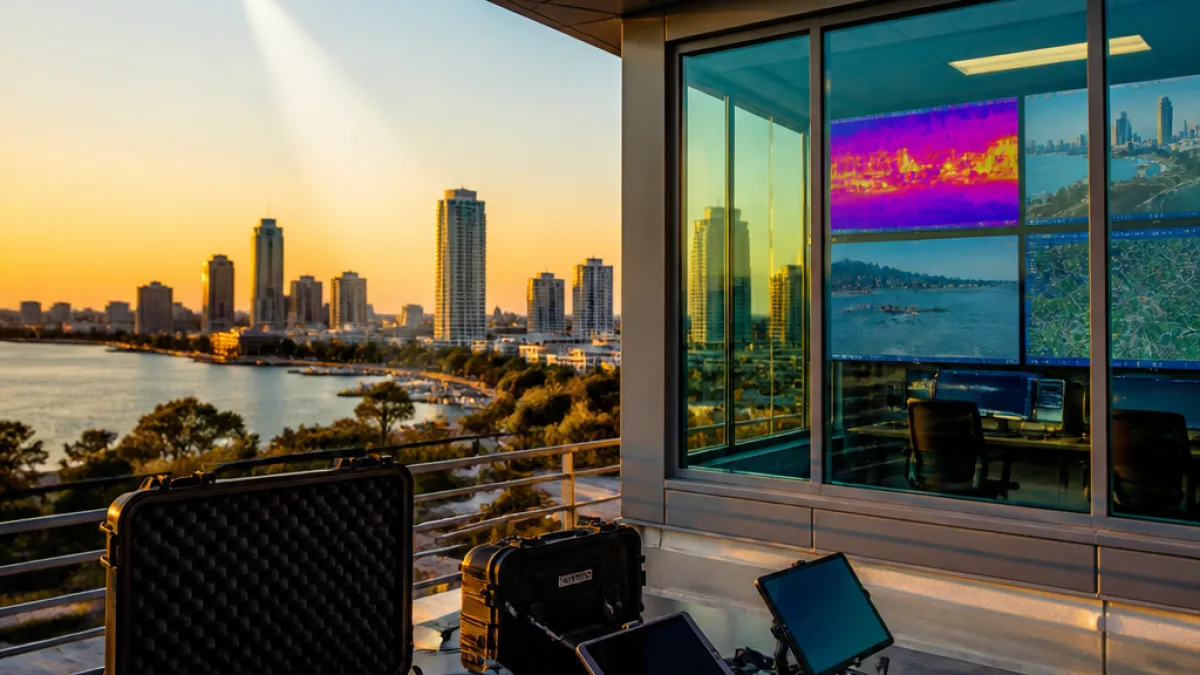
St. Petersburg has added an intelligence hub to its downtown station to coordinate drone operations and other remote sensing capabilities. The Real Time Intelligence Center is intended to give officers quick access to aerial feeds and analytics while incidents unfold, helping commanders make decisions with live information.
Department officials and operators say the center allows crews in the field to request virtual backup from the air, rather than waiting for ground units to arrive or for a manned aircraft to be dispatched. That capability has been used in a range of situations, from searches for missing people to documenting evidence at crime scenes and monitoring hazardous incidents.
Local context and community questions
For St. Petersburg residents, the expanding use of drones raises both practical benefits and important policy questions. Faster scene assessment and additional eyes in search operations can shorten response times and reduce risks to officers and the public. At the same time, the technology prompts scrutiny about oversight, data retention and privacy.
City officials have not released a full public accounting of the drone program’s policies in the material reviewed for this report. As the department continues to integrate aerial systems into everyday policing, residents and local leaders may seek clearer details on when drones are authorized to fly, how long footage is stored and who has access to the data.
Officers and supporters emphasize the life-saving potential demonstrated in field deployments. The example of a rapid drone launch during a missing-child report shows how the technology can extend the reach of patrol units in minutes, especially in neighborhoods where ground searches can be time-consuming or hazardous.
As the program advances, St. Petersburg — like other municipalities — will need to balance operational advantages with transparency and community trust. Questions about policy, accountability and limits on surveillance are likely to accompany further expansion of drone use by the police department.
















