
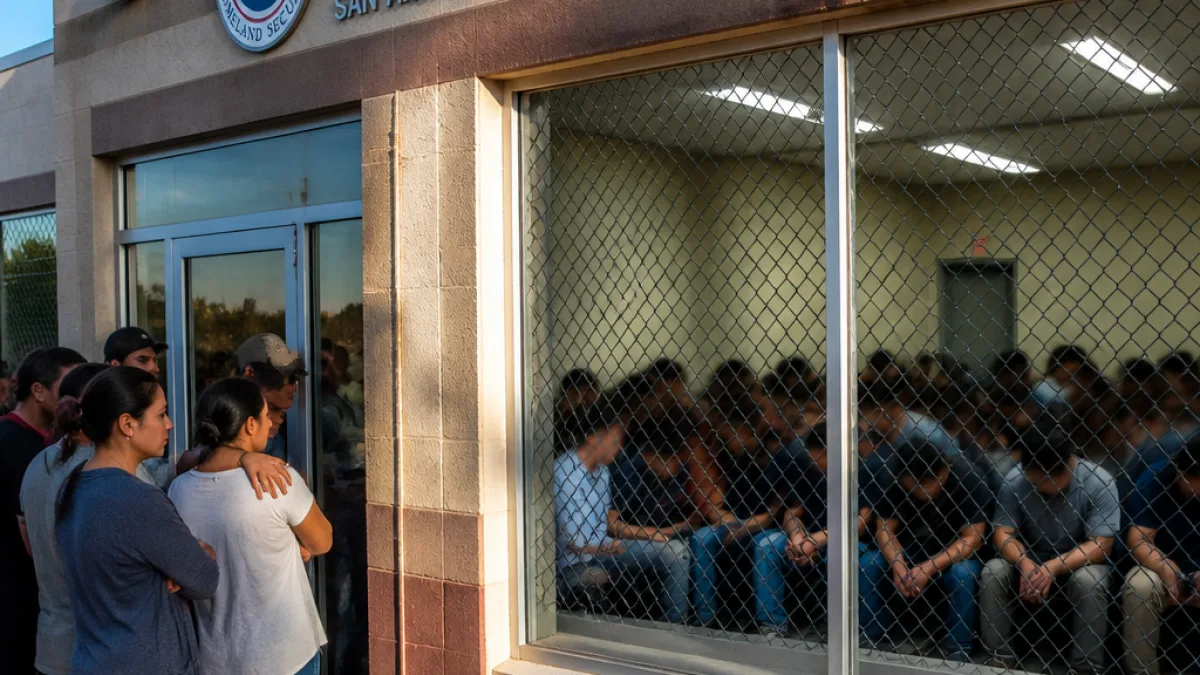
An unannounced inspection by U.S. Rep. Joaquin Castro of San Antonio's U.S. Immigration and Customs Enforcement (ICE) check-in facility turned public on Friday after the congressman posted details on social media, saying he found 40 men crammed into two holding rooms and families waiting outside.
Castro describes detainees taken while traveling to work
In his post on X, Castro said most of the men he observed had been picked up in the morning "on their way to work," noting their dusty work boots had been taken off to the side. He pointed out one pair of boots with an American flag on them.
"ICE isn’t going after the worst of the worst in San Antonio. They’re targeting hardworking folks who are trying to make an honest living for their families."
Castro also said he had spoken with family members who had loved ones being held inside the facility. The congressman's account did not identify the detainees by name or provide additional details about the circumstances of their apprehensions.
What Castro reported and immediate facts
From the congressman's account, the following points are clear:
- Number detained: 40 men observed.
- Holding rooms: The men were in two rooms, described as crowded.
- Timing: Many had been apprehended in the morning while en route to work, according to Castro.
- Family presence: Family members were outside the facility, according to the congressman.
| Detail | Reported |
|---|---|
| Observed detainees | 40 men |
| Holding rooms | 2 rooms |
The account comes from Castro's voluntary inspection; the congressman posted the details publicly but did not release video or a facility log in the post. The report did not include an official response from ICE or facility administrators.
Local context and potential consequences
San Antonio hosts immigration processing and enforcement operations that affect sizable numbers of residents, including immigrant communities and families with members who work in manual labor, construction, hospitality and other sectors. Allegations that people were detained while heading to jobs could intensify local debate over enforcement priorities and practices.
Community advocates and immigration attorneys often raise concerns about the effects of enforcement on families and local labor markets. Public accounts from elected officials such as Castro can prompt demands for inspections, transparency and policy reviews, potentially leading to inquiries at the municipal, congressional or agency level.
At the same time, the facts here are limited to what the congressman reported during his unannounced visit. The post documents observations but does not include corroborating statements from ICE, law enforcement partners or the facility itself. Without those responses, city residents and stakeholders are left with questions about why those individuals were detained, whether the facility was operating within legal and policy guidelines, and what steps will follow.
What comes next
Local leaders, community groups and legal service providers are likely to seek further information from federal authorities and may call for transparency on detainee treatment, screening protocols and criteria used for arrests. Congressional oversight offices or staff could pursue additional documentation or push for a formal review if concerns escalate.
For now, Castro’s public description has drawn attention to conditions at the San Antonio check-in facility and renewed calls among some community members for clearer information from federal immigration officials about enforcement activity in the city.

















