
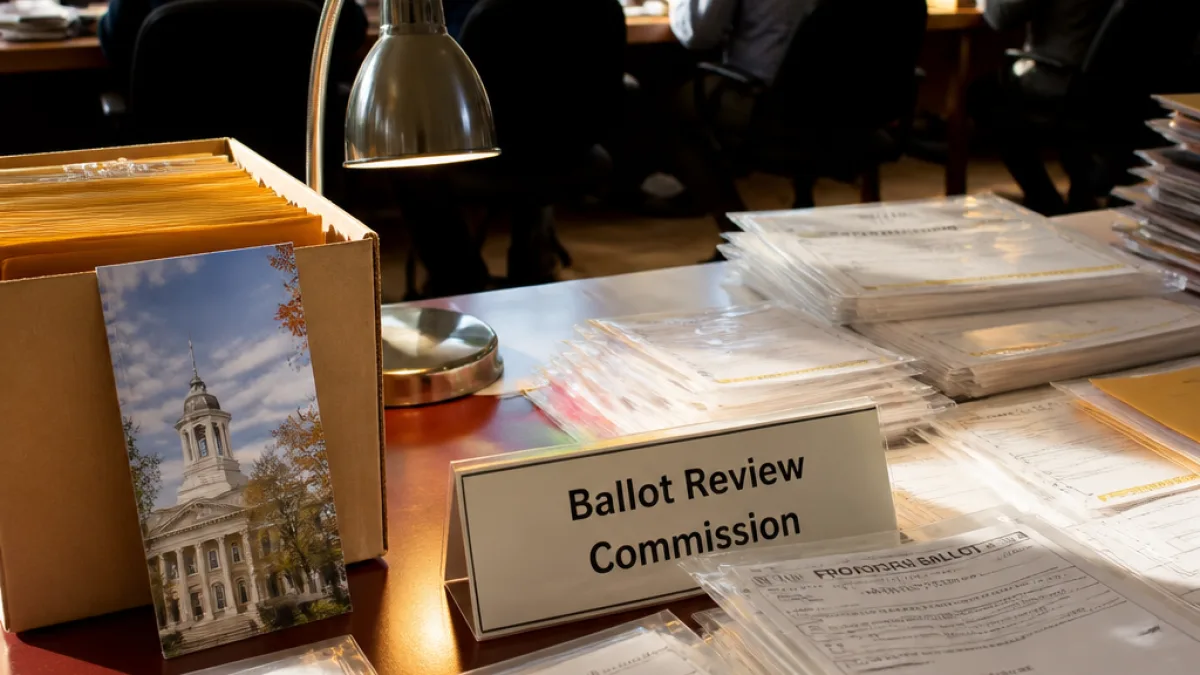
Decisions by an election review panel have changed the outcome of a razor-thin Indiana state Senate contest, turning what had been a three-vote lead for Sen. Spencer Deery into a three-vote margin for challenger Paula Copenhaver, according to official results released after a recount and review of challenged ballots.
What changed in the recount
The shift in the margin came after the commission assigned to adjudicate disputed ballots met to consider challenges raised in the days following the election. The panel's rulings on which ballots to count and which to exclude produced a net swing sufficient to flip the apparent winner in the contest.
The change illustrates how close many legislative races can be and how a handful of ballots — once the subject of review — can determine representation. The revised tally leaves the race separated by a three-vote advantage in favor of Copenhaver, reversing the three-vote edge Deery held immediately after Election Night canvassing.
How post-election challenges work in Indiana
Indiana's election process provides mechanisms for local election officials and candidates to question the validity of specific ballots and to request recounts when outcomes are within narrow margins. Typically, challenged ballots are set aside during the initial canvass and later reviewed by an appropriate body — often a county canvassing board, election commission or similar panel established under state law.
During such reviews, the panel examines documentation, voter intent and compliance with statutory requirements. The commission may decide to count, reject or direct further investigation into individual ballots. When the number of challenged ballots exceeds the margin of victory, the panel's rulings can change the apparent winner.
Local impact and what comes next
For constituents in and around West Lafayette, the flipped margin means uncertainty about who will represent them in the state Senate until any additional legal or procedural steps are exhausted. The close outcome also raises the likelihood of further challenges or appeals by the campaigns, which can extend the time before a certified winner is seated.
Because the margin is three votes, either campaign could consider options available under state law, including requesting a formal recount (if one has not already occurred), petitioning for judicial review, or seeking other post-election remedies. Any such actions would be governed by Indiana statutes and relevant court procedures.
Why small numbers matter
Close races like this underscore the importance of each individual ballot and the often-overlooked role of post-election review processes. A handful of contested ballots — absentee, provisional or otherwise — can determine control of a legislative seat and influence the balance of power in a narrowly divided legislature.
Election officials say that meticulous adherence to processes for handling and adjudicating challenged ballots is essential to both the accuracy of results and public confidence in elections. Transparent documentation of decisions and clear communication about next steps help voters understand how outcomes are reached.
Practical information for voters and observers
- Voters with questions about ballot handling in their county should contact their county election board or clerk for specific guidance.
- Candidates and their representatives have defined timelines and legal options for challenging election outcomes; those procedures are available through the Indiana secretary of state’s office and local election authorities.
- When a race is decided by a small number of votes, expect public records — including canvass minutes and ruling explanations — to be requested or released to explain how each challenged ballot was treated.
Broader context
Narrow margins and post-election adjustments are not unique to this contest. Across the country, state and local races decided by very small vote differentials frequently undergo recounts and legal scrutiny. Those processes can be technical and time-consuming but are designed to ensure ballots are counted consistently with state law and documented standards.
For the communities affected by this Indiana Senate contest, the immediate focus will be on whether the campaigns pursue further review and on the final certification of the result. Until all statutory and legal avenues are completed, the three-vote margin reported after the commission's decisions should be considered provisional.
As the situation develops, WE NEWS will monitor filings and official statements from the county election authorities and the campaigns involved and provide updates on any additional actions or official certifications.
Trevor Lindqvist, State Correspondent, WE NEWS
| Before review | After review |
|---|---|
| Sen. Spencer Deery led by 3 votes | Paula Copenhaver leads by 3 votes |

















