
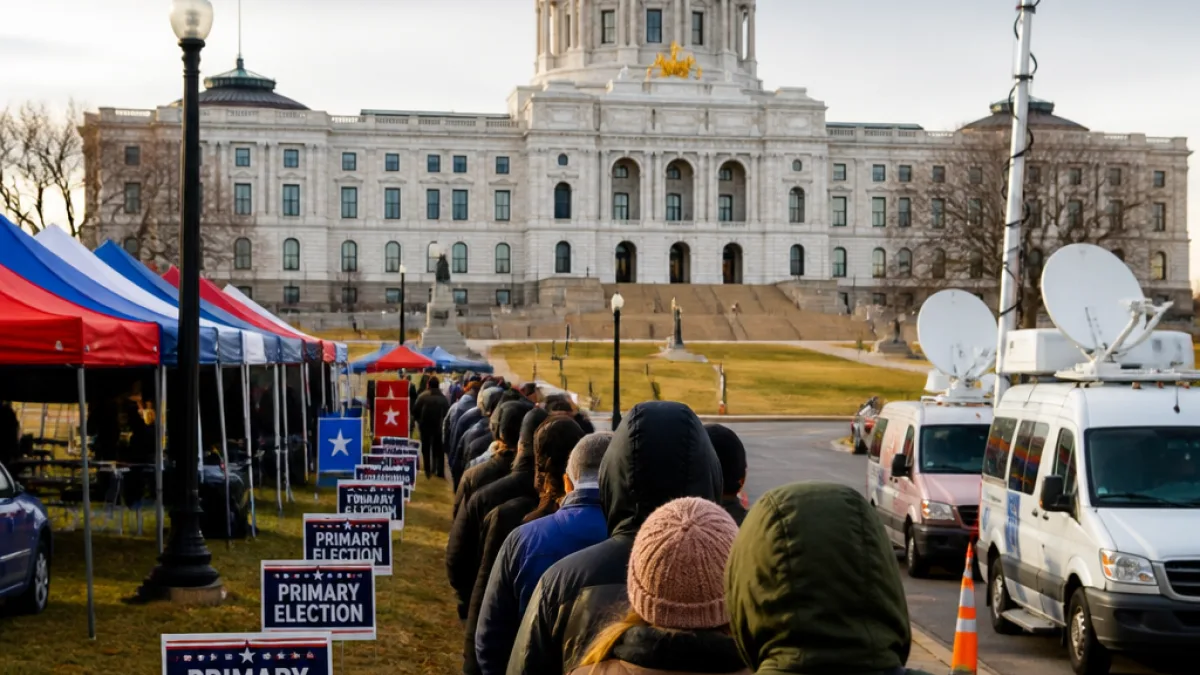
Voters in several states, including Minnesota, are casting ballots Tuesday in a string of primary elections national strategists say could alter how both parties approach the November midterm elections. Contests in Wisconsin and Michigan on the Democratic side and Republican primaries in South Carolina and Minnesota are drawing attention for what they may reveal about voter enthusiasm and ideological trends ahead of November.
National trends, local consequences
The primaries come at a moment when both major parties are testing the strength of different wings of their coalitions. On the Democratic side, progressive and self-described socialist candidates have been competitive in some statewide contests, while Republican voters in several states are choosing nominees in races that could determine party control and strategy heading into the general election.
National observers say the results will be scrutinized for indications of turnout patterns, demographic shifts and where each party's energy is concentrated. That matters for Minnesota because the state often plays a pivotal role in national midterm arithmetic and because primary winners here will shape the choices available to voters in November.
What to watch Tuesday
Observers highlighted several contests as especially consequential:
- Wisconsin: Democratic gubernatorial primary where progressive candidates are competing for nominations.
- Michigan: Democratic Senate primary featuring Abdul El-Sayed among the candidates, with renewed attention to past campaign comments.
- South Carolina: Republican contest to nominate a successor to the late Sen. Lindsey Graham.
- Minnesota: Republican primaries that could indicate the party’s direction ahead of November.
"A lot of the voters that are pushing through these socialist candidates... are not enough to sway a general election," said Tony Kinnett, national correspondent for The Daily Signal, describing dynamics in battleground Democratic primaries.
Kinnett also suggested that younger voters, particularly those in college communities, have played a disproportionate role in recent Democratic primaries. "It may work really great for primaries because you might see the youth come out to vote more readily in primaries," he said, "But in the general, it's not looking so good."
Implications for Minnesota Republicans
The Minnesota Republican contests are being watched for signs of whether the party base will coalesce behind particular candidates or if intraparty divisions could lead to runoffs or bruising nominations. While Kinnett predicted Republicans remain well positioned in some states, he also said certain contests could advance to runoffs despite endorsements from national figures.
For Minnesota, primary outcomes will determine the GOP roadmap into November: whether nominees tilt toward the party’s establishment or its more activist wings, and whether that affects turnout and crossover voting in the general election.
How primaries can reshape general-election dynamics
Analysts say primary winners, especially those from ideological wings of their parties, can change the tenor of general-election campaigns by shifting messaging, fundraising priorities and voter outreach. A nominee who energizes a base may increase primary turnout but face challenges broadening appeal to independent or moderate voters in a statewide general election.
That tension between motivating core supporters and expanding appeal is one reason party strategists closely watch primary results for signals about which messages and coalitions are viable in November.
Practical notes for Minnesota voters
Minnesota voters participating in Tuesday’s primary should note regular polling hours apply and local election offices are the authoritative source for county-level results and any reporting on provisional or absentee ballots. Parties and campaigns will use primary returns to retool messaging and organize ground operations as they pivot to the general-election calendar.
| State | Notable contests |
|---|---|
| Wisconsin | Democratic gubernatorial primary (progressive candidates competitive) |
| Michigan | Democratic Senate primary (candidates including Abdul El-Sayed) |
| South Carolina | Republican primary to replace late Sen. Lindsey Graham |
| Minnesota | Republican primaries that could shape November strategy |
As results are reported, party officials and campaigns in Minnesota will analyze the vote for cues about turnout among key constituencies — young voters, suburban moderates and rural conservatives — and adjust tactics for the months ahead. The primary outcomes may also influence outside spending, endorsements and where parties deploy organizing resources.
For Minnesota voters and political observers, the message is straightforward: primary results will offer an early, often blunt assessment of which messages and coalitions are resonating — and that assessment will guide strategy for both parties as they prepare for a consequential midterm election season.
Reporting from the state capital and across the region.

















