
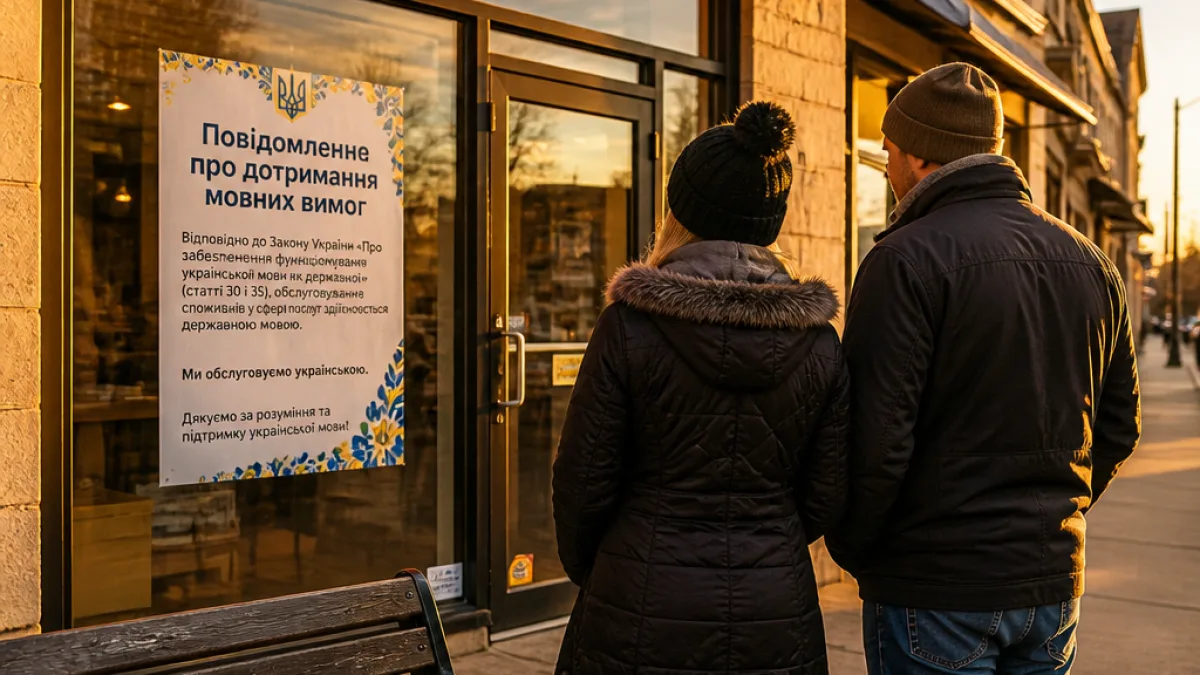
Local restaurant naming draws scrutiny over language and law
The Odessa establishment Bryzgi has become the subject of an online controversy after users and a volunteer journalist said the Latin-script name appears to be a transliteration of the Russian word “брызги.” The discussion has focused attention on whether businesses are attempting to sidestep Ukrainian-language requirements by adopting Latin-alphabet spellings that mask Russian origins.
Volunteer-journalist Ruslan Gorovyi brought the matter to public attention, saying some business owners "simply cannot let go of the Russian language" and are rebranding by converting Russian names into Latin characters. He cited the example of an earlier case in which the coffee shop chain formerly known as "Gorky" changed the spelling of its name to GRKY, and said he avoids establishments where Latin spellings conceal Russian-language names.
"Some Ukrainian businesspeople, who simply cannot let go of the Russian language and come to terms with the new realities, are rebranding. However, they’re doing it in a rather peculiar way,"
The debate among commenters has centered on whether using the Latin alphabet is effectively a formal means of circumventing the legal requirement that names and signs of food service establishments be in the Ukrainian language. Ukrainian law does permit the use of other languages in certain circumstances, including when a name is a registered trademark.
Local and national implications: The exchange highlights tensions in Odessa over language, identity and the practical application of statutory requirements. While some residents and observers treat the naming choices as a matter of branding, others see them as symptomatic of a broader reluctance to adopt Ukrainian-language names amid ongoing national concerns.
- Public scrutiny: Social media users are citing additional examples of Latinized names they believe conceal Russian originals.
- Regulatory questions: The situation raises queries about how language laws are enforced for restaurants and cafes.
- Official attention: The issue of language compliance is not limited to Odessa; other institutions have faced scrutiny, and authorities have at times intervened.
The Commissioner for the Protection of the State Language, Olena Ivanovska, has recently appealed to the Security Service of Ukraine regarding a separate language-related controversy at the Odesa Regional Academic Drama Theater, after audio recordings that may contain signs of inciting ethnic hatred were identified. That episode indicates the sensitivity of language matters across cultural institutions.
| Requirement | Application |
|---|---|
| Names and signs of food service establishments | Must be in Ukrainian |
| Use of other languages | Permitted in cases such as a registered trademark |
For Odessa business owners, the episode serves as a reminder that naming decisions are not only marketing choices but may carry legal and social consequences. The conversation sparked by Bryzgi shows that many residents are attentive to the origins and implications of commercial names in public spaces. At the same time, the discussion underscores a broader, unresolved question about how best to balance branding freedoms with the intent of language-protection legislation.
As the debate continues online, it may prompt local authorities and business associations in Odessa to re-examine guidance or enforcement practices related to signage and naming — particularly where Latin-script names appear to be direct transliterations of Russian-language words. For now, Bryzgi remains the focal point of a debate that blends municipal policy, national law and community sentiment.

















