
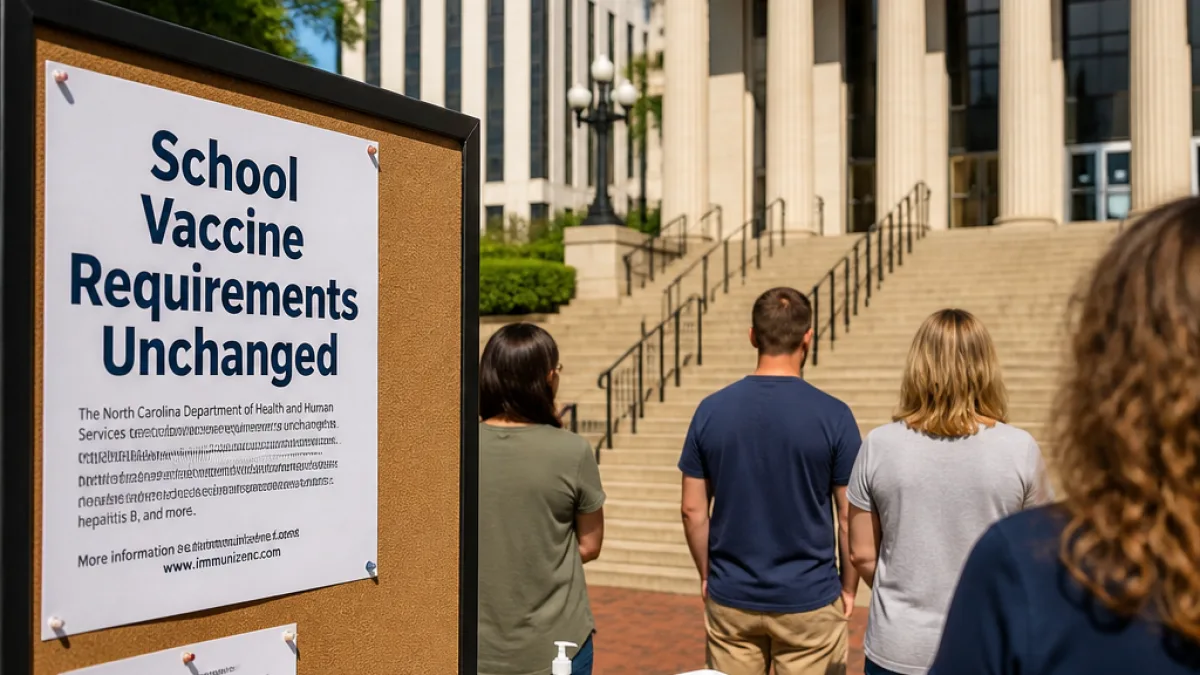
Raleigh, N.C. — North Carolina will keep its existing childhood vaccine requirements in place for the upcoming school year, state health officials said Tuesday, rejecting a White House executive order that recommends scaling back some federal vaccine guidance.
The announcement from the N.C. Department of Health and Human Services comes after President Donald Trump signed an order that urged changes to federal recommendations — including separating the measles, mumps and rubella shots into separate visits over an extended period and classifying vaccines such as influenza, COVID-19 and hepatitis A and B as "voluntary." State officials emphasized that each state makes its own rules for school immunizations and that the department does not plan to alter its clinical guidance.
State authority and public-health stance
Under North Carolina law, the state sets the immunization requirements children must meet to attend school. Officials said those rules remain in effect and that the N.C. Department of Health and Human Services does not expect to change its recommendations for routine childhood vaccinations ahead of the 2026-27 academic year.
“Vaccinations play a vital role in protecting children, their families and communities from the preventable spread of infectious diseases,” said Dr. Larry Greenblatt, North Carolina’s state health director, in a news release. “Nothing has changed regarding the strong evidence supporting current vaccine recommendations and vaccines remain widely available and accessible for individuals and families throughout the state.”
“Vaccinations play a vital role in protecting children, their families and communities from the preventable spread of infectious diseases.” — Dr. Larry Greenblatt, N.C. state health director
What the federal order proposes
The presidential order recommends several shifts in federal practice. Among its proposals:
- Splitting the combined measles-mumps-rubella (MMR) series into three separate appointments spaced over 12 to 18 months;
- Designating influenza, COVID-19 and hepatitis A and B vaccines as optional rather than recommended at the federal guideline level.
Public-health experts and medical groups have criticized the move, warning that making vaccinations less convenient or less recommended could increase the number of unprotected children and heighten the risk of outbreaks.
Which vaccines are required in North Carolina
State officials noted that North Carolina currently lists a set of core immunizations for school attendance. While the federal order addresses national recommendations, the state’s list governs requirements for enrollment in public schools.
| Vaccine mentioned | Federal proposal | State stance |
|---|---|---|
| MMR (measles, mumps, rubella) | Split into separate visits | No anticipated change |
| Influenza | Suggested as voluntary | No anticipated change |
| COVID-19 | Suggested as voluntary | No anticipated change |
| Hepatitis A and B | Suggested as voluntary | No anticipated change |
Practical implications for families and schools
For parents and guardians, the immediate takeaway is simple: school enrollment requirements in North Carolina will not be loosened because of the federal order. Families should continue to follow the state’s schedule for required childhood immunizations to ensure children remain eligible for school attendance.
School districts typically require proof of immunization or an approved exemption at registration. Local health departments and providers continue to offer vaccines and guidance on the state schedule, officials said.
Legal and political context
The executive order follows earlier federal efforts aimed at changing vaccine policy, many of which were challenged in court. The new order also directs the U.S. attorney general to pursue legal action against states whose laws conflict with the president’s recommendations, setting up potential legal fights over jurisdiction and public-health authority.
But public-health authority to set school immunization rules has historically rested with states. Health department officials in North Carolina reiterated their commitment to evidence-based guidance as they monitor federal action and potential litigation.
What to watch next
Officials said they will continue to monitor federal developments and legal action that could influence vaccine policy. In the meantime, the priority for state health officials is maintaining high vaccination coverage to prevent outbreaks of vaccine-preventable diseases.
Parents with questions about required vaccines or school documentation should contact their local health department or the N.C. Department of Health and Human Services for current guidance and resources.
Latoya Simmons is the state correspondent for WE NEWS, covering health and policy across North Carolina.

















