
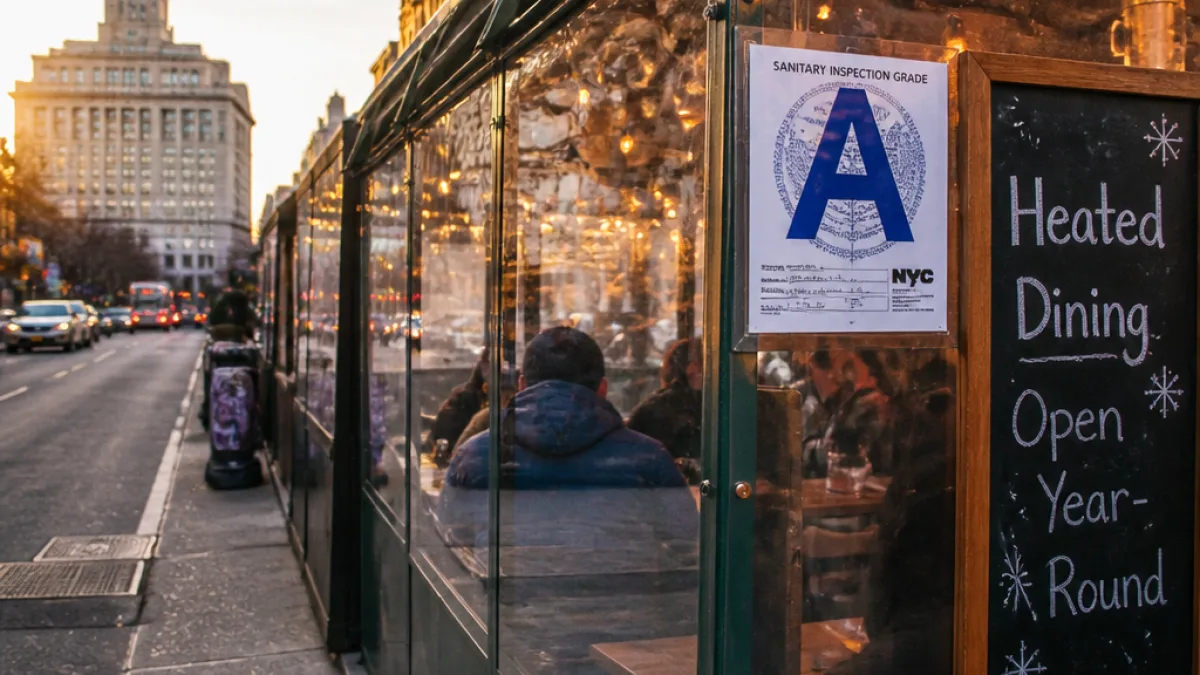
City alters outdoor dining rules to allow roadway cafes year-round
The New York City Council on Thursday voted to expand permissions for outdoor dining, allowing cafes located in roadways to remain open throughout the year if they install weatherproofing. The change aligns roadway cafes with sidewalk cafes, which had been allowed to operate in all seasons, and removes the previous restriction that required roadway setups to be taken down after November.
The move, supported by Mayor Zohran Mamdani, is intended to help restaurants increase revenues and sustain outdoor operations beyond the spring-through-fall window. City officials emphasized that the expansion comes with sanitation and maintenance requirements and new penalties for violations.
Sanitation standards and fines
Council leadership framed the policy shift as a balance between supporting small businesses and protecting neighborhood conditions. City Council Speaker Julie Menin said the measure is designed to bolster restaurant earnings while addressing community concerns about cleanliness and public health.
"At the same time, we want to balance the comments and concerns that we've heard from communities across our city to ensure that any kind of sidewalk cafe or roadway dining is kept free of debris, or trash, or rats," Menin said.
Under the new rules, owners of outdoor dining structures that fail to meet sanitary standards will face fines ranging from $200 to $500. City agencies will enforce upkeep expectations intended to reduce litter, vermin and hazards associated with extended outdoor installations.
Industry reaction and economic context
Hospitality advocates welcomed the expansion. Leaders of the NYC Hospitality Alliance described the change as the culmination of long-standing advocacy and argued it will make outdoor dining more practical for small operations.
- The alliance noted restaurants and bars across the five boroughs support nearly 280,000 jobs.
- They said the sector generates about $11.4 billion in wages.
- They estimated the industry contributes roughly $28 billion in economic activity citywide.
Department of Transportation leadership said restrictions that limited roadway dining to certain months had been a barrier to participation in the city's Dining Out NYC program, because many establishments lacked storage options for offseason setups. DOT Commissioner Mike Flynn said the change recognizes New Yorkers' fondness for outdoor seating and the role it plays in animating streets while supporting small businesses.
What changes and what stays the same
Practically, the new policy allows restaurants currently operating roadway cafes during the April-through-November season to keep those structures in place year-round provided they use weatherproofing. Sidewalk cafes, which already had year-round status, remain unaffected.
| Feature | Prior rule | New rule |
|---|---|---|
| Sidewalk cafes | Allowed year-round | No change |
| Roadway cafes | Allowed April–November; removed in offseason | Permitted year-round with weatherproofing |
| Sanitation fines | Varied/enforcement prior to change | $200–$500 for violations |
Officials and industry representatives said the change resulted from collaboration between policymakers and business groups. The Hospitality Alliance argued the Council's action demonstrates the benefits when elected officials listen to small-business concerns and pursue practical solutions.
Local implications
The expansion is likely to affect a broad set of New York neighborhoods where roadway dining has been popular, including commercial corridors that relied on outdoor seating to attract customers in recent years. City enforcement of the sanitation provisions will shape public reception: proponents say steady upkeep will mitigate complaints, while opponents may continue to press for limits in areas where outdoor setups have caused congestion or cleanliness problems.
For many restaurateurs, the policy offers a potential revenue lifeline by removing the seasonal disruption of disassembling and storing roadway dining infrastructure. For residents, the change promises more year-round outdoor activity on city streets — provided businesses and agencies enforce the new cleanliness standards.
















