
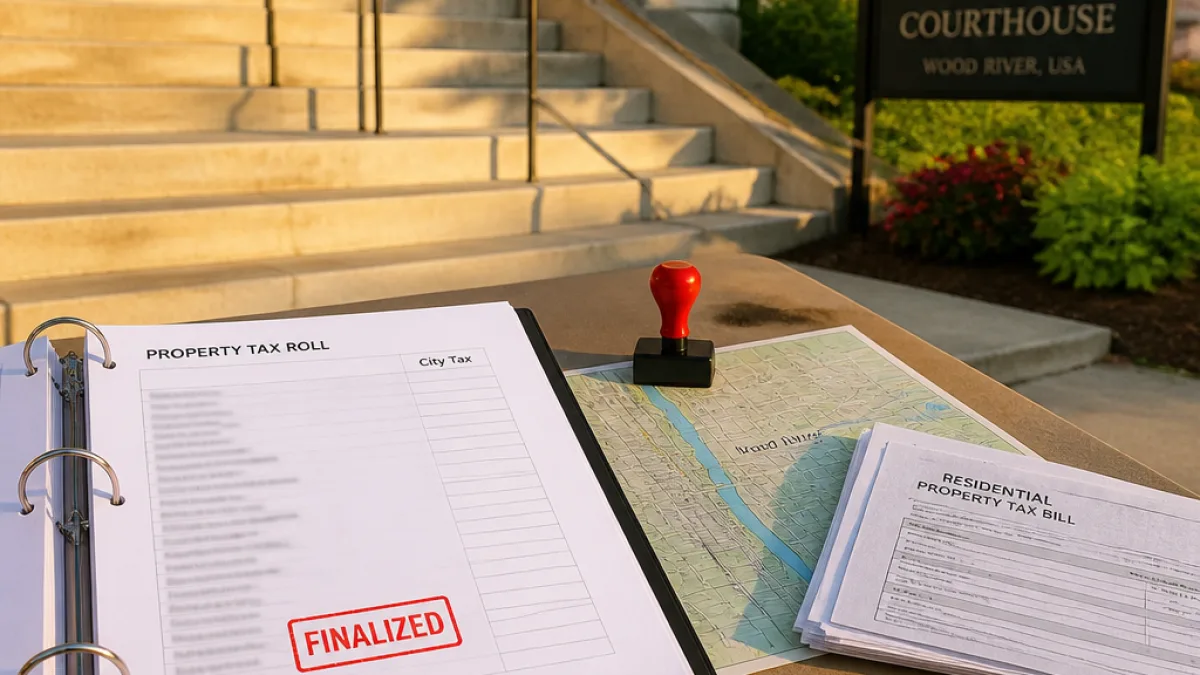
WOOD RIVER — The Nebraska Attorney General has concluded that the city of Wood River cannot retroactively collect nearly $78,900 in municipal property taxes after a Hall County clerical error left annexed properties off the city’s tax rolls for years.
State opinion closes path to back taxes
In a formal opinion issued Aug. 10, Attorney General Mike Hilgers determined that state law bars Hall County from reassessing and collecting municipal taxes once the annual tax levy for a given year is finalized. The decision responds to a request from county officials following a dispute over missed city taxes tied to property annexations.
The error, which county and city officials say went unnoticed for nearly a decade, affected 28 residential properties annexed by Wood River. The properties were assessed for county taxes but were not included on the city’s tax rolls between 2016 and 2025, depriving Wood River of municipal revenue the city says it needs to cover local projects and services.
City sought back taxes for several years
Wood River Mayor Greg Cramer previously told local media the city sought $78,900 in back taxes covering the tax years 2017 through 2022. The city planned to apply those funds toward its share of a $1.1 million fire truck purchase, bonds and park work.
“Every year it’s about $36,000 more in revenue, so it’s corrected [going forward], but we’d like to have that money back,” Cramer said in May.
Hall County commissioners initially rejected Wood River’s claim and asked County Attorney Marty Klein to seek the Attorney General’s formal opinion about whether retroactive municipal assessments were permitted under Nebraska law.
Legal reasoning: levy deadlines create fixed taxpayer rights
Hilgers’ opinion emphasized Nebraska’s statutory deadlines governing tax levies. Once the October 20 levy date passes each year, the Attorney General wrote, statutory rules effectively fix taxpayer rights and prevent later retroactive assessments in most situations.
The opinion also addressed an exception in state law that allows counties to collect taxes retroactively in cases of truly "omitted property" — that is, property that was completely missed during assessment. Because the annexed properties were assessed for county taxes, Hilgers concluded they did not meet the definition of omitted property and therefore the exception did not apply.
“In the absence of such authority, we must conclude that Hall County may not retroactively assess and collect real property taxes on those annexed properties for tax years prior to their inclusion in Wood River’s city tax roll,” the opinion states.
Impact on Wood River and local government finance
The ruling leaves Wood River without the sought-after back revenue and highlights the consequences of administrative errors in property and tax records. City leaders will still benefit from corrected tax rolls going forward, but the lost funds for previous years will not be recovered under this legal framework.
Local officials said the shortfall affected planned capital expenditures in a small municipality where municipal budgets are often tight. The inability to recoup the missed revenue transfers the long-term financial burden onto the city’s current and future budgets rather than the property owners who were annexed.
Key facts
- Number of properties: 28 residential parcels annexed by Wood River
- Period affected: Annexation omissions occurred during 2016–2025
- Amount requested: $78,900 for tax years 2017–2022
| Item | Detail |
|---|---|
| Annexed properties affected | 28 |
| Years city sought back taxes | 2017–2022 |
| Amount Wood River sought | $78,900 |
County and city officials have options for future administrative remedies, such as improving coordination between county assessment offices and municipal governments and auditing tax rolls to prevent similar oversights. But under the Attorney General’s reading of state statute, retroactive recovery of the missed municipal levies is not permitted in this instance.
The opinion settles the immediate legal question raised by Hall County and Wood River, but it could prompt other counties and cities to review their processes to ensure annexed properties are correctly recorded at the time levies are set. For Wood River residents, the ruling means corrected tax bills going forward but no recovery of prior municipal taxes the city had sought.
This report is based on the Attorney General’s formal opinion and statements from local officials made public in recent news coverage.

















