
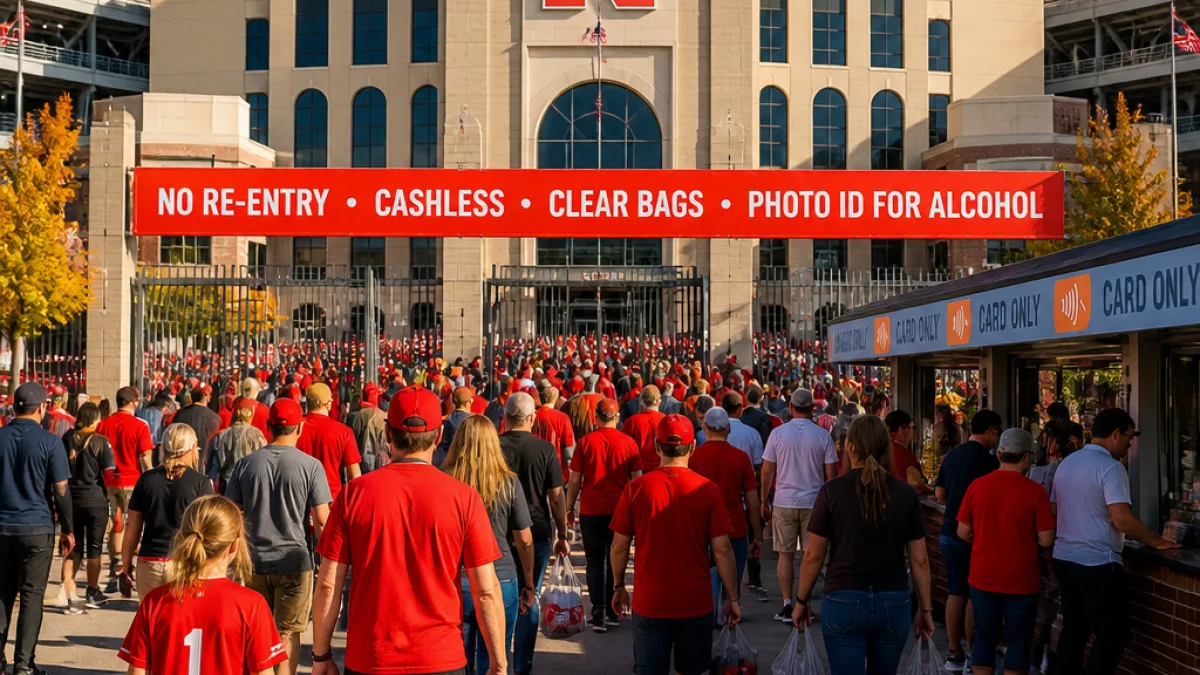
Memorial Stadium gamedays are more than a sporting event for Lincoln — they temporarily reshape the city. For a few hours on Saturdays (and occasionally Fridays), the stadium and its crowd rank as the third largest “city” in Nebraska, behind Omaha and Lincoln itself and ahead of other population centers.
What that looks like in numbers
That informal ranking on Husker Saturdays is often described this way:
- 1. Omaha, NE
- 2. Lincoln, NE
- 3. Memorial Stadium in Lincoln
- 4. Grand Island, NE
- 5. Kearney, NE
The comparison is intended to set the stage for the scale and intensity of attending a Nebraska football game at Memorial Stadium this season.
Operational changes fans need to plan for
Stadium policies have been updated in recent seasons and will affect both longtime fans and newcomers. Key points from the Huskers.com guidance include:
- Gates open 90 minutes before kickoff.
- No re-entry: Beginning with changes in 2025, once a ticket is scanned and a fan exits the stadium, the ticket is no longer valid for re-entry.
- Clear bag policy: One clear plastic bag or one-gallon clear Ziploc-style freezer bag is allowed, plus one small personal clutch bag. Backpacks, large purses and fanny packs are prohibited.
- Alcohol sales: Alcohol is available inside the stadium, but each purchase requires a photo ID.
- Cashless transactions: All purchases inside the stadium must be made by debit or credit card; cash is not accepted.
Sellout streak remains a local hallmark
One of the most enduring claims tied to Husker football is the home sellout streak. Nebraska has sold out every home game since 1962. The streak currently stands at 410 consecutive sellouts. That figure means every ticket was sold, although it does not necessarily indicate every seat is occupied on game day.
“On a Husker Saturday…for a few hours it is considered the third largest city in the entire state.”
That characterization underscores both the passion of the fan base and the practical implications for Lincoln: traffic, parking demand, local business activity and public services are all affected on game days.
Local consequences and planning tips for Lincoln residents
For Lincoln residents who do not attend games, the scale of gameday crowds still produces tangible effects across the city. Increased traffic near the stadium can extend to adjacent neighborhoods, and parking demand often fills commercial lots and street spaces in areas surrounding downtown and the University of Nebraska–Lincoln campus.
Businesses near the stadium frequently see higher customer volumes before and after games. The cashless requirement inside the stadium means many visitors carry cards for concessions and merchandise, but nearby businesses may still accept cash; residents who interact with visiting fans should be aware of that distinction.
Because re-entry is no longer allowed, tailgaters and fans who plan to leave the stadium at halftime should reconsider their plans. Those who attend should plan to bring everything they need for the duration of the event or remain outside and not expect to re-enter if they leave after scanning their ticket.
| Policy | What to expect |
|---|---|
| Gates | Open 90 minutes before kickoff |
| Re-entry | Not permitted once ticket is scanned (policy in effect since 2025) |
| Bags | One clear bag or one-gallon Ziploc + one small clutch |
| Purchases | Cashless only; alcohol requires photo ID |
| Sellout streak | 410 consecutive sellouts since 1962 |
For many Lincoln residents, Husker gamedays are part of the city’s identity and economy. Whether you are attending or living nearby, understanding the stadium’s policies can make a difference in how you plan your day. Expect heavy pedestrian and vehicle traffic around the stadium, follow the clear-bag and ID requirements if you attend, and remember the no re-entry rule when organizing tailgate plans.
Local officials and university staff typically provide gameday traffic advisories and parking information; residents should consult official channels ahead of each game for the most current instructions and any temporary road or transit changes.

















