
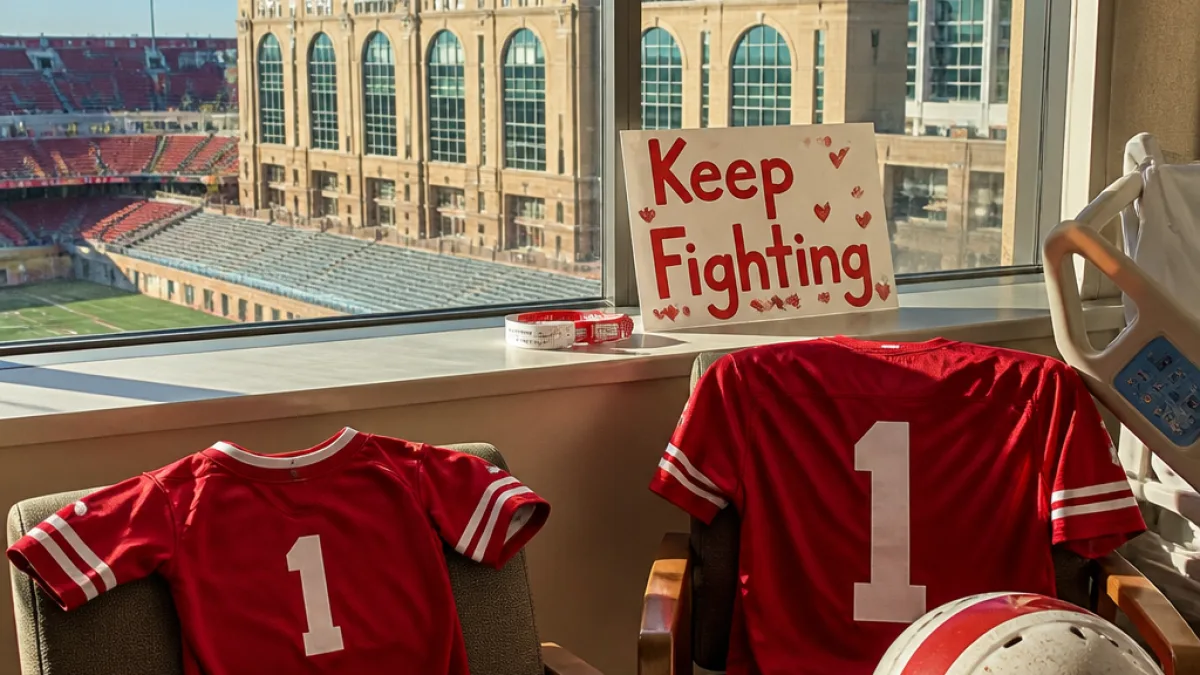
LINCOLN, Neb. — A connection that began with a shared medical history has grown into a meaningful friendship between Nebraska defensive lineman Dylan Parrott and 7‑year‑old cancer survivor Cade Parrish.
Shared diagnosis creates rare bond
For Cade and his family, Parrott is more than a college football player to root for on Saturdays. The two are bound by the same diagnosis — Burkitt lymphoma — a rare and aggressive form of cancer. Parrott was diagnosed at age 10; Cade faced the diagnosis at 7 while receiving treatment at Children’s Nebraska.
The connection emerged after Nebraska publicized Parrott’s story following a 2024 game against Iowa. That coverage highlighted Parrott’s experiences, including his participation in the University of Iowa’s “Hawkeye Wave,” a pregame tradition that reaches out to patients and families at the hospital across the street from Kinnick Stadium.
Outreach and meaning
Parrott’s involvement in the wave was particularly meaningful because he underwent treatment at the Stead Family Children’s Hospital in Iowa when he was a child. His presence on the field during that program struck a chord with his family and with families like the Parrishes, who were navigating chemotherapy appointments when they encountered Parrott’s story.
“Standing down on the field doing the wave, it hit home a little different. It was extra special,”
The remark came from Parrott’s mother, Carrie Parrott, reflecting the emotional weight of returning to that stadium as a survivor and paying tribute to families still undergoing treatment.
Mentor and symbol of hope
Since learning about Parrott, Cade’s family says the defensive lineman has become a friend and mentor for their son. Parrott has spoken about being able to offer support because he has gone through similar treatments and understands the difficulties involved.
“I can be there for him,” Parrott said, acknowledging the role he can play in Cade’s life. “I’m just very grateful to be able to do that and to be in the situation I’m in, and to have him have somebody that I can help through something that I know is a difficult thing.”
For the Parrish family, watching Parrott on the field provides a tangible glimpse of possibility. Seeing a cancer survivor play at the collegiate level gives them something to hope for amid a frightening period of hospital visits and treatments.
Local impact and broader resonance
Stories like this illustrate how local athletes can have reach beyond athletics, offering visibility and emotional support to families confronting serious illnesses. Parrott’s public presence — and his willingness to share his history — has helped transform a football tradition into an outreach moment for young patients and their families.
- Patient: Cade Parrish, 7
- Survivor/mentor: Dylan Parrott, former pediatric patient
- Diagnosis: Burkitt lymphoma (both)
- Hospital connection: Children’s Nebraska and Stead Family Children’s Hospital
| Person | Age at diagnosis | Role |
|---|---|---|
| Cade Parrish | 7 | Patient, current survivor under treatment |
| Dylan Parrott | 10 | Former patient, now Huskers defensive lineman and mentor |
What families and fans can take away
The Parrish‑Parrott relationship underscores several practical and emotional takeaways for local families coping with pediatric cancer:
- Visibility matters: When public figures share their health journeys, it can provide reassurance and a sense of possibility to current patients and parents.
- Peer support helps: Connections with someone who has endured the same diagnosis may ease the isolation and fear that often accompany treatment.
- Community rituals carry weight: Traditions such as hospital outreach from sports programs can have lasting emotional impact.
As Cade continues his recovery, the relationship with Parrott will remain an example of how local sports figures can serve as sources of comfort and inspiration beyond their roles on the field.
Coverage for this report included statements from Cade’s family and from Dylan Parrott and his mother regarding their shared experience with Burkitt lymphoma and Parrott’s outreach efforts.

















