
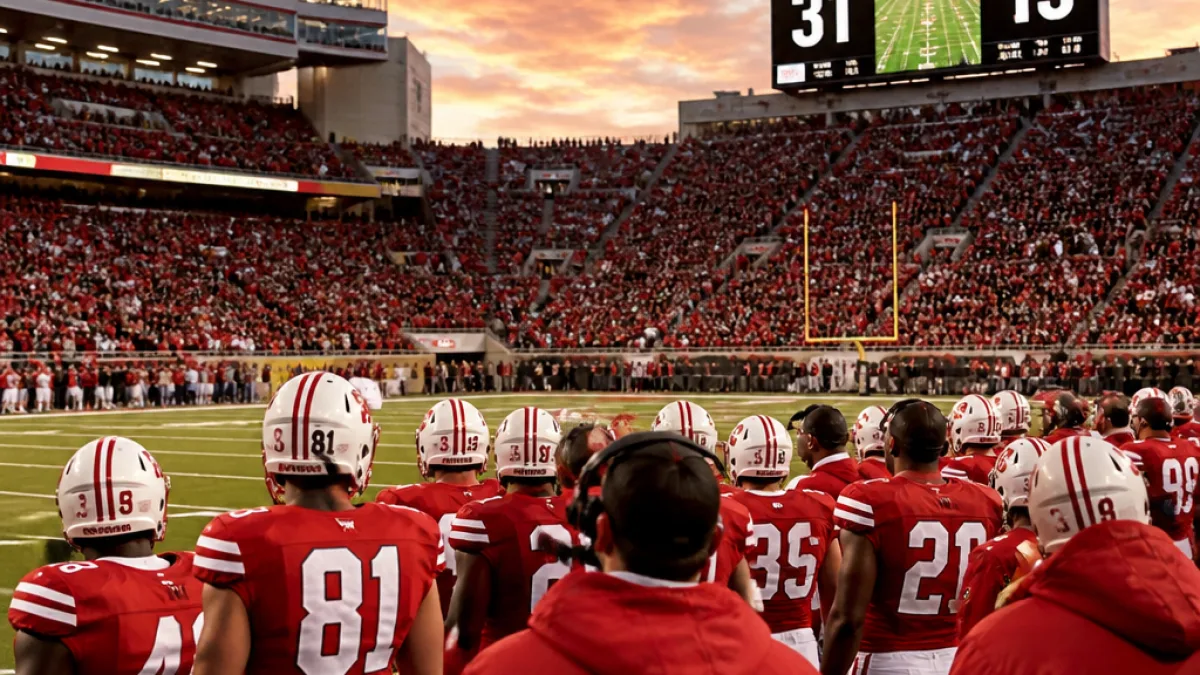
LINCOLN — Nebraska’s 31-13 victory at Michigan State on Saturday brought a string of milestones that have not been seen in Lincoln in years, but the result did little to quiet a steady chorus of caution among coaches, players and analysts.
Historic markers, tempered optimism
The win opened Big Ten play and moved Nebraska to 4-0, its best start to a season since 2016. The Huskers also recorded their first conference-opening victory since 2019 and scored more than 30 points in a conference road game for the first time outside of Maryland or Purdue since 2019.
Those numbers are meaningful: they reflect a team that has improved in several areas and is doing some of the little things required to sustain success.
- 4-0 start: First since 2016.
- Conference opener win: First (home or away) since 2019.
- 30+ points on a conference road game: First outside Maryland/Purdue since 2019.
- Four straight wins by 18+ points: First time since 2009-10; first season to do that since 2000.
| Milestone | Last time achieved |
|---|---|
| 4-0 start | 2016 |
| Conference opener win | 2019 |
| 30+ points in conference road game | 2019 (except MD/Purdue) |
| Four wins by 18+ points in a row | 2009-10 (season-level feat last in 2000) |
Still, the bar shouldn’t be moved — not yet
Despite the encouraging indicators, close examination of the Spartans game revealed lingering issues that temper enthusiasm.
The running game produced inconsistent results, and Nebraska failed to fully capitalize on an injury-depleted Michigan State secondary. The defense, while disruptive at times, allowed chunk plays when Michigan State used tempo to limit substitutions.
"My goalposts are bolted in the same place I had them at the beginning of the season,"
That sentiment, voiced in the immediate aftermath of the game, captures a commonly held perspective among observers: enjoy the progress, but avoid expectation inflation. The Huskers’ improvement is real, but the team has not yet proven it can sustain this level of execution against top-tier Big Ten competition.
Special teams, penalties and situational decisions
Special teams contributed positively overall, but a waved-off blocked punt — due to a penalty — left what could have been a momentum-shifting play on the field. Late in the contest Nebraska elected to try to convert on fourth down rather than attempt a 47-yard field goal, a situational decision that underscores the coaching staff’s willingness to be aggressive but also highlights the fine margins that will determine how far this season can go.
Coaches and fans alike have noted that many of the positives are foundation-level: improved discipline, fewer self-inflicted errors and better execution in the red area. Those are not glamorous, but they are often the difference between single wins and a sustained run.
What comes next
Nebraska’s upcoming schedule includes matchups that will test whether the Huskers are a surprising contender or a team peaking early. There is already conversation among supporters about the likelihood of defeating higher-profile opponents. For now, the prevailing message from within the program and around the fan base is measured: acknowledge the gains but keep expectations bounded.
Fans should watch four key indicators in coming weeks: consistency of the run game, the ability of the defense to limit chunk plays, special teams reliability and depth when starters are forced off the field. Improvement in those areas would justify a reassessment of the team’s potential; struggles would remind observers why modest goals were set in the first place.
Nebraska’s 4-0 start is a notable achievement that has reignited interest across the state. Whether this team will sustain its progress against the grinding rigors of Big Ten play remains to be seen. For now, the Huskers have given themselves margin for optimism — and a clear set of questions to answer.
Nathan Ackerman is the state correspondent for WE NEWS covering University of Nebraska athletics and statewide sports developments.

















