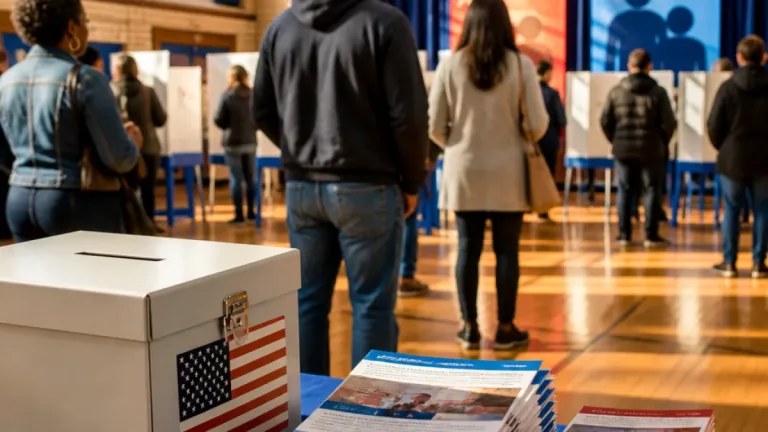
Michigan voters next week will consider a citizen-led measure designed to reduce the political clout of the state’s electric and gas utilities, a campaign driven by widespread frustration with high bills, frequent outages and the perceived sway utilities hold over lawmakers in Lansing.
What's on the ballot
The proposal would restrict how much utilities can contribute to political campaigns and with whom they may coordinate — a targeted effort to limit the role of utility companies in state and local elections. The measure was placed on the ballot after a coalition of groups collected more than 560,000 signatures, according to organizers.
Supporters say the change would free elected officials to hold utilities accountable for pricing, reliability and environmental impacts without fear of losing campaign support. Opponents — primarily utility companies — contend the proposal could hamper necessary communication and advocacy on complex energy policy.
Why voters are engaged
Many homeowners and renters point to higher utility bills and a string of service interruptions in recent years, including long outages after severe weather events such as ice storms and tornadoes. The public dissatisfaction has intersected with the expansion of large data centers that require massive amounts of power, further straining the state’s grid and stoking debate over utilities’ priorities.
Volunteer canvasser Sam Getsinger, 83, told campaigners she took to door-knocking across northern Michigan because she wants a political system where money does not determine outcomes. “I don’t want our politics to continue so that the person with the most money wins everything,” she said, describing her motivation to protect future generations’ democracy.
“Everything is more expensive. The quality of service is worse, and we are dealing with more air and water pollution as a result of utility influence in Lansing,”
That quote came from Christy McGillivray, co-chair of Michiganders for Money Out of Politics, which led the drive to place the question before voters.
What supporters say it will do
Backers argue the measure would:
- Limit direct campaign contributions and certain expenditures by utilities;
- Restrict coordinated political activity between utilities and campaigns or political committees;
- Make it easier for regulators and lawmakers to act in the public interest without perceived conflicts tied to campaign donations.
Proponents say the aim is not to silence utilities on policy debates but to reduce the financial leverage they can exert during elections.
Legal and practical questions remain
Even if voters approve the measure, legal experts expect challenges that could narrow its reach. Some observers also caution the proposal would not eliminate all utility money from politics, because there are alternative channels and legal workarounds available under current campaign finance law.
Polls conducted by organizations supporting the initiative have shown strong approval for the change, but independent analyses, enforcement mechanisms and court rulings could shape the final impact.
Broader context in Michigan
Michigan has experienced a series of high-profile power failures and a reputation for relatively elevated utility rates in parts of the state. Those conditions have driven public scrutiny of how utilities plan investments, prioritize customers and interact with regulators and legislators.
Supporters see the ballot question as a corrective step: a way to rebalance power between ratepayers and companies that provide essential services. Opponents say the measure could unintentionally hamper communication and lobbying critical for technical policy discussions.
| Item | Detail |
|---|---|
| Signatures collected | 560,000+ |
| Main voter concerns cited by supporters | High bills, unreliable service, data center expansion, pollution |
What voters should know
Voters will decide directly whether to impose new limitations on utility political spending. If the measure passes, expect immediate legal scrutiny and potential litigation that could delay or alter enforcement. Regardless of outcome, the campaign has elevated public debate about how utilities are regulated and the relationship between corporate money and policymaking in Lansing.
The vote reflects a broader trend of citizens pushing for campaign finance reforms targeted at specific industries they view as wielding outsized political influence. For Michigan residents wrestling with rising costs and intermittent service, the ballot question offers a direct chance to reshape that influence at the ballot box.
Aaliyah Freeman is the state correspondent for WE NEWS.