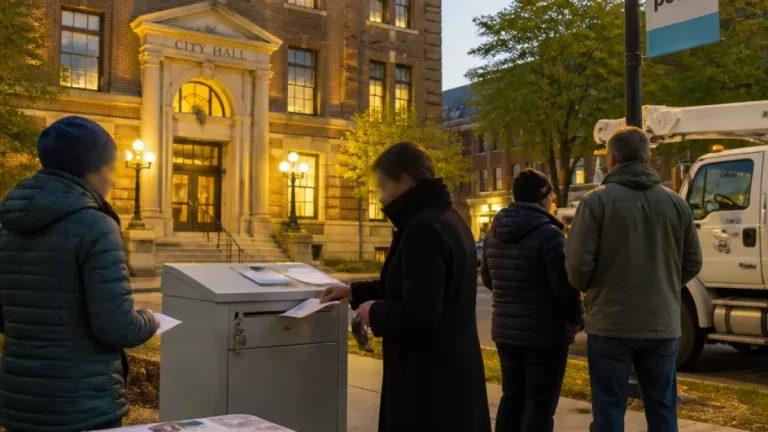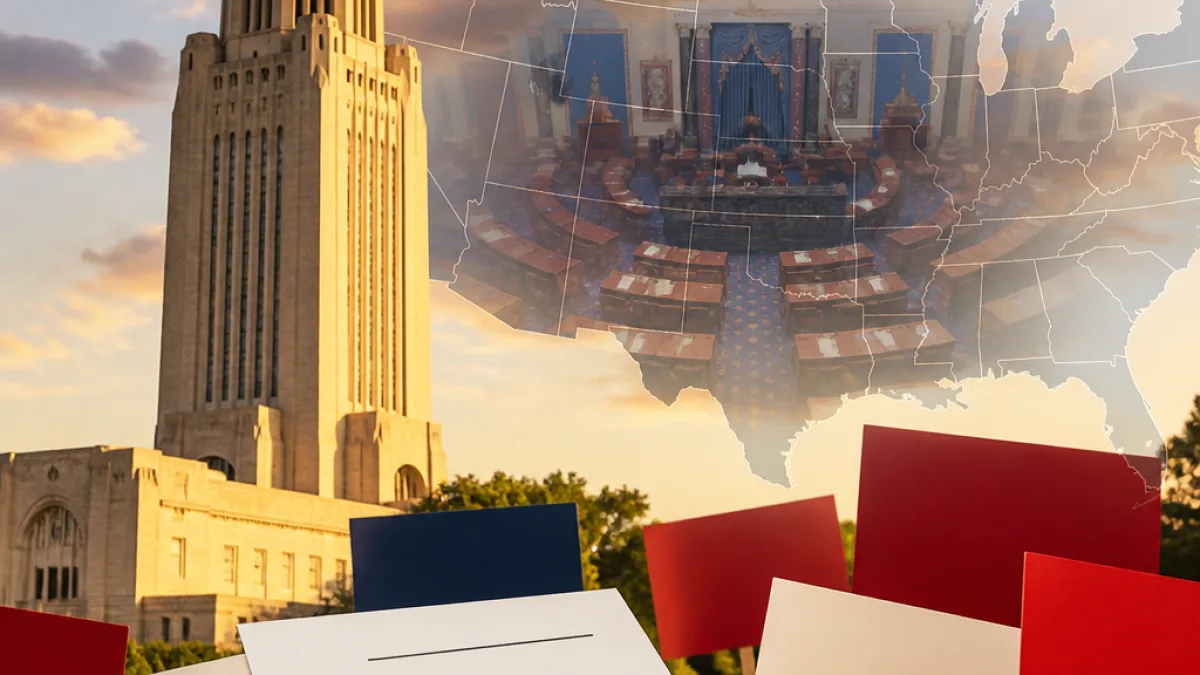
Nebraska’s U.S. Senate race is emerging as an unexpected national battleground, with a rising independent candidate challenging the state’s long-standing political assumptions and injecting uncertainty into a contest that could help determine which party controls the chamber.
The development is notable because Nebraska is widely regarded as a deeply conservative farm state. The state is now being grouped with other Republican strongholds, including neighboring Iowa and Kansas, where races that once appeared relatively secure are showing signs of unexpected competition.
The independent candidate’s central message is a rejection of both major parties. That positioning is drawing attention in a contest where voters may be weighing dissatisfaction with the existing political choices alongside their views about the direction of the country.
A traditionally Republican state in a closer national environment
Nebraska’s importance extends beyond the individual race. The contest is unfolding as Republicans and Democrats fight over control of the U.S. Senate, where even a small number of competitive races could determine which party sets the legislative agenda.
According to the report, Republican candidates in parts of the Plains are facing tighter races than expected. The shift is occurring as President Donald Trump’s approval rating declines in areas he carried comfortably two years ago. The report does not provide specific polling figures, candidate names or detailed district-by-district results, but it describes the overall political environment as increasingly unsettled.
| Factor | What the report indicates |
|---|---|
| State political profile | Nebraska is described as a deeply conservative farm state. |
| Emerging challenge | An independent candidate is attracting support while distancing himself from both parties. |
| Regional pattern | Republican strongholds in Nebraska, Iowa and Kansas are seeing unexpectedly tight races. |
| National consequence | Any one of the close contests could affect control of the Senate and its agenda. |
Why the independent candidacy matters
An independent campaign can alter a race even before Election Day by forcing both major parties to reconsider their assumptions about the electorate. In Nebraska, the candidate’s refusal to align with either party offers a distinct alternative in a state where the Republican label has traditionally carried considerable weight.
The report does not identify the candidate or detail the campaign’s policy platform. It also does not specify how much support the candidate has among Republicans, Democrats or voters who identify with neither party. Still, the candidate’s growing appeal is enough to place Nebraska among the races receiving heightened attention in the national contest for Senate control.
- Nebraska’s Senate race is no longer being treated as a routine contest in a Republican-leaning state.
- An independent candidate is presenting himself as separate from both major parties.
- Regional uncertainty is also being reported in Iowa and Kansas.
- Senate control could turn on one or more races that party strategists previously considered safer.
Voter dissatisfaction becomes a central variable
The broader backdrop is a decline in Trump’s approval rating in some places he won decisively two years earlier. That movement does not, by itself, establish that Nebraska voters have abandoned the Republican Party. It does indicate that the political climate may be less predictable than recent election results suggested.
For voters, the race may therefore become a test of several competing considerations: loyalty to a party, support for the president’s political direction, dissatisfaction with Washington and interest in an alternative candidate. The available report does not say which issue is driving the independent’s support, but it makes clear that the candidacy has changed the way the contest is being viewed.
A race with consequences beyond Nebraska
Senate elections are decided state by state, but their consequences are national. The party that controls the chamber has greater influence over the legislative schedule and the broader congressional agenda. That makes a competitive race in Nebraska significant even for voters and political observers outside the state.
The Nebraska contest is part of a larger pattern described across the Plains rather than an isolated development. Iowa and Kansas, like Nebraska, have generally been considered strong territory for Republicans. Tightening races in all three states could force party organizations to devote more resources to places that might otherwise have received less national attention.
Much remains unknown from the report, including the independent candidate’s identity, the size of the polling movement and the precise issues shaping the contest. Those details will be important in determining whether the campaign represents a durable challenge or a temporary expression of voter dissatisfaction.
For now, the significance is clear: Nebraska has moved into the conversation about the Senate’s balance of power. In a state long viewed through the lens of Republican strength, an independent candidate’s appeal is creating a level of uncertainty that could make the race one of the country’s most closely watched contests.