Chicago is approaching a landmark change in the way its public schools are governed, but the campaign to create a fully elected school board is already showing the tensions that can accompany a broader electorate. What was promoted as a way to give communities a stronger voice has also become another arena for the city’s intensely competitive political culture.
A major shift in school governance
For nearly three decades, the Chicago Board of Education consisted of seven members selected by the mayor. That arrangement is now being replaced through a two-year transition to a 21-member elected board, following years of organizing and demands for greater representation in decisions affecting Chicago Public Schools.
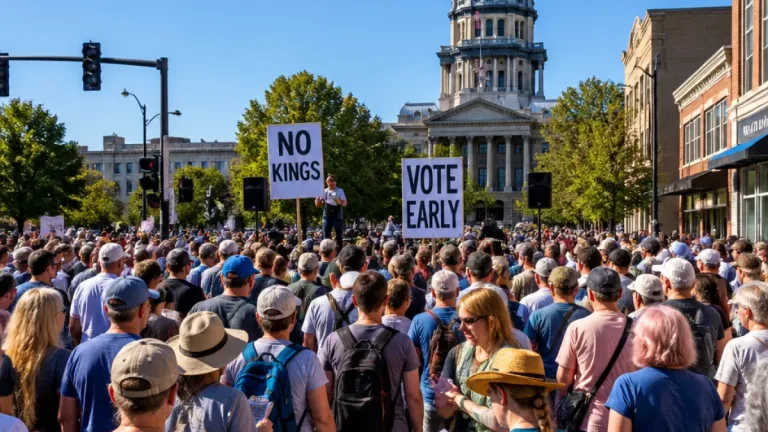
Supporters of the change have described elections as a path toward more democratic control and increased community participation. The campaign, however, has demonstrated that elected seats can also bring the familiar features of city politics: aggressive messaging, competing alliances and large-scale fundraising. The contest includes attack advertising and campaign war chests reaching seven figures, according to the source material.
| Previous structure | New structure |
|---|---|
| Seven-member board chosen by the mayor | 21-member board elected through a two-year transition |
| Appointments governed the board’s membership | Campaigns and voters will determine board members |
Campaign messages and controversy
The leading candidates for board president have used sharply contrasting messages. Victor Henderson recently posted an AI-generated Facebook video portraying opponents as serving their financial backers. In the video, former Chicago Teachers Union organizer Hilario Dominguez is shown with a bucket marked “CTU,” while former principal and current board member Jessica Biggs carries one labeled “billionaires.” Henderson’s own container is presented as representing CPS students. The video drew skepticism from some commenters, including one who questioned its use of artificial intelligence.
Each of the three candidates has also faced questions about past controversies. Biggs has repeatedly addressed her 2018 dismissal as a principal, which followed an inspector general finding that she changed attendance information and transported students without documentation. She has characterized those matters as limited bureaucratic problems. Dominguez confronted a reopened inquiry into allegations involving inappropriate behavior with a teenager in 2017; the inspector general ultimately did not substantiate the accusation. Henderson has faced scrutiny over a 2010 divorce filing in which his former wife accused him of abusing his teenage son.
“The nature of making these elected positions is the nature of making these people politicians,” said Brian Stryker, a local Democratic political consultant and pollster.
What voters are being asked to weigh
The race illustrates the central challenge of the new system: elections can broaden participation while also requiring candidates to operate in a political environment where personal records, endorsements and fundraising are closely examined. Jonathan Collins, an assistant professor of political science and education at Teachers College at Columbia University, summarized the rough nature of the contest by saying, “If you come to the swamp, you get muddy.”
- Representation: The new structure is intended to provide communities with a direct role in selecting school board members.
- Accountability: Candidates will face voters rather than relying solely on mayoral appointments.
- Political competition: Campaign spending, attack ads and controversies are now part of the board contest.
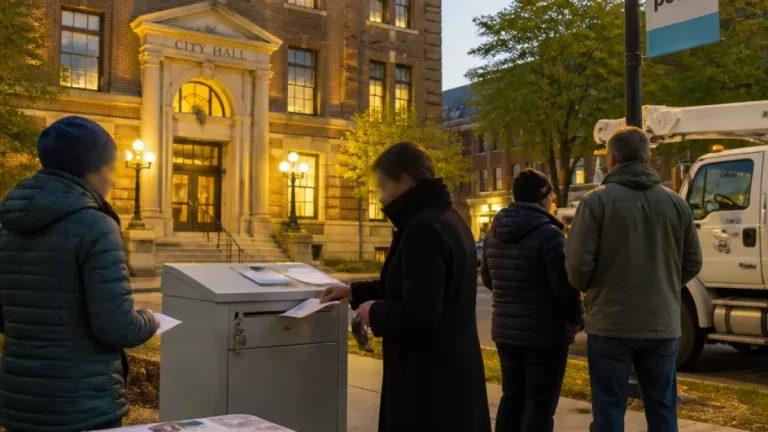
The upcoming vote therefore carries consequences beyond the individual candidates. It will help establish how a larger board functions, how members respond to neighborhood concerns and how school policy is debated in public. The transition also means Chicago residents will be watching whether the promised increase in community voice changes decision-making or simply transfers school governance into another form of citywide political competition.