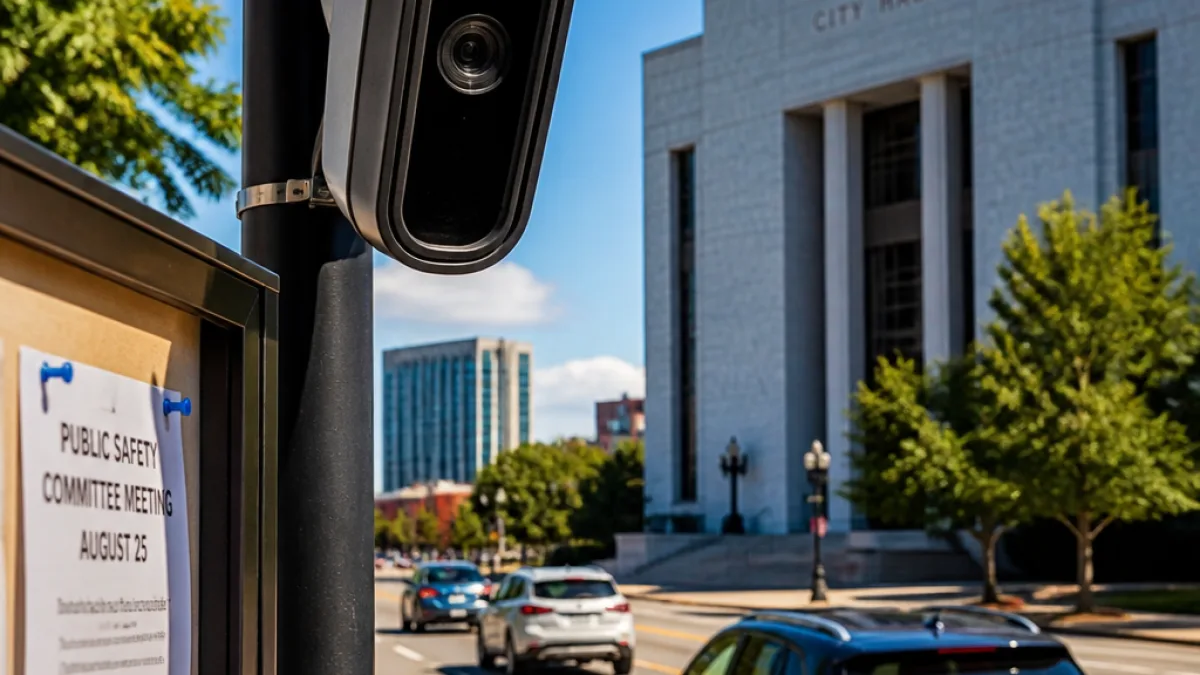
City review arrives after months of complaints about concert noise
Grand Rapids residents from downtown and surrounding suburbs say sound from concerts at the new Acrisure Amphitheater has carried into homes for months, spurring frustration and a demand for more say in how the venue is regulated. The City Commission will consider a change Oct. 27 that would eliminate the amphitheater from the city's existing noise ordinance rather than impose stricter decibel limits on the venue.
Neighbors described hearing full performances, including lyrics, bass and crowd noise, from well outside the facility during shows this summer. One longtime resident said he could hear a Kesha concert from about a half-mile away.
"I want residential input because we haven’t had any," said Hal Froot, a 72-year-old resident who has complained about the sound. "What are we asking for? An environment where we’re respected, where residents have the ability to enjoy living in our homes."
How local rules apply
City officials say the amphitheater was never intended to be governed by the municipal noise ordinance, which sets a 62-decibel cap used for typical neighborhood noise enforcement. Instead, sound from events at the 12,000-seat outdoor venue is controlled through a separate city permit that authorizes higher levels for concerts.
Under that permitting framework, event sound is limited to 105 decibels, measured at three locations inside the facility. Officials have acknowledged receipt of resident complaints and say the city has shared the concerns with the venue owner, which the city described as open to dialogue.
"The city has heard the community’s concerns," said city spokesman Steve Guitar.
Attendance and impact
City and arena authority figures point to early attendance figures as evidence the venue has drawn large crowds in its inaugural season. The arena authority had hoped for roughly 300,000 visits, and through 49 shows the amphitheater drew about 400,000 patrons. Acts on the schedule included national touring artists who routinely perform at high-volume outdoor venues.
- Venue capacity: 12,000 seats
- Reported inaugural-season attendance: approximately 400,000 across 49 shows
- Permitted concert sound level under event permit: 105 dB (measured at three points inside)
| Item | Detail |
|---|---|
| Municipal noise ordinance limit | 62 dB |
| Event permit sound cap | 105 dB (inside facility) |
| Seating | 12,000 |
| Reported inaugural attendance | ~400,000 (49 shows) |
Residents seek involvement, possible remedies
Some residents said removing the amphitheater from the noise ordinance feels like a disregard for their concerns. They expressed a desire for a process that allows more direct input into how events are regulated or for monitoring and mitigation measures that reduce sound impacts beyond the facility footprint.
The city said it is working with the venue operator — the Grand Rapids-Kent County Convention/Arena Authority — to exchange information and prepare for next year's season. No specific mitigation measures have been announced publicly, and officials offered no timeline for additional changes beyond the Oct. 27 commission meeting.
What action may mean for neighbors
If the City Commission approves the proposed change to remove the amphitheater from the noise ordinance, enforcement of sound levels at concerts would continue to rely on the permit terms and any contractual conditions the venue accepts. That could limit the applicability of neighborhood noise rules but would keep the 105-decibel cap as the main regulatory tool.
Residents and neighborhood groups will be watching the commission meeting for signs that the city will expand monitoring, require additional sound mitigation, or create formal channels for community input. The issue highlights a broader tension cities face when balancing large-scale cultural and economic development projects with the daily quality-of-life concerns of nearby residents.
Public comment at the City Commission meeting on Oct. 27 will be the next formal opportunity for residents to raise their concerns directly with elected officials before any change takes effect.