A late break in Michigan’s Senate contest
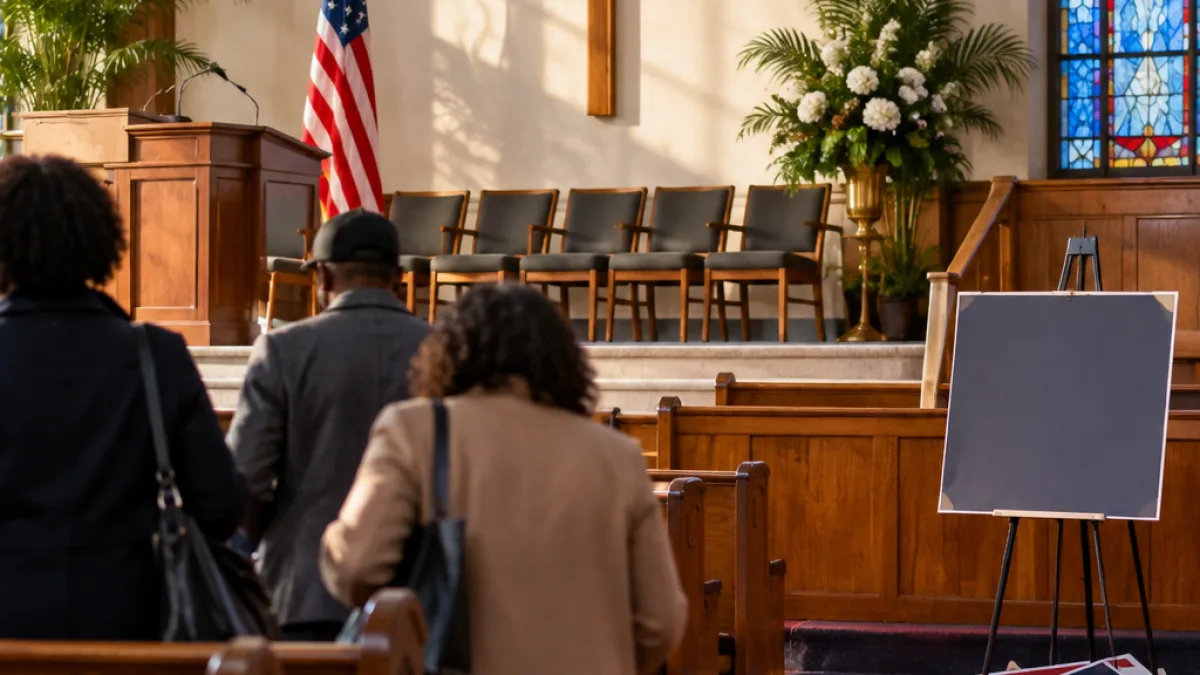
DETROIT — Michigan’s U.S. Senate race entered its final days under unusual strain Sunday when Democrat Haley Stevens appeared alongside Republican Mike Rogers at a Detroit church service, signaling support for the Republican candidate after Stevens lost the Democratic primary to Abdul El-Sayed.
The appearance came as the contest approached Tuesday’s election, a vote that could help determine the balance of power on Capitol Hill. Stevens had been expected to participate in a separate church event with El-Sayed and U.S. Rep. Jim Clyburn, D-South Carolina, but that plan collapsed after a dispute involving Israel and a campaign advertisement by an outside group became a public fight between the two Democrats.
El-Sayed defeated Stevens in the August Democratic primary by a narrow margin. The former Michigan public health official is now facing Rogers, the Republican nominee, in a closely contested general election. Stevens’ decision to appear with Rogers gives the Republican campaign a prominent Democratic figure’s support while underscoring the depth of the disagreement inside the Democratic Party during the closing stretch.
Dispute over Israel reshapes final campaign days
Stevens, who has criticized El-Sayed’s statements concerning Israel, said in a Friday statement that the Democratic nominee should address the issue differently. Her fiancé also said last week that he planned to vote for Rogers, arguing that El-Sayed had not adequately responded to concerns among the Jewish community.
“Abdul promises to get money out of politics,” Stevens wrote. “He can begin by getting Israel out of his explanation for everything Michigan cannot afford.”
The statement reflects the central point of the rupture: Stevens and her allies have challenged El-Sayed over how he discusses Israel and related issues, while the nominee has campaigned on removing the influence of money from politics. The dispute has moved beyond policy disagreement and into a public confrontation over whether the party can present a unified ticket before voters make their choice.
Planned Democratic appearance is canceled
Debbie Dingell, the Michigan congresswoman who helped arrange the planned appearance involving El-Sayed, Stevens and Clyburn, said she asked Stevens not to attend. Dingell said Stevens agreed to follow that request. The congresswoman described the decision as an effort to keep the church service from being overtaken by the conflict.
“I’m the one who pulled it because it had become way too distracting,” Dingell said.
Dingell also said the bishop had become upset because the gathering was intended to be a genuine church service. Her comments offer a measure of how quickly a get-out-the-vote appearance had become a liability for the organizers, with the disagreement threatening to dominate the event rather than reinforce the Democratic nominee’s campaign.
| Development | What happened |
|---|---|
| Democratic primary | El-Sayed narrowly defeated Stevens in August. |
| Sunday appearance | Stevens joined Rogers at a Detroit church service. |
| Planned Democratic event | A joint appearance involving El-Sayed, Stevens and Clyburn was called off. |
| General election | El-Sayed and Rogers are competing ahead of Tuesday’s vote. |
Separate services, separate messages
While Stevens appeared with Rogers, El-Sayed attended a different church service with prominent Michigan and national Democrats. That gathering was intended to show party unity, but the public exchange involving the two former primary rivals has overshadowed the effort.
The competing appearances created a stark visual contrast in Detroit. El-Sayed’s allies sought to demonstrate that Democratic leaders remained behind the nominee, while Stevens’ presence with Trump-endorsed Rogers showed that the primary contest had not produced a simple transition to general-election unity.
Turnout concerns in key constituencies
Democrats are working to increase participation among Black and Jewish voters in important Michigan strongholds. The conflict over the canceled appearance and Stevens’ support for Rogers now unfolds against that turnout effort, placing additional attention on whether the party’s late-stage public dispute affects its ability to mobilize voters.
- El-Sayed is the Democratic nominee after winning the August primary.
- Rogers is running as the Republican candidate and has President Donald Trump’s endorsement.
- Stevens’ public support for Rogers followed the cancellation of a planned joint Democratic appearance.
- The dispute has centered in part on Israel and El-Sayed’s comments about the issue.
The source of the disagreement is not merely an internal campaign scheduling problem. The argument has become part of the election itself, giving voters a late look at the tensions that can follow a closely decided primary. Stevens’ move also places her at odds with the Democratic nominee just as party leaders are trying to turn attention toward the general election and the Senate stakes.
Race remains unsettled before Tuesday
Rogers’ appearance with Stevens gives the Republican campaign a moment of prominence in a race described as tight. El-Sayed, meanwhile, is relying on the support of Democratic officials and other prominent figures as he attempts to move beyond the primary conflict and focus voters on the general-election choice.
With only days remaining, the candidates face different challenges. Rogers can point to support from Trump and now from Stevens, a former Democratic primary rival. El-Sayed must consolidate Democrats after a bruising nomination contest while sustaining efforts aimed at Black and Jewish voters. The competing church services illustrate the competing political realities confronting both campaigns.
Voters will decide Tuesday whether Michigan’s Senate seat goes to El-Sayed or Rogers. Until then, the campaign’s final debate is taking place as much within Democratic ranks as it is between the two nominees.