
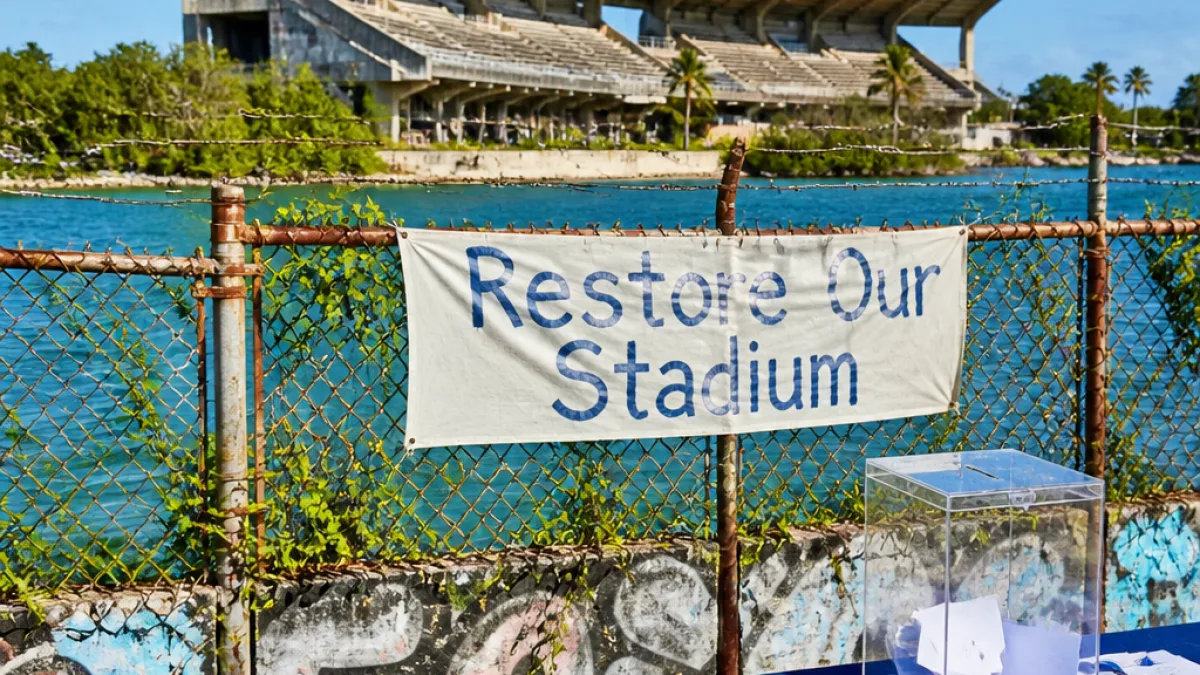
Decision on Virginia Key landmark could reshape waterfront and civic memory
The fate of the Miami Marine Stadium, a midcentury Brutalist structure overlooking Biscayne Bay, rests with Miami voters this week as they consider a measure that would allow the city to enter a partnership with a private company to restore and reactivate the long-shuttered venue.
Opened in 1963 and designed by Cuban refugee architect Hilario Candela, the 6,500-seat stadium was built specifically for powerboat racing and became a cultural touchstone for South Florida. It hosted concerts, political rallies and religious gatherings, and served as the backdrop for Elvis Presley’s 1967 film Clambake. The venue also drew performers including Gloria Estefan and the late Jimmy Buffett, who appeared on a movable floating stage.
Damaged during Hurricane Andrew in 1992, the facility was closed for public events and has since fallen into disrepair. The site remains fenced off and covered in graffiti even after being listed on the National Register of Historic Places in 2018.
"It encapsulated a time period in Miami that’s incredibly unique with an incredible story that touches all Miamians," said Miami Commissioner Damian Pardo. "So this is really a place that connects with Miami at a very deep and personal level."
What voters are being asked to allow
The ballot measure would permit the city to negotiate and enter into a public-private partnership to rehabilitate the stadium and return it to active use. Proponents argue the partnership could bring private money and development expertise needed to repair the structure while preserving its historic character. Opponents have raised questions about the scope of private involvement, potential commercial use of a public waterfront asset and long-term maintenance responsibilities.
- Opened: 1963
- Capacity: 6,500 seats
- Closed after damage from Hurricane Andrew: 1992
- Added to National Register of Historic Places: 2018
- Designer: Hilario Candela (died 2022)
Local context and implications
For many Miami residents, the stadium is more than an architectural landmark. It figured in political and civic life — President Richard Nixon and entertainer Sammy Davis Jr. shared a 1972 stage there — and it hosted religious observances such as Easter sunrise services and festivities honoring Our Lady of Charity, an important figure for Cuban and Cuban American communities.
Supporters contend restoring the stadium would revive a rare piece of Miami history and create a venue for cultural events, boosting tourism and neighborhood pride. They point to the building’s distinctive cantilevered roof and waterfront setting as assets that could anchor broader Virginia Key revitalization efforts.
Critics warn that partnerships with private firms can shift control away from the public and may favor commercial programming over community use. Questions also remain about the costs of stabilization and restoration, environmental factors tied to the waterfront location and the timeline for reopening.
Historic significance and stewardship
The stadium’s inclusion on the National Register of Historic Places in 2018 recognized it as an ambitious example of midcentury modern architecture and a symbol of Miami’s multicultural evolution in the 1960s. Architect Hilario Candela, who designed the facility in his late 20s after arriving from Cuba, spent years advocating for its preservation before his death in 2022.
| Year | Event |
|---|---|
| 1963 | Stadium opened |
| 1967 | Featured in Elvis Presley film "Clambake" |
| 1992 | Closed after Hurricane Andrew damage |
| 2018 | Added to National Register of Historic Places |
| 2022 | Designer Hilario Candela died |
Tuesday’s vote will determine whether the city can pursue a private partnership to restore the stadium. Depending on the outcome, Miami faces decisions about funding, programming, and long-term stewardship for a structure many residents consider emblematic of the city’s midcentury identity and waterfront culture.
As voters weigh the measure, the conversation around the stadium raises broader questions about preserving historic public assets, the role of private capital in civic projects and how best to balance cultural memory with future use.

















