
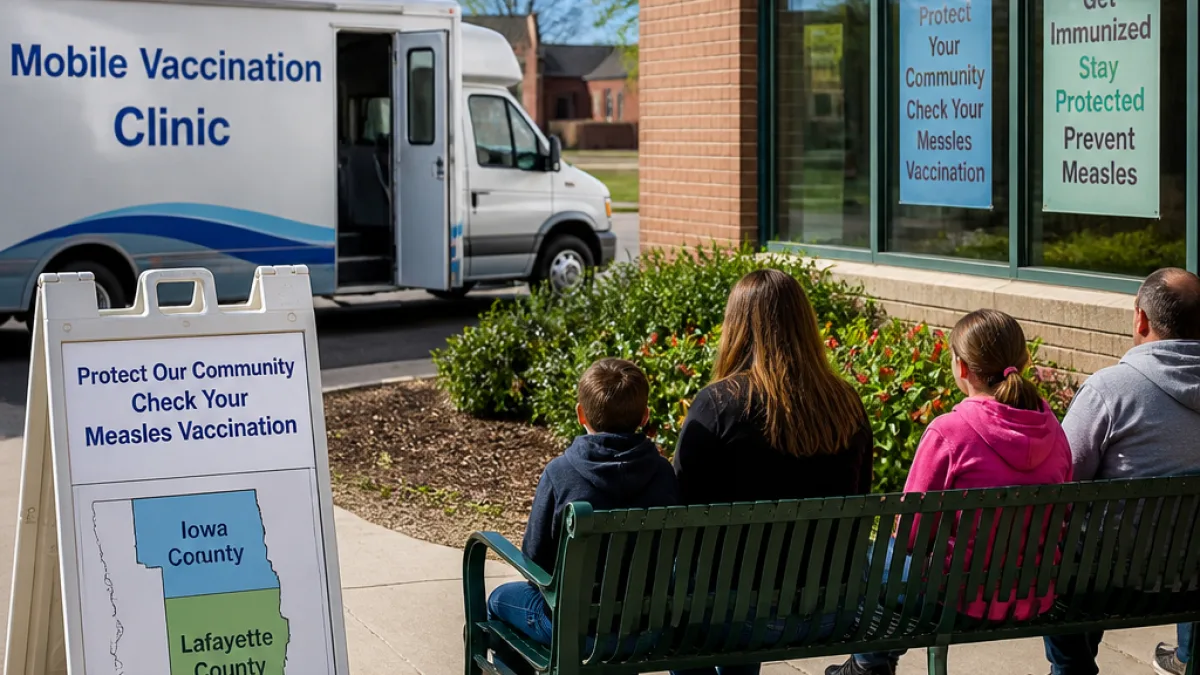
State health officials confirmed Thursday that a measles outbreak in southwestern Wisconsin has grown to 15 confirmed cases and six probable cases, and they said community transmission is likely ongoing.
Scope of the outbreak
The Wisconsin Department of Health Services said the newest counts include 13 confirmed cases identified in Iowa County as well as six probable cases there, part of an outbreak that has spread through multiple communities in the region. Officials told reporters Thursday that two earlier cases were identified in Iowa and neighboring Lafayette counties and that both appeared to have been exposed inside Wisconsin.
No hospitalizations linked to the outbreak have been reported so far, according to state officials.
Officials warn of local spread
"The rapid emergence of these cases, particularly among people who have not traveled outside of Wisconsin, indicates that there is active local transmission," said Ryan Westergaard, chief medical officer and state epidemiologist for communicable diseases for the Wisconsin Department of Health Services.
Westergaard told reporters it is "very likely that additional cases exist in the community that have not yet been identified or reported to public health." He also said no specific public locations have been identified where exposures occurred.
Who is being affected
Health officials reported that most of the people infected in the outbreak are unvaccinated children and teenagers. The state measles dashboard indicates that all but one of this year’s Wisconsin cases involve people who were unvaccinated.
The pattern mirrors national trends: the U.S. has experienced an unusually large number of measles cases this year. Federal Centers for Disease Control and Prevention data show nearly 2,500 cases nationally so far in 2026, the highest total since 1991.
Public-health response and recommendations
State and local public-health officials are investigating links between cases and working to identify anyone who may have been exposed. Because measles is highly contagious, health authorities emphasized that more infections are likely to be discovered as the investigation continues.
- Most people who have contracted measles in recent outbreaks were unvaccinated or had unknown vaccination status.
- Authorities have not identified public locations tied to exposure in this cluster.
- No hospitalizations have been reported in this Wisconsin outbreak so far.
Public-health officials have urged people to check their vaccination records and to seek medical advice if they have symptoms consistent with measles, especially if they are unvaccinated or uncertain of their vaccination status. Symptoms typically include fever, cough, runny nose, red eyes and a rash.
Data snapshot
| Measure | Count |
|---|---|
| Confirmed Wisconsin cases (outbreak) | 15 |
| Probable Wisconsin cases | 6 |
| Confirmed cases in Iowa County (included above) | 13 |
| U.S. cases so far in 2026 | ~2,500 |
Officials said vaccination coverage has declined in some communities, a trend seen nationally that has contributed to the resurgence of measles this year. The state dashboard and public-health notices remain the best sources for updated information on case counts and any identified exposure locations.
As the investigation continues, residents in southwestern Wisconsin are being asked to remain alert for symptoms and to contact health providers if they suspect measles. Health officials said prompt identification and isolation of cases, plus immunization of susceptible contacts, are central to limiting spread.
WE NEWS will update this report as state and local health departments release more information.

















