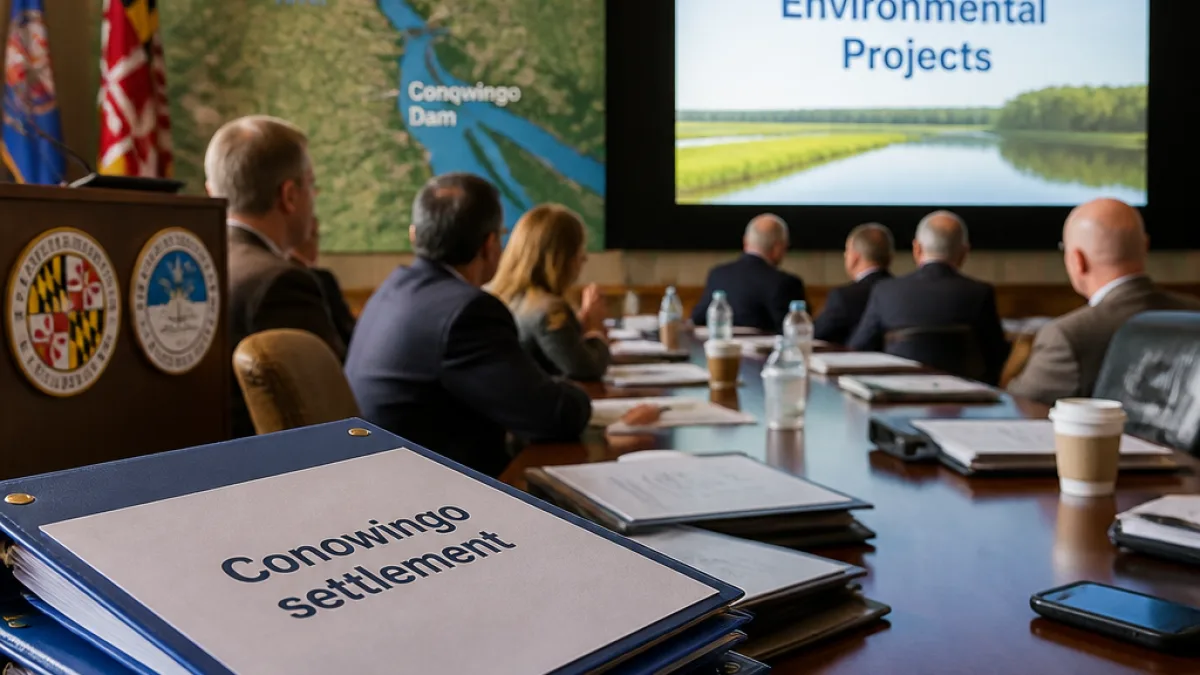
Leaders from rural Maryland counties, state environmental officials and representatives from Constellation Energy gathered Thursday at the Maryland Association of Counties conference in Ocean City to outline a cooperative approach to implementing a high-profile agreement tied to the Conowingo Dam.
From opposition to advisory cooperation
Until recently, several Republican county officials had opposed the deal, joining together as the Clean Chesapeake Coalition to challenge Maryland’s revised water quality certification for the hydroelectric dam in Cecil County. That dispute stemmed from long-standing concerns about sediment releases and their impacts on downstream water quality.
Those tensions have eased, county officials said, and the coalition has been replaced by an advisory body designed to work alongside state regulators and Constellation on putting the settlement into practice. The shift was described as a move away from litigation and toward collaboration.
"We pivoted to: Let's try to work together," Cecil County Administrator Dan Schneckenburger said. "We've always been on different sides of this issue — maybe not addressing it the way we wanted to see it addressed. So we ultimately said, 'Let's put together an advisory group, and we can work on implementation of the settlement.'"
What the settlement includes
The central component of the agreement is a commitment from Constellation Energy to fund environmental projects over multiple decades, totaling $340 million. In return, Maryland issued a revised certification intended to address water quality concerns tied to the dam’s operations.
- Payment amount: $340 million for environmental projects
- Dam location: Conowingo Dam, Cecil County
- License pending: FERC consideration of a new 50-year license for the dam
Federal approvals could change the plan
Despite local signs of cooperation, the settlement is not yet final. The Federal Energy Regulatory Commission (FERC) must still decide whether to accept Maryland’s certification and whether to grant the dam a new 50-year operating license. That decision could affect how — or whether — the terms of the state-level agreement move forward.
Complicating matters further, the U.S. Environmental Protection Agency, under a proposal issued in January by the Trump administration, has suggested restricting how states use Clean Water Act Section 401 certifications. State officials warned that such a federal rule could curb Maryland’s authority to attach conditions to certifications — potentially unraveling elements of the Conowingo arrangement.
Local impact and next steps
County leaders at the conference emphasized a focus on implementation: turning the settlement’s funding into concrete projects that improve downstream waterways and shorelines. The advisory group is expected to advise on priorities and oversight, though specific project lists or timelines were not detailed at the session.
State environmental officials earlier persuaded the counties to drop legal challenges to the certification, which cleared a key hurdle for the settlement to proceed at the state level. With litigation off the table for now, the parties say they can concentrate on addressing the sediment and water-quality issues that have drawn public concern for years.
Why the stakes remain high
The Conowingo Dam sits at a critical point in the Chesapeake Bay watershed, and events at the site have at times sent large volumes of sediment downstream, affecting water clarity and aquatic habitat. The settlement’s funding is aimed at mitigating those impacts through projects across the watershed, but the efficacy of such measures will depend on how the advisory group prioritizes interventions and how federal regulators rule on the license and certification authority.
| Item | Status |
|---|---|
| Settlement funding | $340 million committed by Constellation |
| State certification | Revised and issued by Maryland |
| Federal review | Pending FERC decision and potential EPA rule impacts |
Officials at the conference described the tone of discussions as markedly more cooperative than a year ago, but they cautioned that federal actions could still change the outcome. For now, local and state leaders say their priority is to convert the settlement dollars into projects that will reduce sediment and improve water quality throughout the Chesapeake watershed.
Coverage continues as FERC and federal agencies move forward with their reviews; WE NEWS will report developments that affect the implementation timeline or the scope of environmental projects funded under the agreement.