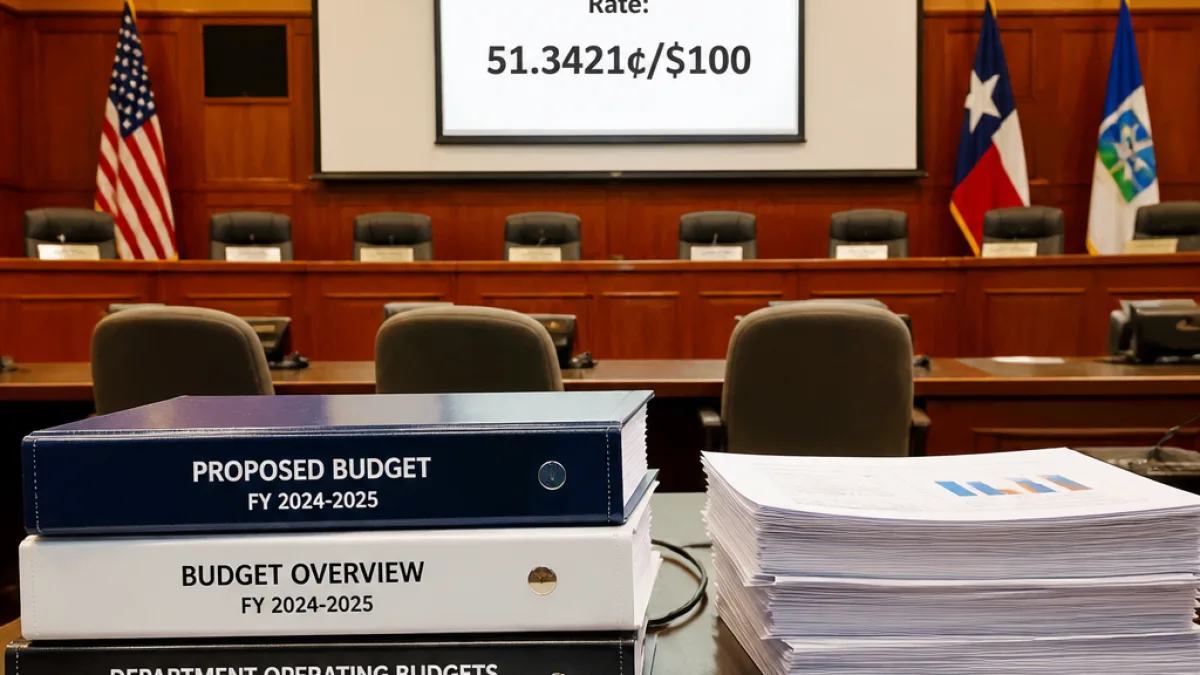
The Lubbock City Council on Tuesday set a maximum property tax rate of 51.3421 cents per $100 valuation, a procedural cap that gives the council room to adopt a lower rate later but prevents any increase above that ceiling. The move is part of the council’s ongoing summer budget process as city leaders review proposals and prepare to prioritize services and contracts for the coming year.
Why the ceiling matters
Setting the maximum rate is a required step in the timeline for adopting the city budget. Mayor McBrayer thanked City Manager Jarrett Atkinson for what he called an “extremely difficult and long process” of preparing budget materials for council review, and urged fellow council members to weigh community needs against the burden of taxation.
“It’s not an easy thing to do, to balance the needs that we feel and the needs that come to us from the citizens and then our responsibility as we levy a tax on them,” the mayor said.
Councilman Tim Green highlighted one major factor complicating revenue projections: statewide changes approved by voters last fall under Proposition 9, which raised the business personal property exemption from $2,500 to $125,000. City presentations to council noted that these exemptions trimmed the city’s taxable value by $29 million last fiscal year and will reduce it by about $436 million in the upcoming year.
Local revenue impacts
That reduction in taxable value has a direct fiscal impact: the exemptions subtract approximately $1.5 million in potential tax revenue from the city’s coffers for the coming year, according to the material presented to council. City staff pointed out that total taxable value across Lubbock actually decreased from last year to this year despite new property and annexed parcels being added to the rolls.
- Maximum tax rate approved: 51.3421 cents per $100 valuation
- No-new-revenue rate presented: 47.5154 cents per $100 valuation
- Last year’s adopted no-new-revenue rate: 47.2191 cents
- Exemptions reduced taxable value by: $29 million (last fiscal year) and $436 million (upcoming year)
- Estimated lost city tax revenue due to exemptions: ~$1.5 million
| Measure | Value |
|---|---|
| Maximum rate set | 51.3421¢ per $100 |
| No-new-revenue rate (this year) | 47.5154¢ per $100 |
| No-new-revenue rate (last year) | 47.2191¢ per $100 |
Because the no-new-revenue rate — the rate that would generate the same revenue as the previous year absent new value — rose this year, staff warned that maintaining services at current levels will be more complicated. The increase in the no-new-revenue rate stems primarily from the large jump in exemptions that removed substantial taxable value from the base used to calculate municipal property taxes.
Budget choices ahead
Council members must now determine priorities as staff refines the budget. Among items under consideration are compensation and labor agreements; staff noted that approval of proposed budgets together with “meet-and-confer” agreements with fire and police would affect homeowner bills. City presentations illustrated how different policy choices translate to changes in tax rates and household payments.
The maximum rate set Tuesday is not an automatic increase — the council retains discretion to adopt a lower levy when it finalizes the budget. Still, the interplay of reduced taxable value, service needs and contract commitments means council will confront trade-offs before final adoption.
Public hearings and additional budget work sessions remain on the council’s calendar as staff and members work toward a final budget and tax rate. Residents who follow city finances should watch for scheduled meetings where the council will take public comment and vote on final numbers.