
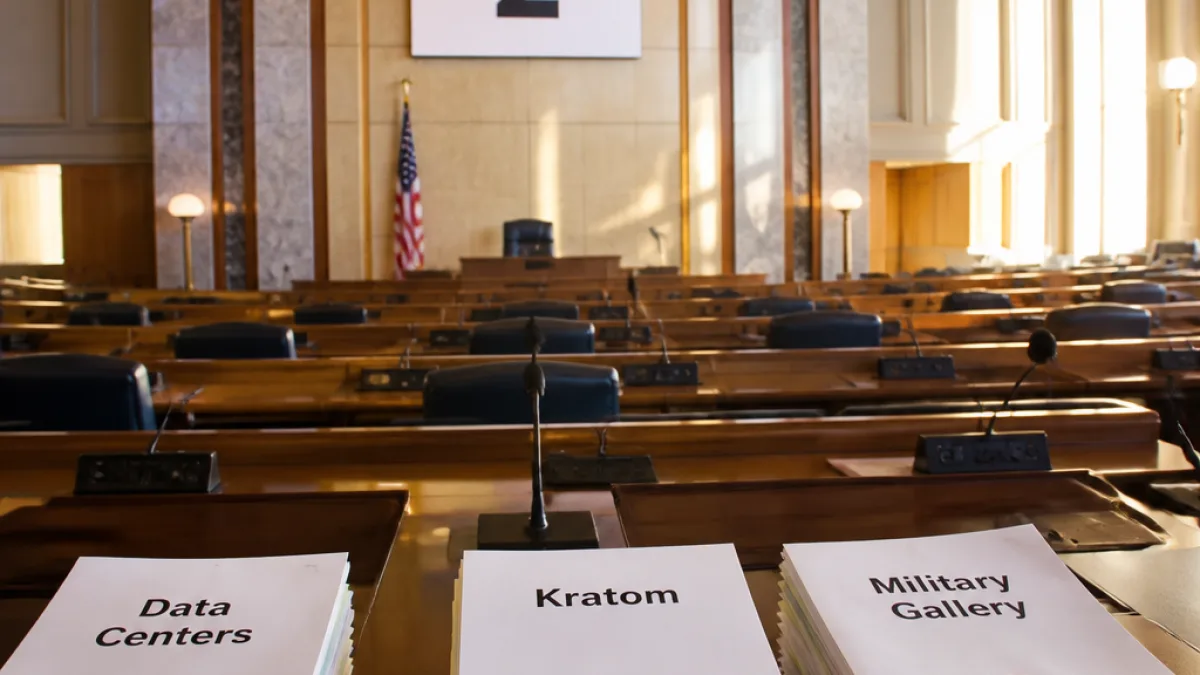
BISMARCK, N.D. — North Dakota lawmakers set a focused agenda Monday for a three-day special session called by Gov. Doug Burgum, advancing just six of 20 proposed bills and resolutions after hours of debate by legislative management.
Limited docket aimed at efficiency
Committee leaders said efficiency drove their decision to move forward a narrow slate of measures and leave the rest for the regular session in January. Of the 20 proposals considered, only six were approved for consideration when lawmakers reconvene on Sept. 2.
Among the items advanced were proposals addressing the state’s rapidly expanding data center industry, action on the unregulated botanical product kratom, and funding for a military gallery on the Capitol grounds. The committee also approved legislation that would change policies affecting data centers, including two of the three bills offered by Sen. Tim Mathern.
Data centers: moratorium and disclosure limits
Sen. Tim Mathern, a longtime lawmaker from the Fargo area, argued for a cautious approach to data center development.
“Data centers create potential economic benefits, but also great economic stressors and, if not done correctly, great harm,” said Mathern.
The committee moved forward a proposal to impose a temporary moratorium on new data centers and a separate measure to ban non-disclosure agreements between developers and local officials. Those two items were among the measures Mathern brought to the meeting and were among the handful advanced.
Supporters say pause-and-study measures would allow lawmakers to draft guardrails that protect local infrastructure and ratepayers while preserving potential economic benefits. Opponents — including some local economic-development advocates — have warned that strict, immediate limitations could chill investment.
Kratom regulation and the governor’s request
Also on the limited docket is the issue that prompted the governor to call the special session: regulation of kratom, a botanical product often sold as a supplement. Lawmakers approved consideration of legislation addressing the substance, which currently has limited oversight in many states.
The administration has said regulatory clarity is needed to protect consumers while allowing access where appropriate. The measure advanced by the committee will be formally debated during the special session.
Military gallery funding and other advances
Lawmakers approved consideration of a bill to fund a military gallery on the Capitol grounds. Committee leaders said the proposal concerns honoring veterans and creating a permanent display; specifics of funding and design will be part of the special-session debate.
While the committee endorsed six proposals, many other measures were set aside for the regular session. Among the rejected items were bills related to childcare funding for low-income families, regulation of prediction markets, additional limits on e-cigarettes and a proposal to require driver’s license exams be administered only in English.
“We could lose, I think, up to 50% of our childcare slots within the next two years,” Democratic Sen. Kathy Hogan warned of a childcare funding proposal that did not advance. “It’s kind of a doom-and-gloom projection. But if we can have consideration of this bill during the special session, we can begin to develop a plan to stabilize childcare for the lowest-income families only.”
High-profile resolutions left behind
The committee also declined to advance a clemency resolution by Sen. Jeff Magrum concerning convictions tied to the 1983 Medina shootout, where two U.S. marshals were killed. That resolution and other high-profile items will not be part of the special-session timetable.
What to expect in early September
Lawmakers said they hope to complete their work during the three-day session beginning Sept. 2. With a compressed calendar, debate is likely to focus tightly on the measures the committee advanced, and on reaching compromise language quickly.
For residents and businesses, the session’s most immediate effects could come from data-center rules that influence siting and contractual transparency, and from kratom regulation that could affect retail availability. Local governments watching potential impacts on roads, utilities and property tax bases will be looking closely at any moratorium language and at discussions on developer agreements.
- When: Lawmakers will reconvene Sept. 2 for a special session expected to last up to three days.
- How many measures advanced: Six of 20 proposed bills and resolutions were approved for consideration.
- Notable topics on the docket: data centers (including a temporary moratorium and NDA ban), kratom regulation and funding for a military gallery.
| Topic | Action by committee |
|---|---|
| Data centers | Two proposals advanced (temporary moratorium; ban on NDAs) |
| Kratom regulation | Advanced for consideration |
| Military gallery funding | Advanced for consideration |
The restrained agenda reflects lawmakers’ desire to limit the special session to issues deemed urgent or time-sensitive. Those who argued to defer more measures said a full review during the regular session would allow broader public input and more legislative deliberation.
Lawmakers and stakeholders will now prepare for expedited committee hearings and floor debate in Bismarck next month as the state attempts to resolve the handful of items deemed urgent enough to require action outside the normal legislative calendar.
Copyright 2026 KFYR. All rights reserved.
















