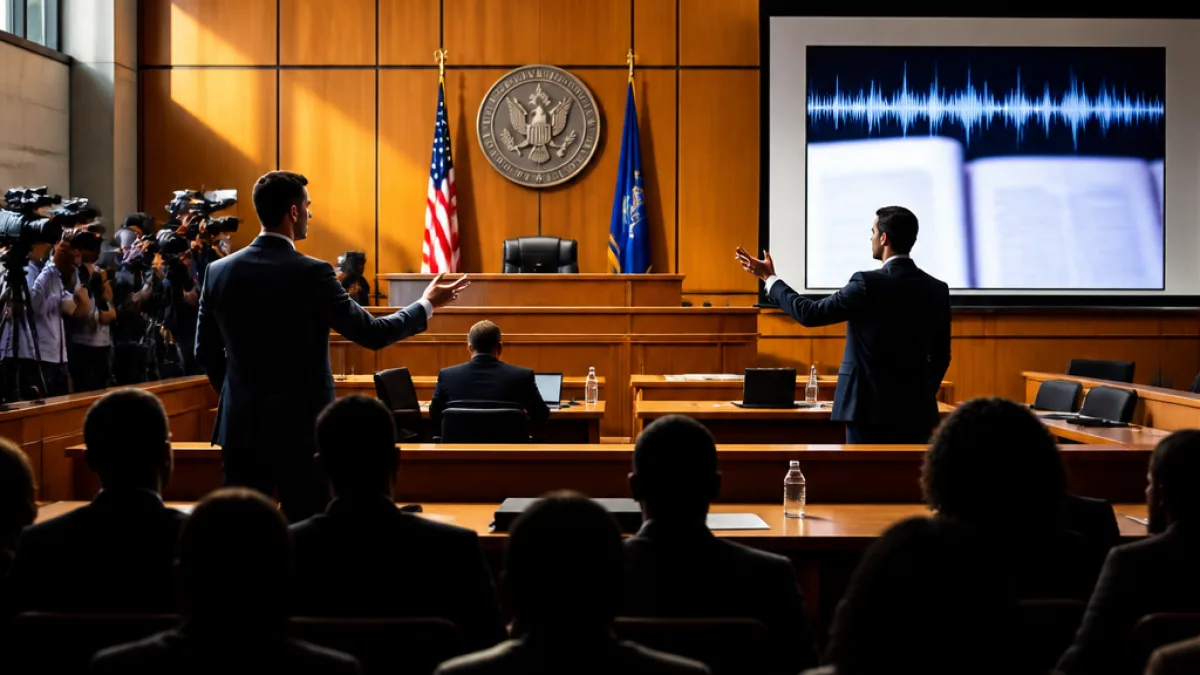
The trial of Duane “Keffe D” Davis reached closing arguments this week in a Las Vegas courtroom, bringing to a head a prosecution that rests largely on the defendant’s own public statements and recordings. Davis, 63, is accused of arranging the 1996 killing of rapper Tupac Shakur and has pleaded not guilty.
Prosecution emphasizes Davis’s recorded accounts
Clark County prosecutors presented a case built around Davis’s media appearances, a 2019 memoir and recorded conversations with investigators. Over the course of the weeks-long trial, the state called 25 witnesses, according to court proceedings.
Prosecutors Marc DiGiacomo and Binu Palal placed particular weight on hours of recordings in which Davis himself described his role in planning retaliation tied to an earlier altercation in Las Vegas.
Prosecutors played eight hours of recordings taken from four separate events in different years. Those tapes, the prosecution argued, show Davis acknowledging he organized the attack after the beating of his nephew, Orlando “Baby Lane” Anderson, in the MGM Grand lobby on the night of Sept. 7, 1996.
“He has essentially admitted to arranging Shakur’s killing,” prosecutors told the court, arguing that under Nevada law such an admission can support a murder charge.
Defense frames statements as self-serving and exaggerated
Defense attorney Michael Sanft urged jurors to view Davis’s statements with skepticism, characterizing the memoir and media accounts as the embellishments of a man seeking attention or profit. Sanft argued the accounts were inconsistent with the burden of proof required for a criminal conviction.
Much of the defense’s strategy at trial involved countering the weight the jury should assign to retrospective recollections, public interviews and the contents of recorded conversations played for the jury.
Events of the night remain central to the case
The prosecution’s timeline revisits a widely reported sequence of events from September 1996: after attending a boxing match at the MGM Grand, Tupac Shakur and Marion “Suge” Knight were stopped at a red light when a white Cadillac pulled up alongside their vehicle. The prosecution contends that the Cadillac carried men sent to retaliate for the earlier beating of Anderson, a member of a rival Compton gang.
Anderson later died in an unrelated 1998 shootout. The killing of Shakur, a global music figure, has remained an open wound in popular culture for decades and has drawn renewed attention as this case moved through Las Vegas courts.
- Defendant: Duane “Keffe D” Davis
- Age: 63
- Charges: Murder for allegedly arranging Tupac Shakur’s killing
- Evidence highlighted: Memoir (2019), media interviews, and recorded statements
| Trial detail | Reported figure |
|---|---|
| Witnesses called by prosecution | 25 |
| Hours of recordings played | 8 hours from 4 events |
| Relevant date of incident | Sept. 7, 1996 |
The case has underlined challenges prosecutors face when relying heavily on later statements and public admissions as principal evidence. Prosecutors told jurors the recorded accounts are consistent and represent Davis admitting he ordered the retaliation. The defense contends the statements are inconsistent, self-aggrandizing and insufficient to meet the legal standard of proof beyond a reasonable doubt.
As closing arguments concluded, jurors were preparing to deliberate on a case that has drawn national attention because of the fame of the victim and the years-long mystery surrounding his death. For Las Vegas, the trial has put a spotlight on how local courts handle high-profile, decades-old crimes that intersect with national culture and media narratives.
Verdict timing will depend on jury deliberations. Court filings and testimony presented at trial will remain part of the public record as the case moves toward a resolution.