New Lansing facility starts production, eyes both energy storage and electric vehicles
The largest battery manufacturer in North America announced the start of production Tuesday at its new manufacturing complex on the southeast side of Lansing, a move company and state officials said will deepen Michigan’s role in both electric vehicle supply chains and grid-scale energy storage.
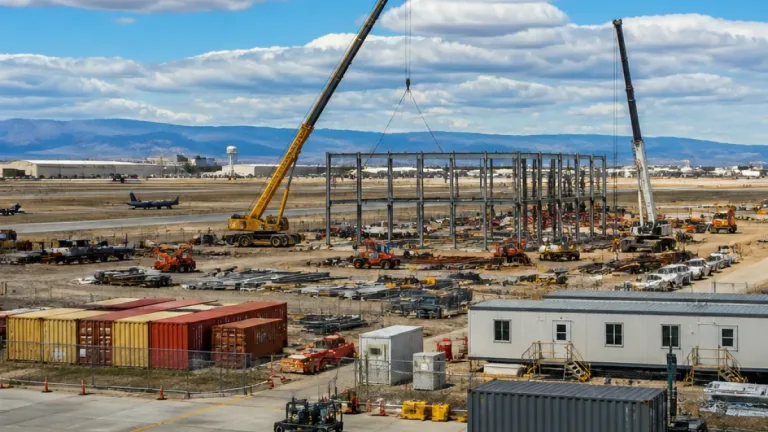
LG Energy Solution’s Michigan-Lansing plant occupies 226 acres and is designed to make large-format cells for two markets: lithium-iron phosphate (LFP) cells intended for energy storage systems (ESS) and higher-energy nickel-manganese-cobalt (NMC) cells for automotive use. At full-scale production, the facility is expected to reach more than 35 GWh of annual capacity and to employ up to 1,700 people, the company said.
- Site size: 226 acres
- Planned capacity: 35 GWh+ annually at full-scale
- Expected employment: 1,700 jobs at full-scale
- Products: LFP cells for ESS and NMC cells for EVs
LG Energy Solution will supply LFP cells to its U.S. energy storage division, Vertech, which integrates cells into complete systems used for utility, grid-scale and commercial applications. NMC cells produced at Lansing are designated for automakers, including Toyota, and are expected to power vehicles such as the 2027 Toyota Highlander EV, according to the company. Toyota assembles that model at Toyota Motor Manufacturing Kentucky in Georgetown, Ky.
“Michigan is open for business and creating good-paying jobs building the future of cars, chips, and batteries,” said Michigan Gov. Gretchen Whitmer.
The company and state officials framed the plant as a reinforcement of domestic battery supply chains and a way to help automakers meet U.S. content requirements. Executives and elected officials attended the plant’s opening, including Gov. Whitmer, U.S. Secretary of the Interior Doug Burgum, U.S. Rep. Tom Barrett and Sangwoo Hong, Consul General of the Republic of Korea in Chicago.
Local and regional effects
For Lansing, the plant represents an infusion of manufacturing activity tied to two fast-growing sectors: electrified transportation and stationary energy storage. The stated 1,700-job potential is an important figure for local labor markets, but company and state officials have not provided a timeline for when full-scale employment or the planned capacity will be reached.
Because the facility produces both LFP and NMC chemistries, operators and suppliers in the region may see demand for a range of inputs — from battery-grade raw materials and cell components to equipment, logistics and maintenance services. The company’s emphasis on domestic content aims to reduce reliance on overseas supply chains, a matter of policy importance for state and federal leaders focused on reshoring critical industries.
| Attribute | Detail |
|---|---|
| Facility size | 226 acres |
| Annual capacity target | More than 35 GWh |
| Full-scale employment | Up to 1,700 jobs |
| Product lines | LFP cells for ESS; NMC cells for EVs (Toyota) |
Officials said Lansing-made batteries will help customers meet U.S. domestic content requirements, a point likely to be cited by automakers planning electric vehicles in North America. The plant’s dual focus — grid storage and transportation — positions it to serve utility customers as well as vehicle manufacturers, potentially broadening the local industrial base beyond traditional automotive assembly and proving grounds.
Questions remaining
While company leaders and elected officials celebrated the opening, several operational details remain unspecified publicly: the schedule for ramping cell output to the announced capacity, the breakdown of job types and wage levels among the prospective 1,700 positions, and the local sourcing plans for suppliers and contractors. Those details will matter to Lansing-area workforce planners and economic development officials as they assess longer-term community impacts.
LG Energy Solution has operated in Michigan for more than two decades, according to the company. The Lansing plant adds to the state’s cluster of battery and electric-vehicle manufacturing activity, reinforcing a trend state leaders have promoted as central to Michigan’s industrial future.
Local leaders and the company said the plant’s production start marks a new phase for Lansing manufacturing — one tied to both the electrical grid and the automobiles that will increasingly rely on domestically produced battery cells.