
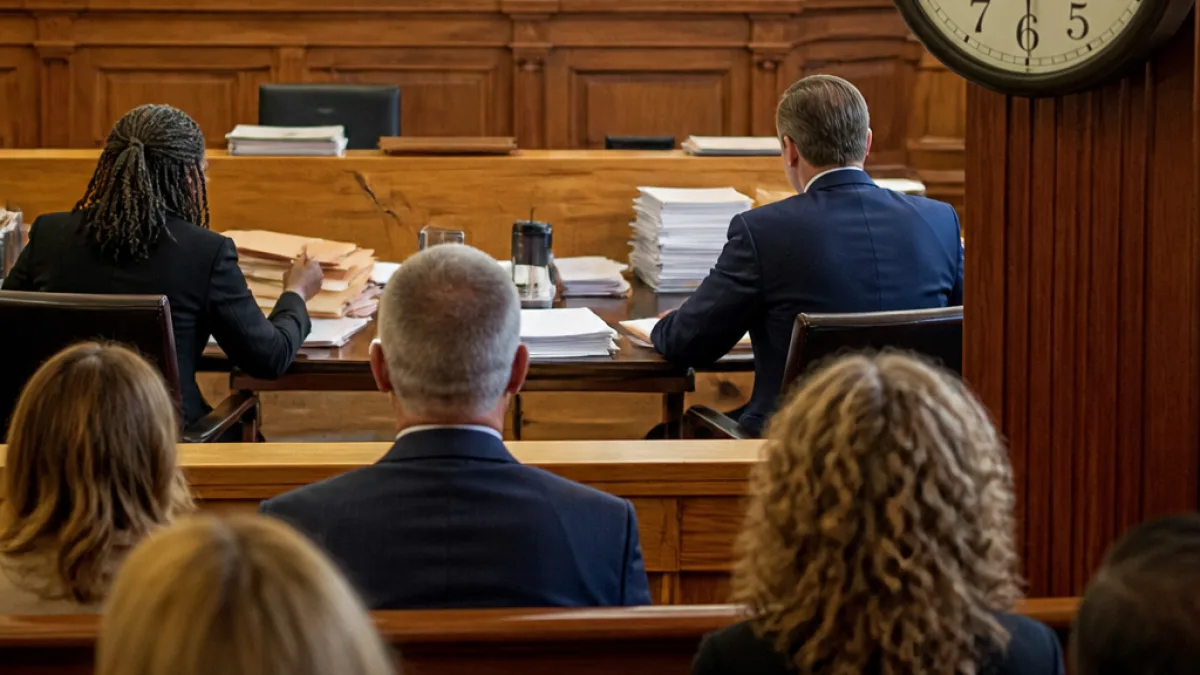
LINCOLN — A Lancaster County courtroom became the latest venue for disputes over who may appear on Nebraska ballots when attorneys for the state’s two major parties, two nascent parties and the secretary of state argued over whether the America First Party and the Nebraska Working People Party should be listed this fall.
Central questions: name, timing and who can object
At issue is a state law intended to prevent candidates or political groups from adopting names or labels that could confuse voters. During Wednesday’s hearing, lawyers probed whether the statute permits election officials to block a party petition on grounds that its name is too similar to an established party, and who has standing to lodge such objections.
Two separate lawsuits could determine whether either or both of the new parties appear on the November ballot. One case was brought by the Nebraska Republican Party against the America First Party. The other was filed by the Nebraska Democratic Party together with the national Working Families Party against the Nebraska Working People Party.
Advocates for the Nebraska GOP asked Lancaster District Court Judge Darla Ideus to authorize Nebraska Secretary of State Bob Evnen to reject the America First Party’s petition to form a party, arguing the name and related activity amounted to an effort to sabotage and confuse voters. In the second matter, Democrats and the national Working Families Party want Evnen to remove the Nebraska Working People Party from consideration because they say its name is too close to the Working Families Party.
Arguments over statutory language and deadlines
Lawyers for the America First Party countered that the statute allows objections to party names that resemble others in the state, and asserted that no existing party in Nebraska contains the words "America First" in its formal name. The America First Party’s attorney, Jason Grams, pressed back against characterizations by GOP lawyers linking his client to political maneuvers.
"The idea that somehow the Nebraska Republican Party owns the phrase 'America First' or owns conservative issues or conservatism itself is wrong,"
Attorneys representing the Nebraska Working People Party argued they have standing because the law allows parties to operate and object through the channels they pursued. They also asserted that only official parties with recognized status in the state may lodge certain objections — a contention that speaks directly to who may challenge whom under Nebraska election statutes.
Secretary of State Evnen, whose office oversees ballot access, has taken a nuanced position through his lawyer, Zachary Pohlman. Evnen contends he should be able to reject the America First Party petition but not the Nebraska Working People Party petition, asserting that the Democrats filed their objection too late under the statutory deadline. The objection deadline in question is seven days after July 15, a timing argument that echoes a recent Nebraska Supreme Court ruling.
Context from recent precedent
Evnen’s position tracks the Nebraska Supreme Court’s decision earlier this year in the dispute over former Democratic U.S. Senate candidate Cindy Burbank, where the high court overruled the secretary’s removal of her candidacy because Republicans had filed their objection after the deadline.
The Nebraska GOP’s lawsuit names John Cartier as the organizer of the America First Party and characterizes his effort as "political sabotage," pointing to his connections to other campaigns and to legal fees received in a prior 2024 Senate campaign. The complaint alleges ties to Legal Marijuana Now Senate candidate Mike Marvin and references legal fees tied to Dan Osborn’s 2024 campaign. America First Party counsel disputed that characterization in court.
What’s next and local stakes
Judge Ideus could issue rulings affecting whether either party appears on the ballot for the November general election, potentially reshaping who voters see when they head to the polls. For party organizers, access to the ballot is the difference between a formal political presence and an uphill battle to be known to voters.
For the secretary of state, the cases raise administrative questions about enforcement power and the timing of challenges — decisions that carry implications for future ballot disputes. For the major parties, success or failure in court could set precedent on whether similar party-formation efforts are permitted or can be blocked.
- Parties involved: America First Party; Nebraska Working People Party; Nebraska Republican Party; Nebraska Democratic Party; national Working Families Party.
- Key officials and lawyers: Secretary of State Bob Evnen; Judge Darla Ideus; attorneys Jason Grams and Zachary Pohlman.
- Legal questions: statutory interpretation of name-similarity prohibitions, standing to object, and timeliness of objections.
| Case | Plaintiff(s) | Defendant / Target |
|---|---|---|
| America First Party challenge | Nebraska Republican Party | America First Party / John Cartier |
| Nebraska Working People Party challenge | Nebraska Democratic Party & national Working Families Party | Nebraska Working People Party |
Judge Ideus’s rulings in the coming days or weeks will resolve whether Evnen may act to remove one or both parties from the ballot and clarify how Nebraska’s law will be applied in future disputes over party names and ballot access.
Nathan Ackerman, State Correspondent

















