Florida voters delivered results Tuesday that promise to alter the state’s political landscape heading into the November midterm elections. The first contests run under a newly redrafted congressional map produced both an unexpected victory for the Democratic left and continued consolidation for Republicans poised to defend a strengthened map.
Progressive upset in Democratic Senate primary
State lawmaker Angie Nixon scored a surprise win over former national security official Alexander Vindman in the Democratic primary for U.S. Senate. Nixon, a progressive who previously worked as a labor activist, overcame substantial fundraising disadvantages to prevail in a race that drew national attention.
Campaign finance figures highlighted the disparity: Nixon raised under $1 million, while Vindman outraised her by a margin exceeding 16-to-1. Nixon’s victory — aided by endorsements from prominent progressive figures — underscores a continuing trend this election cycle of insurgent left-leaning candidates beating better-funded, establishment opponents.
Republican consolidation and a high-profile gubernatorial nominee
On the Republican side, Congressman Byron Donalds secured his party’s nomination for governor with the support of former President Donald Trump. That endorsement and the primary victory position Donalds as a leading Republican standard-bearer in a state in which Republicans appear to have structural advantages under the new map.
Observers have noted that the redrawn congressional boundaries were crafted in a way that benefits Republicans and could sharply reduce Democratic representation among Florida’s 28 U.S. House seats. The primary results will shape how both parties deploy resources and craft strategies as the general election approaches.
What the results mean for November
The primary outcomes carry several immediate implications for the November ballot:
- Democrats face pressure to reconcile intra-party divisions as progressive victories complicate general-election messaging and fundraising dynamics.
- Republicans appear to benefit from a map that could limit Democratic pickup opportunities in congressional contests.
- High-profile nominations — including the gubernatorial ticket — will draw national attention and likely more outside spending as campaigns shift into the general-election phase.
Political strategists say the unexpected nature of some primary outcomes — notably Nixon’s win — will force quick re-evaluations of candidate viability and voter outreach plans ahead of the midterms.
Key races and takeaways
Below is a snapshot of the principal developments from Tuesday’s primaries.
| Race | Primary winner | Notable point |
|---|---|---|
| U.S. Senate (Democratic primary) | Angie Nixon | Upset over better-funded Alexander Vindman; drew progressive endorsements |
| Governor (Republican primary) | Byron Donalds | Won with backing from Donald Trump; faces general-election matchup in November |
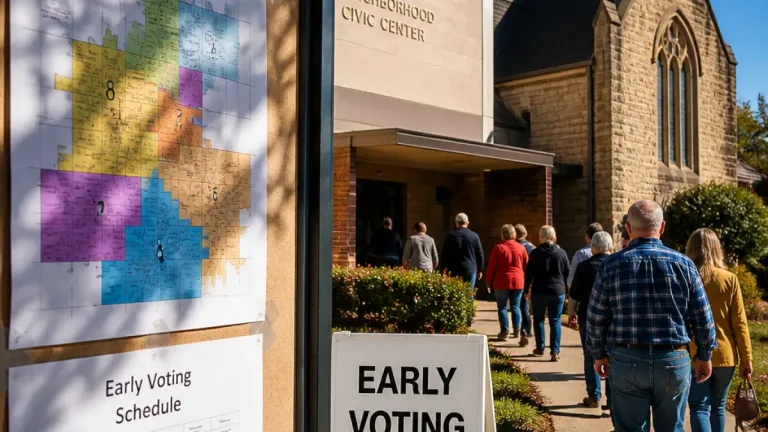
Political analysts also noted the primaries were the first conducted under Florida’s newly redrawn congressional map, which many observers say was designed to advantage Republicans. That change could leave Democrats with a markedly reduced presence among the state’s 28 U.S. House seats heading into the new Congress.
Local impact and next steps
For Florida voters and activists, the primary results will influence turnout and organizing priorities over the coming months. Campaigns will pivot from intraparty contests to head-to-head general election fights, and outside groups are likely to increase spending in targeted districts and statewide races.
With less than a year until the next Congress convenes, candidates must now broaden their appeals to independent and swing voters while addressing the practical realities of the new district map. For Democrats, that may mean reconciling establishment and progressive wings to present unified tickets in competitive districts; for Republicans it means capitalizing on structural advantages while defending against national Democratic vulnerabilities.
The races that concluded Tuesday mark an early but significant chapter in what promises to be a closely watched midterm season in Florida — one that could have national ramifications for control of the U.S. House and Senate.
— Javier Castellanos, State Correspondent