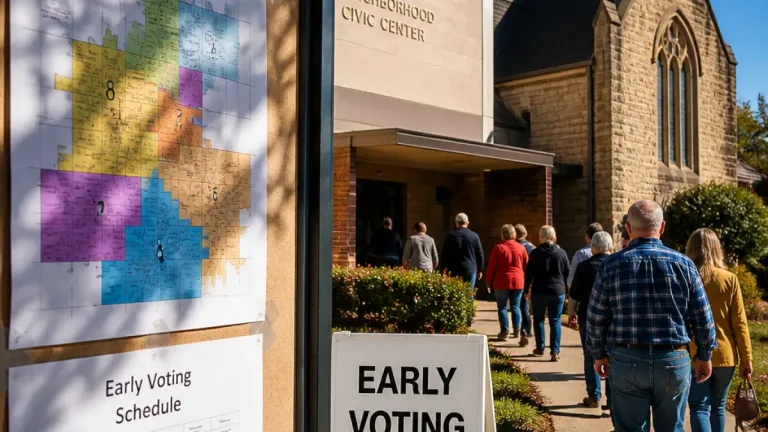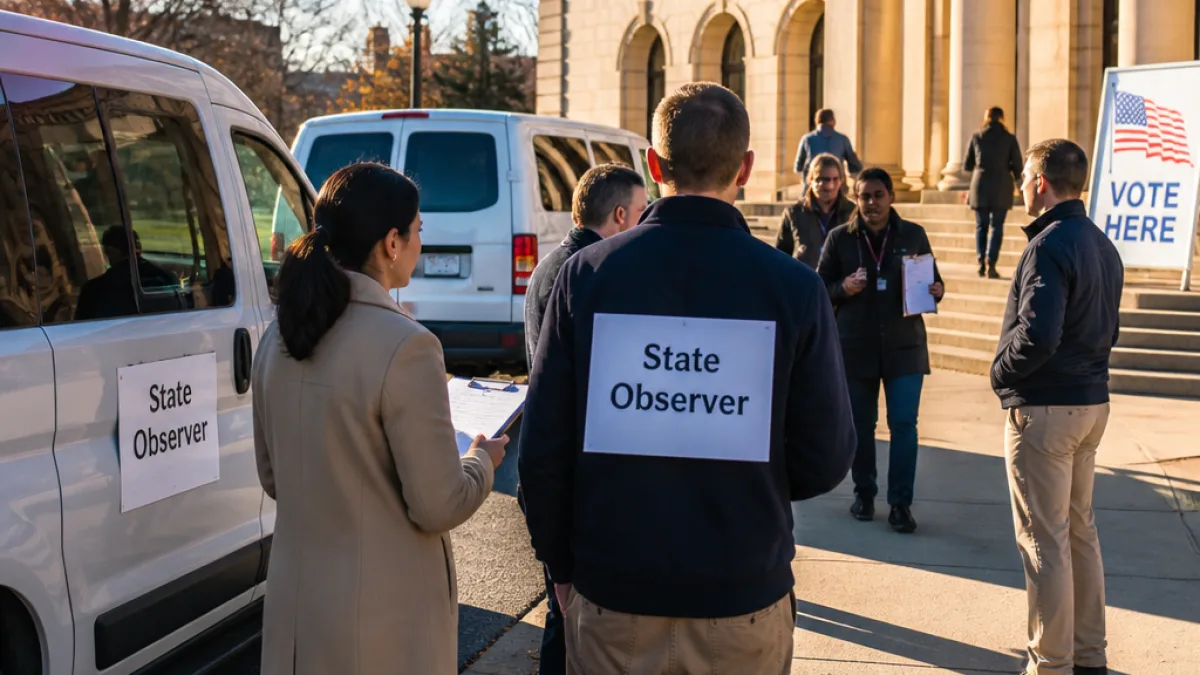
The United States Department of Justice is sending seven teams from its Civil Rights Division to Minnesota to monitor polling places during Tuesday’s primary, prompting state officials to brief voters and station state observers alongside the federal monitors.
Federal monitors arrive amid heightened scrutiny
State election leaders said the federal teams will focus on compliance with provisions of the Voting Rights Act, including the provision of language assistance and sufficient voter resources. Minnesota Secretary of State Steve Simon described federal observers as a routine element of election oversight but acknowledged recent events have raised public concerns.
“The stated reason for these observers, [which are] not a new thing, is to make sure that jurisdictions are complying with certain provisions of the Voting Rights Act related to voter resources and languages other than English,”
Simon told reporters the monitors will be limited in scope and placed at a small number of precincts in Hennepin and Ramsey counties. He said the state will place its own personnel in the field to “observe the observers” and ensure federal teams adhere to their limited role.
State response: attorneys general and local law enforcement weigh in
Minnesota Attorney General Keith Ellison issued a statement ahead of the primary. State and local law enforcement officials also provided guidance to voters on what to expect at polling places and how to report concerns.
Officials emphasized that monitors are observers only: they do not have authority to direct election administration, challenge voters’ eligibility at the polls or interfere with balloting. Election administrators reiterated that poll workers remain in charge of operations.
- What voters should expect: poll workers running the precinct; observers restricted to public areas; no authority to challenge individual voters.
- Reporting concerns: contact local election officials or call the Secretary of State’s office for assistance.
- Language help: jurisdictions must provide assistance where required under federal law.
Practical details and limited footprint
Officials described the footprint of federal involvement as small and targeted. State spokespeople said the DOJ teams will not be deployed statewide; instead, they will operate at a handful of precincts in the Twin Cities area to observe compliance with federal election law provisions.
| Item | Detail |
|---|---|
| Federal teams | 7 Civil Rights Division teams |
| Primary counties | Hennepin and Ramsey (selected precincts) |
| State response | State attorneys and observers to monitor federal teams |
Simon urged voters not to be alarmed by the presence of federal observers and reiterated that their role is to document whether jurisdictions are meeting obligations under the Voting Rights Act — for example, ensuring that materials are available in required languages and that jurisdictions provide adequate resources to facilitate voting.
Why this matters in Minnesota
Minnesota has a history of multilingual communities and precincts where federal civil‑rights protections trigger specific obligations. Observers can serve a watchdog function, but their presence can also stoke concern among voters when federal and state authorities appear at the same sites.
Election officials said they have coordinated with county and city election offices to confirm that poll workers and election judges understand the limited role of observers and how to address voter questions. Law enforcement contacts provided guidance for handling any protests or disruptions that may arise where observers are present.
Officials urged voters to focus on their ability to cast ballots: bring identification if required, arrive during regular polling hours, and contact your local election office if you encounter problems. The Secretary of State’s office remains the primary resource for statewide election questions and complaints.
As the primary proceeds, state and federal officials will document interactions at the observed sites. The outcome of that documentation could influence future conversations about federal oversight in Minnesota elections.
Reporting for this article included statements from the Secretary of State’s office and an announcement from the attorney general’s office. Local election officials provided procedural guidance to voters and poll workers ahead of Tuesday’s primary.