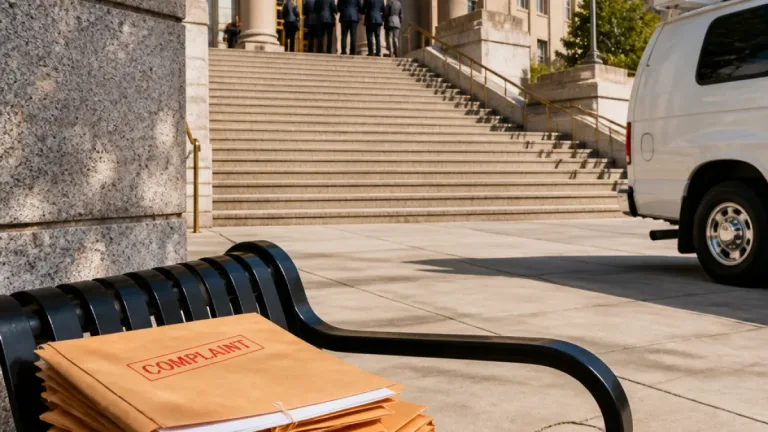

SALT LAKE CITY — Three environmental and public-health groups on Monday asked the Federal Trade Commission to investigate and stop what they call misleading, taxpayer-funded advertisements produced by the Utah Office of Energy Development promoting nuclear energy.
Groups challenge comparisons in state ads
Downwinders, Inc., the Healthy Environment Alliance of Utah and Utah Physicians for a Healthy Environment argue the state’s campaign includes inaccurate claims minimizing the risks and radiation associated with nuclear power. The complaint takes aim at a series of messages that appeared online, on billboards and in newspapers.
Among the contested statements are comparisons that say nuclear plants emit less radiation than eating a banana, that nuclear energy is safer than lighting a candle, and that nuclear power is less risky than eating leftovers or sitting in a chair. The groups say those kinds of analogies distort risk and amount to deceptive advertising.
"This campaign has been one of industry propaganda, and it is not benefiting the Utah public, which, by the way, is paying for this campaign through our tax dollars," said Downwinders volunteer Steve Erickson. "We think that there's time for a course correction."
What the complaint seeks
The filing requests that the FTC review the advertising for potential violations of federal standards on deceptive practices and consider ordering the Office of Energy Development to remove the ads. The advocacy groups said they hope the commission will pursue enforcement, including issuing a cease-and-desist order to halt what they describe as state-sponsored misinformation.
In their statement, the groups framed the ads as part of a coordinated push to build support for nuclear projects in Utah, which they oppose on public-health and environmental grounds.
Context: Utah’s push toward nuclear power
The complaint arrives amid an expanded state-level push toward nuclear energy led by top officials. Gov. Spencer Cox has promoted nuclear power as part of his "Operation Gigawatt" initiative to expand the state's electricity supply. In June, Valar Atomics reported a milestone at its small modular reactor in Orangeville, Emery County, when the facility reached zero-power fueled criticality — an important technical step toward full operation and the first Department of Energy-authorized reactor built outside a national laboratory.
Supporters of nuclear power in Utah say the technology can provide reliable, low-carbon electricity as the state grows. Critics counter with concerns about safety, waste disposal and the speed of the proposed build-out.
Claims at issue
Below is a summary of the specific comparisons identified in the complaint and the media where they appeared.
| Advertisement claim | Analogy used | Placement |
|---|---|---|
| Radiation level comparison | Less radiation than eating a banana | Online, billboards, newspapers |
| Safety comparison | Safer than a candle | Online, billboards, newspapers |
| Risk comparison | Less risky than eating leftovers or sitting in a chair | Online, billboards, newspapers |
Those examples were captured in screenshots on the Office of Energy Development’s website, according to the groups’ filing.
Responses and next steps
The state Office of Energy Development did not immediately publish a response to the FTC complaint. Officials in the governor’s office have previously emphasized the administration’s support for nuclear projects, citing energy reliability and emissions reductions as goals.
The FTC, which enforces laws against deceptive advertising, has the authority to investigate public and private entities and to seek remedies including orders to stop specific practices. The agency does not typically confirm or deny whether it is investigating a particular complaint, but it can issue formal actions if it finds a pattern of deception.
- The complaint was filed by Downwinders, Inc., the Healthy Environment Alliance of Utah and Utah Physicians for a Healthy Environment.
- It challenges ads claiming nuclear power emits less radiation than eating a banana and that nuclear is safer than a candle, among other analogies.
- Advocates seek FTC enforcement and removal of the advertisements, arguing they are paid for with taxpayer dollars.
As the FTC determines whether to act, the dispute highlights a broader debate over how state resources should be used to shape public views on controversial energy projects. With nuclear proposals proceeding in places such as Orangeville, the issue is likely to remain a focal point in Utah’s energy and political discussions.
Spencer Holloway is state correspondent covering energy and public policy for WE NEWS.