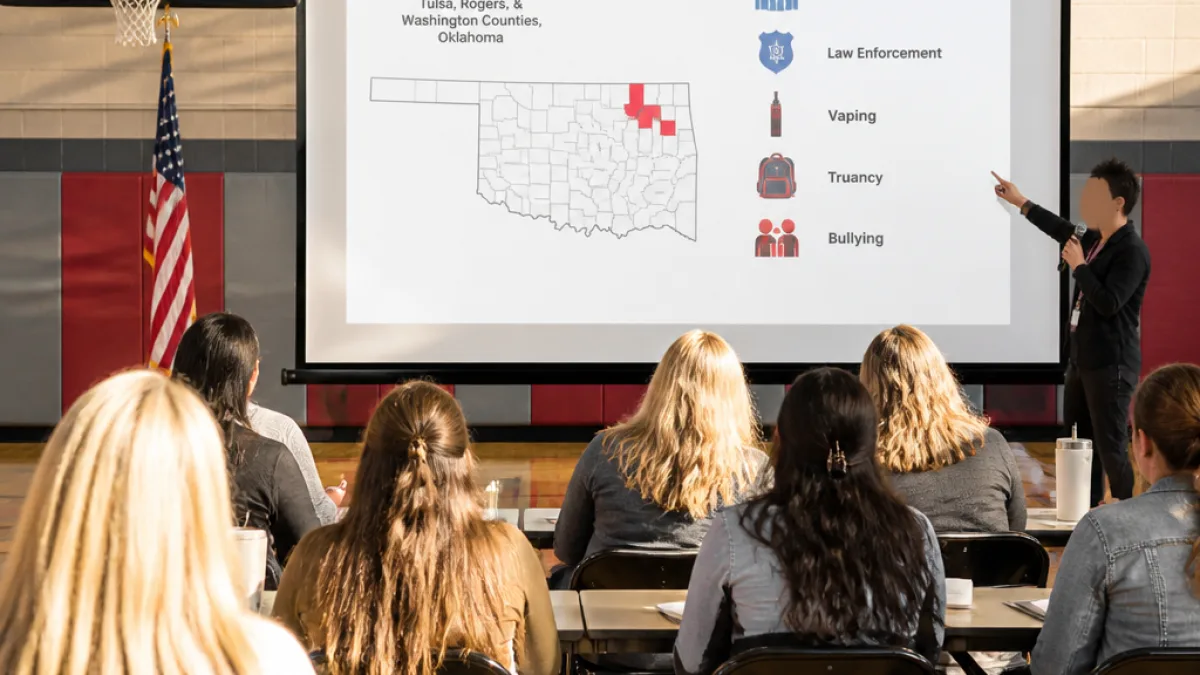
As students returned to classrooms this week, educators across three Oklahoma counties received refreshed instruction on spotting and reporting child abuse, handling truancy, addressing vaping and responding to bullying and cyberbullying. The training was delivered by the District 22 District Attorney’s Office, which serves Seminole, Hughes and Pontotoc counties.
Mandatory reporting emphasized for all school staff
Erik Johnson, District 22 District Attorney, told teachers and school personnel that anyone who works for public schools — from custodians to district leaders — has a legal obligation to report suspected abuse. Reports are filed with the Oklahoma Department of Human Services and local law enforcement agencies for investigation.
“Everybody from the janitor up to the Superintendent that works for public schools has a statutory duty to disclose if reports are brought to them by school-age children,” said Erik Johnson.
The DA’s office said it has provided the program for several years and already met with staff in 18 school districts in the three-county area. The refresher sessions are timed with the start of the school year to remind staff of procedures and the legal thresholds that trigger reports.
Truancy, funding and classroom impacts
In addition to abuse reporting, the training covered truancy laws and the expectation that educators report chronic absenteeism to the DA’s office. Johnson highlighted that keeping students in class is both an educational priority and a financial issue for districts; some district funding is tied to average daily attendance.
Johnson framed the truancy work as support for teachers and school leaders: reporting absenteeism helps educators enforce attendance expectations and gives school districts tools to address students who are frequently absent.
Vaping enforcement and student health
This year’s training placed special emphasis on student vaping. Johnson said educators were instructed that vaping on school grounds is illegal, harmful to student health and can lead to consequences if incidents are reported to the DA’s office.
Officials noted that the sessions are intended to give staff concrete steps to identify and document vaping incidents so they can be addressed through school discipline policies and, when appropriate, through the justice system.
Bullying, cyberbullying and the role of educators
Bullying and cyberbullying were key topics in the training. Johnson stressed the central role educators often play in a child’s life and urged staff to recognize signs of a student who may be isolated or targeted.
“I tell the teachers you might be the only person in that kid’s life that kid can lean into,” Johnson said, underscoring the importance of school personnel recognizing and reporting concerns that could indicate abuse or severe bullying.
Partnership with the Chickasaw Nation
The District Attorney’s office also highlighted cooperation with the Chickasaw Nation on truancy issues. The tribe maintains its own truancy statutes and has worked with the DA’s office to coordinate responses where tribal students or tribal jurisdiction issues arise.
What the training covers
Organizers described the training as comprehensive and practical, focusing on statutory duties, reporting pathways and follow-up expectations. Topics covered included:
- Statutory mandatory reporting obligations for suspected child abuse and neglect
- Procedures for documenting and reporting vaping incidents on campus
- Steps for filing truancy reports with the DA’s office
- Recognition and response strategies for bullying and cyberbullying
| Item | Purpose |
|---|---|
| Mandatory reporting | Trigger DHS and law enforcement investigations |
| Truancy reporting | Support classroom attendance and district funding |
| Vaping enforcement | Protect health and apply legal consequences |
The DA’s office did not release a schedule of future sessions, but Johnson said the program is ongoing and has been part of the office’s outreach for multiple years. Officials emphasized the goal is to equip school staff with knowledge to act quickly when they have concerns about student safety.
The refresher program adds another layer to schools’ existing safety and student welfare efforts, linking educators directly to county prosecutors and state child welfare authorities when incidents require formal investigation.
Parents or staff with questions about reporting procedures can contact their local school administration or the District 22 District Attorney’s Office for guidance on when and how to file a report.