
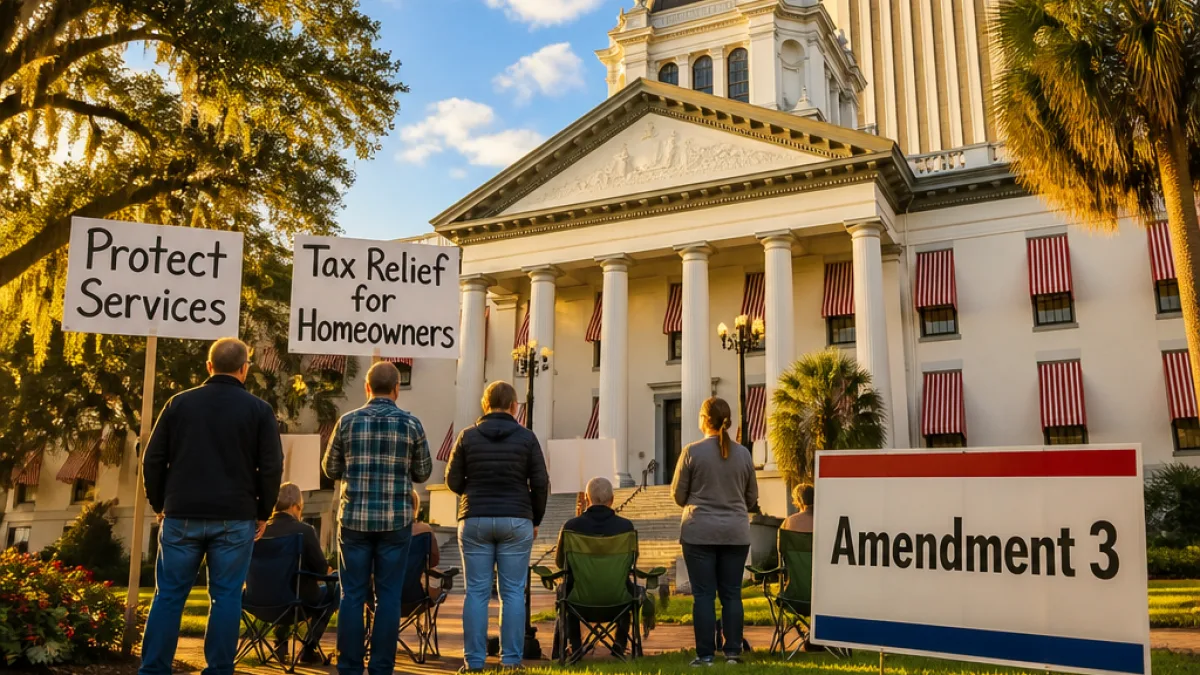
Amendment 3 has re-emerged as a central point of debate across Florida as advocates frame the proposal as essential relief for homeowners facing rising costs, while opponents caution that the measure could produce unwanted trade-offs in the form of higher rents, reduced local services and cuts to programs that many families rely on.
What backers say
Proponents of the amendment describe it as long-overdue support for property owners in a state where housing and living expenses have climbed. They argue that a change to property tax rules would help keep housing affordable for long-term residents and ease the financial pressure on homeowners, particularly those on fixed incomes or with limited means to absorb cost increases.
What critics warn
Opponents, however, say those apparent gains could surface elsewhere in the economy and in public life. Local officials and community advocates have made the case that trimming property tax revenue could leave municipal and county governments with fewer resources for services, infrastructure and local programs. That fiscal squeeze could, critics say, be passed along to renters through higher rents or result in cuts to programs that benefit many families.
- Higher rents: Developers and landlords may seek to offset reduced tax burdens for owners by increasing rents, critics warn.
- Fewer local services: Less revenue for counties and cities could translate into scaled-back services, from parks and public safety to sanitation and road maintenance.
- Program cuts: Opponents say important local programs that support families and vulnerable residents could face reductions.
Statewide ripple effects
Although proponents emphasize direct benefits for homeowners, the amendment's broader fiscal implications have prompted analysis and concern in county offices and city halls across Florida. Local governments rely heavily on property tax revenue to fund schools, emergency services and public works; any reduction would require officials to identify alternative revenue or reduce spending.
Public discussion has focused on how quickly any shifts would occur and which populations would be most affected. Because property taxes are a primary local funding source, even modest cuts can force municipalities to re-evaluate budgets and priorities.
| Stakeholder | Primary concern |
|---|---|
| Homeowners | Immediate tax relief and lower housing costs |
| Renters | Potential for increased rents as landlords adjust to market and tax conditions |
| Local governments | Revenue loss that could require cuts or alternative funding |
Context and unanswered questions
At the heart of the debate are practical questions about who will see the biggest gains and which groups will absorb the costs if revenue falls. Proponents point to homeowners as the primary beneficiaries. Critics highlight secondary effects — like rent adjustments and service cuts — that could shift burdens onto renters and program recipients.
Because the amendment's language and implementation details will determine the actual fiscal outcome, many local officials and analysts are urging voters to examine how the measure would interact with existing local budgets and state funding arrangements. For voters, the choice may not be as simple as weighing a tax cut against no change; it involves assessing likely second-order consequences for housing, services and public programs.
What voters should consider
Residents weighing the amendment should consider these practical steps:
- Review the exact language of the amendment and any official fiscal analyses available from local or state budget offices.
- Ask local elected officials and county budget staff how property tax changes could affect services in their communities.
- Consider the broader economic context — including rent trends — and how reduced property tax revenue might be distributed across different stakeholders.
As the conversation moves forward, local leaders, advocates and residents will continue to weigh the trade-offs. The final outcome will hinge on both the amendment's specific provisions and how policymakers at the local level respond to any resulting revenue shifts.
Statewide attention to the proposal underscores the often-complex balance between providing tax relief and maintaining funding for services that communities depend upon.

















