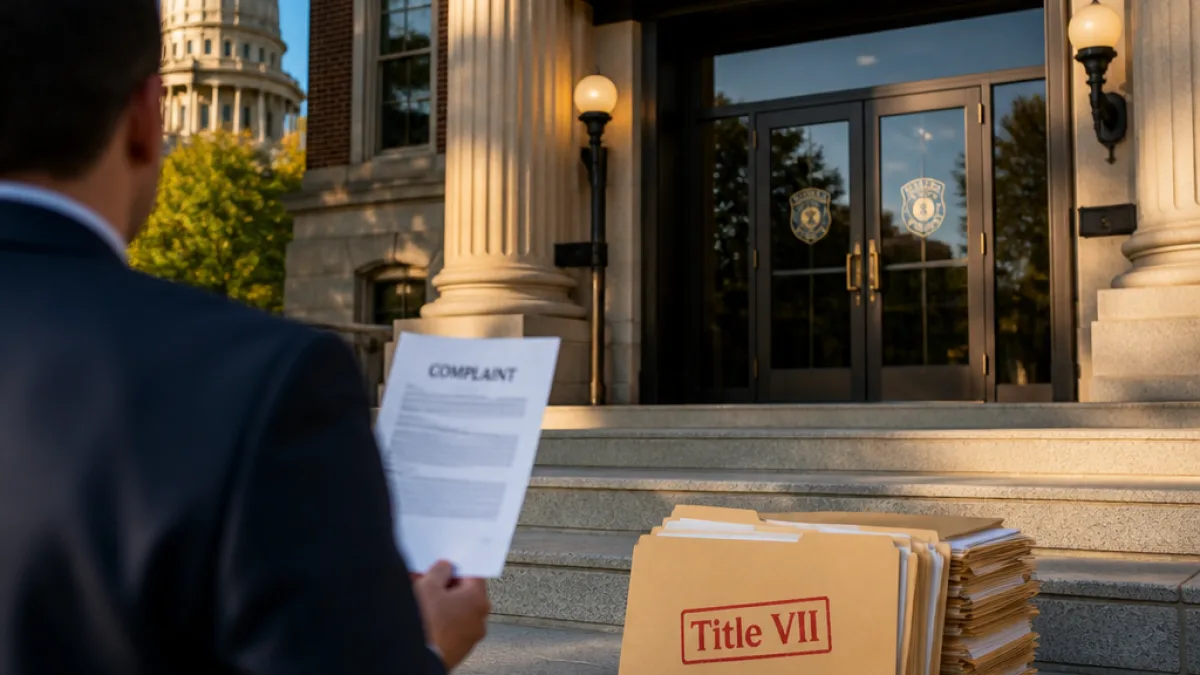
LANSING — A Detroit attorney has formally requested that the U.S. Department of Justice examine alleged discriminatory employment practices at the Michigan State Police, filing a 17-page petition that asks the Civil Rights Division to launch a pattern-or-practice investigation under Title VII of the Civil Rights Act of 1964.
What the filing says
The letter, dated Sept. 11, was submitted by attorney James K. Fett on behalf of two former Michigan State Police officials, former Major Ryan Pennell and former Inspector Patrick Morris. Fett contends that decisions by the agency on hiring and promotions have been influenced by impermissible considerations including race and gender.
“I don’t care who is being discriminated against. You make decisions based on race, gender, height, weight; it’s illegal. It violates the Constitution. And right now, one of her directors is blatantly violating the law,”
The filing asks DOJ to determine whether the alleged conduct amounts to unlawful, systemic patterns or practices that would warrant federal intervention under Title VII.
Responses from state officials
Requests for comment directed to the governor’s office were redirected to the Michigan State Police. In a statement, the agency defended its workforce, describing members as “highly trained public safety professionals.” The MSP added that state departments must adhere to Civil Service rules and federal law in their hiring.
The Justice Department customarily does not confirm or deny whether it has opened an inquiry, and officials have not publicly indicated whether Fett’s request is under review.
Background and legal context
The move follows long-standing disputes over affirmative action and diversity policies within the state police. Fett has litigated previous cases involving the agency, saying those earlier fights over DEI practices and employment law persist in new forms.
Title VII empowers the DOJ to investigate whether an employer engages in a pattern or practice of discrimination and, where warranted, pursue remedies. A federal inquiry of this kind can culminate in negotiations, consent decrees, or litigation depending on findings.
Local implications
A federal investigation could have multiple effects for Michigan residents: it could reshape MSP hiring and promotion procedures, influence statewide law enforcement leadership, and set precedents for how state agencies implement diversity and civil service requirements.
- Potential review of hiring and promotion records and interviews with current and former employees
- Possible demands for policy changes or monitoring if violations are found
- Legal and financial consequences for the agency if litigation follows
What’s next
At this point, there is no public indication from the DOJ that it has opened a formal investigation. The agency’s standard practice is to neither confirm nor deny inquiries in progress. State officials say they follow applicable Civil Service and federal rules, while the petitioner urges federal review to ensure compliance.
| Item | Current status |
|---|---|
| Request filed with DOJ | Sept. 11 — 17-page letter from attorney James K. Fett |
| Subjects named | Michigan State Police hiring and promotion practices; former Maj. Ryan Pennell; former Insp. Patrick Morris |
| DOJ response | No public confirmation of an opened investigation |
Those who work at or with the Michigan State Police may face additional scrutiny as a federal review, if opened, would likely examine personnel files, hiring metrics and promotion decisions. Community groups and legal advocates often monitor such probes for broader implications on civil rights enforcement in the state.
The request from Fett underscores continuing tensions over how government employers balance diversity initiatives, civil service rules and anti-discrimination law. If the Justice Department decides to act, the investigation could clarify whether MSP practices align with federal employment protections or whether corrective measures are necessary.
WE NEWS will continue to monitor any developments and report on official responses from the Department of Justice, the governor’s office and the Michigan State Police.