A popular snorkeling site with protected status
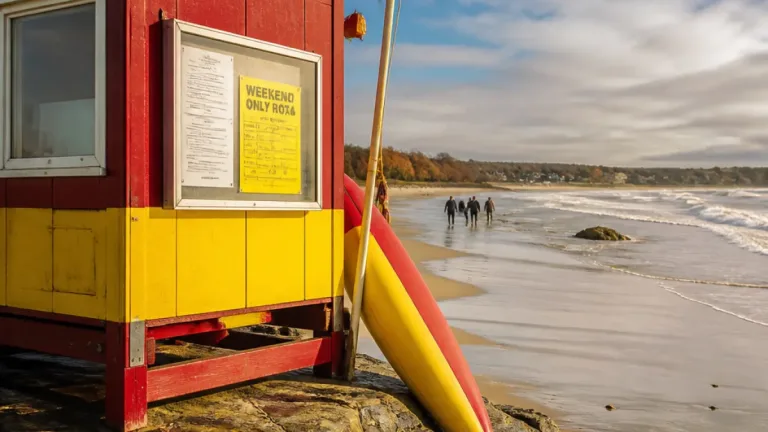
At Kapoʻo, better known as Sharks Cove, the appeal is easy to understand: clear coastal waters, tide pools and abundant sea life draw visitors to Pūpūkea on Oʻahu’s North Shore. What many visitors may not realize is that the area is also a marine life conservation district, including the adjoining tide pools.
The site is designated as a “no take zone” and is monitored by the state Department of Land and Natural Resources. That status means the area is not simply a recreational stop. It is a protected coastal ecosystem where fish, invertebrates and coral are part of a living habitat vulnerable to the effects of heavy use.
Mālama Pūpūkea-Waimea was created in 2005 in response to that challenge. The community organization acts as a neighborhood presence for the ocean while also caring for the land around it. Its work reflects a tension familiar at popular Hawaii sites: residents want people to experience the coastline, but the number of visitors and the way they use the area can place pressure on the resources they come to see.
Small contacts can damage coral
Denise Antolini, the group’s president and co-founder, said the tide pools contain 13 coral species and more than 85 types of fish and invertebrates. On a recent volunteer morning, dozens of people were entering the pools, underscoring the scale of activity in a habitat that can be affected by repeated contact.
Antolini said a study conducted by Mālama Pūpūkea-Waimea last year found a relationship between the daily number of people entering the tide pools and a decline in the fish population. The organization says even an apparently minor action, such as stepping on coral, can harm the reef structure and force fish away from their habitat.
Damage is not limited to direct contact. Dirt and polluted water moving from land into the ocean can also affect coral, making the condition of the shoreline part of the conservation problem. The group’s approach therefore extends beyond the waterline and into the banks, paths and developed areas that drain toward the sea.
Native planting addresses erosion
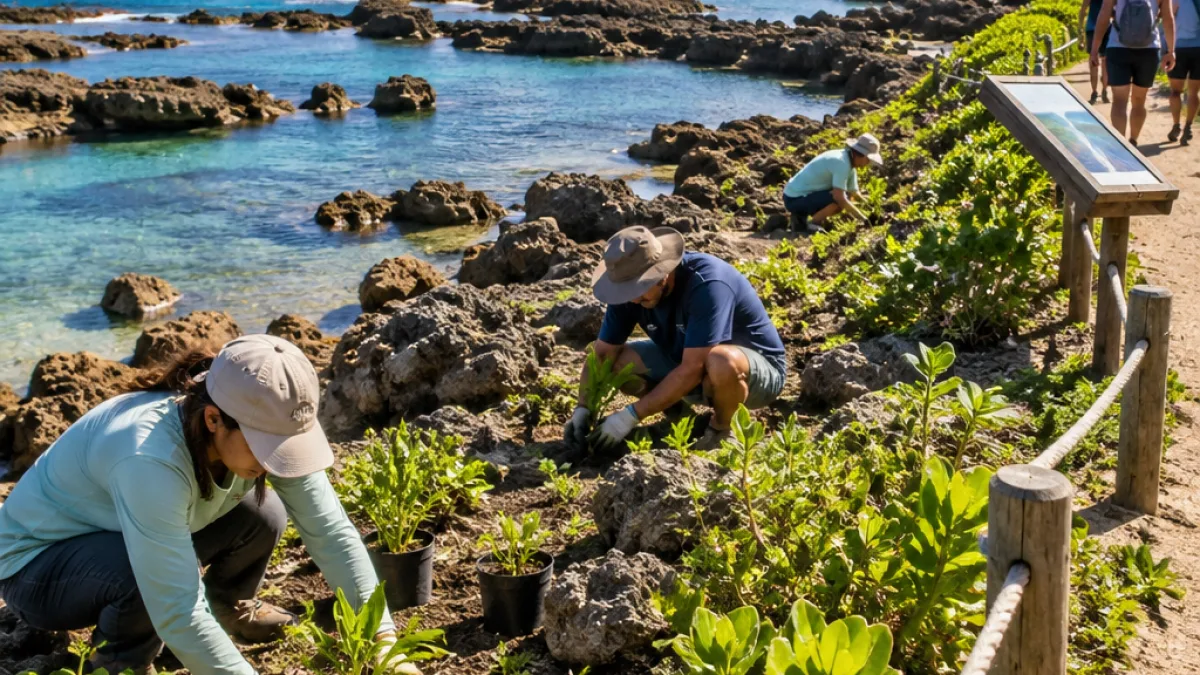
About 12 years ago, the organization began planting native coastal vegetation along the shoreline. The plants are intended to help hold the banks in place and reduce erosion, while the volunteer effort gives residents a direct role in maintaining the area.
During a recent outing, volunteers planted naupaka along a rain-slick bank. The work may appear modest beside the volume of visitors arriving at the coast, but it addresses one of the pathways by which sediment and contaminated runoff can reach the ocean. Mālama Pūpūkea-Waimea says volunteers are especially important because the area extends across approximately 80 acres of coastline.
The organization plans to broaden that work near the restroom, shower and parking areas. Those locations sit within the larger visitor landscape and are part of the group’s effort to manage the connection between public facilities, foot traffic and the shoreline.
Seeking clearer paths and stronger guidance
Antolini said the group hopes to establish designated routes, add boardwalks and install signs that make it clear when people are entering a sensitive place. The aim is to guide visitors without severing their access to the North Shore coast.
“We want to have specified pathways [and] put in boardwalking and signage on the pathway, so you know you’re entering something special,” Antolini said.
Clearer circulation could help reduce the informal movement of people across fragile areas, while signs could give visitors a stronger reminder that the tide pools are protected. The organization’s proposed improvements are tied to the same basic concern: use of the site should not undermine the habitat that makes it attractive.
Visitor numbers remain an unresolved question
There is currently no limit on how many people may enter the tide pools, Antolini said. That leaves the conservation group facing a difficult policy question as visitation continues: how can the public retain access while the ecosystem receives enough protection to recover and remain healthy?
Antolini said Mālama Pūpūkea-Waimea does not want to restrict residents’ access. She suggested that a reservation or visitor-management approach similar to the system used at Hanauma Bay could be considered, though the source does not identify a specific plan or decision to adopt one.
For now, the group’s work combines education, planting and advocacy. The central message is that Kapoʻo is both a destination and a protected environment. Visitors arrive for the fish, coral and pools, while volunteers work to ensure that those features are not diminished by the very popularity that brings people there.
- Kapoʻo, or Sharks Cove, is a protected marine life conservation district in Pūpūkea.
- The adjacent tide pools contain 13 coral species and more than 85 kinds of fish and invertebrates, according to Denise Antolini.
- Mālama Pūpūkea-Waimea is planting native coastal vegetation across an area covering about 80 acres of coastline.