
A federal appeals panel on Tuesday upheld a district court ruling that South Dakota lawmakers violated the First Amendment when they moved the deadline for filing petition signatures for statewide ballot questions three months earlier. The decision preserves a longer filing window for groups collecting signatures and sets the stage for more litigation: the state’s attorney general plans to seek review by the full 8th Circuit.
What the court said
The three-judge panel agreed with the district court’s finding that the legislative change—shifting the deadline in a general election year from the first Tuesday in May to the first Tuesday in February—unduly burdened petitioners. The appeals opinion, written by Judge Raymond Gruender, rejected the state’s contention that an earlier deadline meaningfully advanced the government’s interest in ensuring time for legal challenges before ballots are finalized.
"Even if that were the case, however, nothing in the record indicates that the new deadline advances that interest in any meaningful way," Judge Raymond Gruender wrote.
The decision affirms a district court ruling issued last August, which said that moving the deadline “arguably goes beyond merely inconvenient and enters the realm of severe.” The case was brought by Dakotans for Health, a group that has participated in multiple ballot question campaigns.
Numbers and deadlines
South Dakota requires petitioners to collect tens of thousands of voter signatures to qualify measures for the ballot. Under current law, petition requirements are:
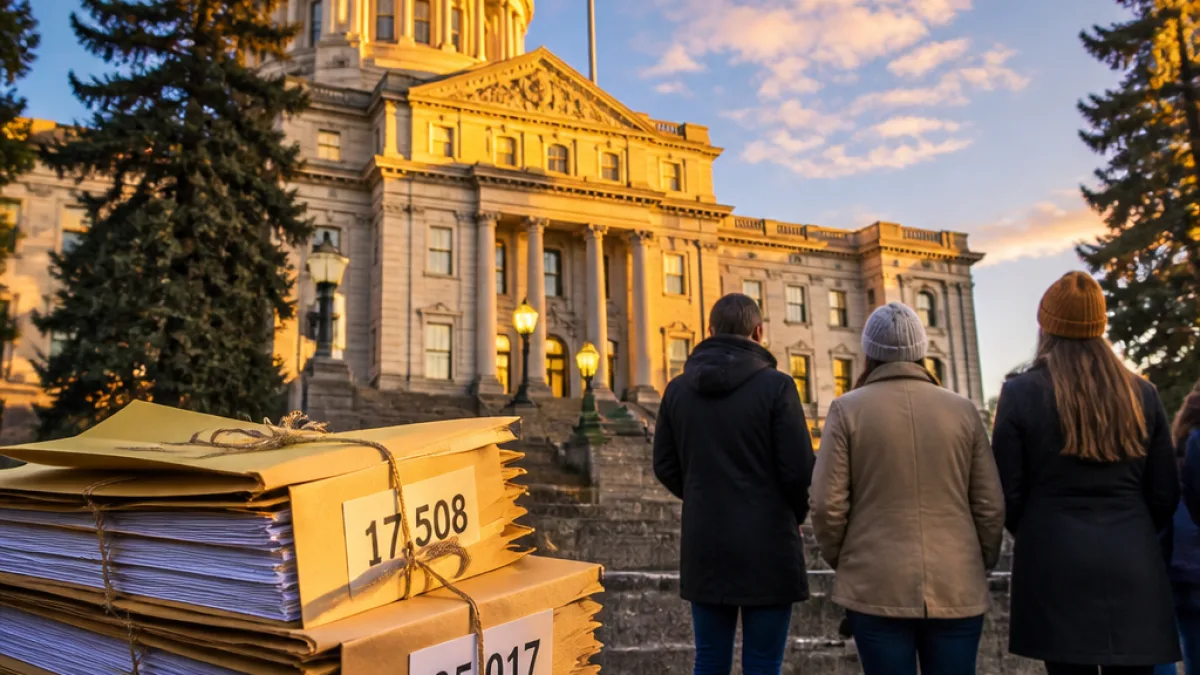
- 17,508 signatures to place a proposed law on the statewide ballot.
- 35,017 signatures to place a proposed constitutional amendment on the statewide ballot.
| Item | Prior deadline (general election year) | Changed deadline |
|---|---|---|
| Filing signed petitions | First Tuesday in May | First Tuesday in February |
| Signatures required (law) | 17,508 | |
| Signatures required (constitutional amendment) | 35,017 | |
State response and next steps
Shortly after the appeals panel issued its ruling, the attorney general’s office announced it will ask the full, 11-member 8th Circuit Court of Appeals to rehear the case. During oral arguments in June, the state argued the earlier deadline would give officials more time to resolve litigation related to ballot measures. Paul Swedlund, a lawyer in the Attorney General’s Office, said at the time that "the more time that you have to litigate a case, the better chance it is that you're going to get it finished." The appeals court, however, found no evidence that the compressed filing window actually served that interest.
Implications for petition campaigns and voters
Preserving the later May deadline matters practically for organizations that rely on in-person and volunteer-driven signature gathering. Shortening the calendar by three months can reduce opportunities for events, fairs and other gatherings where petitioners gather support, and can compress weather- and harvesting-dependent outreach in rural counties.
- Campaigns will retain the additional weeks to gather signatures through the spring.
- Voters may see more time for public education and debate about proposed measures before petitions are filed.
- State officials will continue to press their argument that earlier deadlines reduce litigation timing risks by allowing more time between filing and ballots being finalized.
Legal context and broader significance
The case centers on the balance between a state’s interest in orderly elections and the constitutional protections for political speech and association. Courts have long scrutinized rules that affect the mechanics of ballot access, weighing how much a law burdens expressive activity against legitimate administrative goals.
For South Dakota, the ruling is significant beyond the parties in this case. It preserves a longer petitioning period for any group seeking to place a law or constitutional amendment before voters, affecting how future campaigns plan their timelines and how the state prepares for potential litigation tied to ballot measures.
The appeals court’s decision does not end the dispute; it is likely to move to an en banc rehearing request by the state. Until the 8th Circuit rules on whether to rehear the case or a higher court intervenes, the status quo—maintaining the later May deadline—remains in place.
Reporting for this story relied on the appeals opinion and court filings in the case, statements from the parties involved and prior coverage of the district court decision.
















