
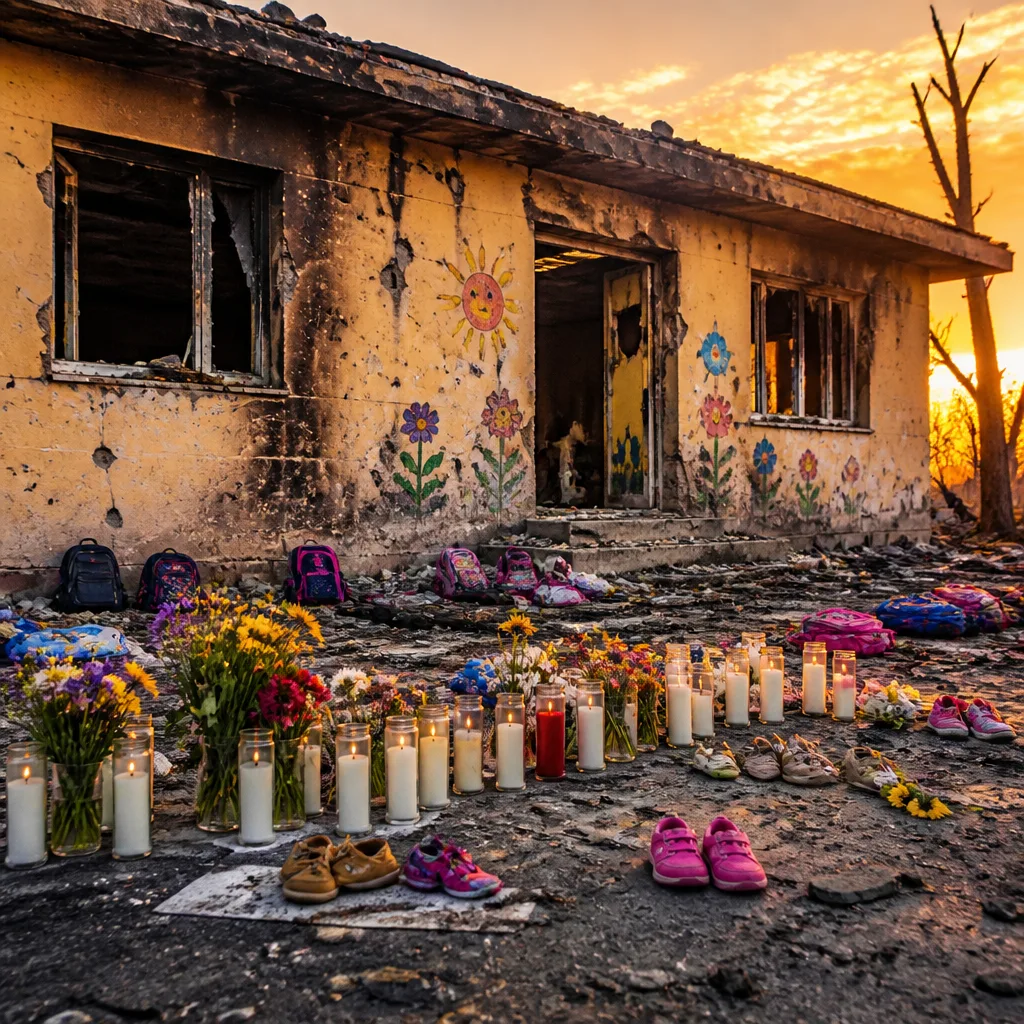
United Nations–commissioned human rights investigators have concluded there are reasonable grounds to believe a US strike on a school in southern Iran constituted a war crime, after a probe into two airstrikes that together killed scores of civilians.
Findings and casualties
The international fact-finding team centred its inquiry on strikes carried out in late February, which it said resulted in the deaths and injuries of civilians and damage to civilian property. The mission recorded at least 178 civilian deaths across the two incidents; Iranian state media has reported that 168 people died in the attack on the Shajareh Tayyebeh school in Minab, many of them children.
| Source | Reported figure |
|---|---|
| UN fact-finding mission | At least 178 civilian deaths |
| Iranian state media (school strike) | 168 killed |
Allegation and US response
The mission said its examination pointed to what it characterised as an indiscriminate attack by US forces, a conduct that, if established, can amount to a war crime under international humanitarian law.
US authorities have not publicly accepted responsibility. Officials in Washington have not released the results of a Pentagon investigation into the school strike, and a White House spokesperson dismissed the UN Human Rights Council’s work in stark terms, saying it had achieved "nothing for human rights" and accusing Tehran of committing the only war crimes in the conflict.
"The only party in this conflict that has committed war crimes is the Iranian regime, which has murdered thousands of its own people... and launched indiscriminate attacks against its neighbours in the region," the White House spokesperson said.
Reactions from rights groups
Amnesty International’s regional human rights lead described the situation as one that demanded clarity. She recalled repeated public assurances from the US administration that an inquiry would be conducted and expressed frustration that months later there has been little transparency.
She emphasised that while fact-finding reports are not judicial rulings, they carry authority and are based on a detailed review of available evidence.
- Investigation status: Pentagon findings on the school strike have not been released publicly.
- UN stance: Fact-finders say evidence gives reasonable grounds to suspect a war crime.
- Human cost: Dozens of children and other civilians reported killed in the Minab attack.
Context and consequences
The allegation arrives amid a broader US–Iran conflict environment and follows joint US–Israeli operations earlier in the campaign. Prosecuting or otherwise holding states and personnel to account for alleged violations of the laws of armed conflict is complex: it typically requires criminal investigations that meet national or international standards of independence and transparency, and may lead to domestic prosecutions, referrals to international courts or other accountability mechanisms.
For victims and their families, the immediate priorities are truth and remedy: establishing precisely what occurred, identifying responsible parties, and securing reparation or other forms of redress. For governments and the international community, the report poses diplomatic and legal questions about how to respond when a powerful state is accused of violating the rules that protect civilians in war.
The UN-backed mission’s conclusions do not determine criminal guilt; they outline findings that rights experts say warrant further independent scrutiny. The US position, including the contents of any internal military inquiry, remains crucial to whether those next steps will be taken and how they will be pursued.
As events stand, the absence of a public US account of the strike and a reluctance to accept external findings have left a gap between the fact-finding team’s conclusions and any prospect of immediate official accountability.














