
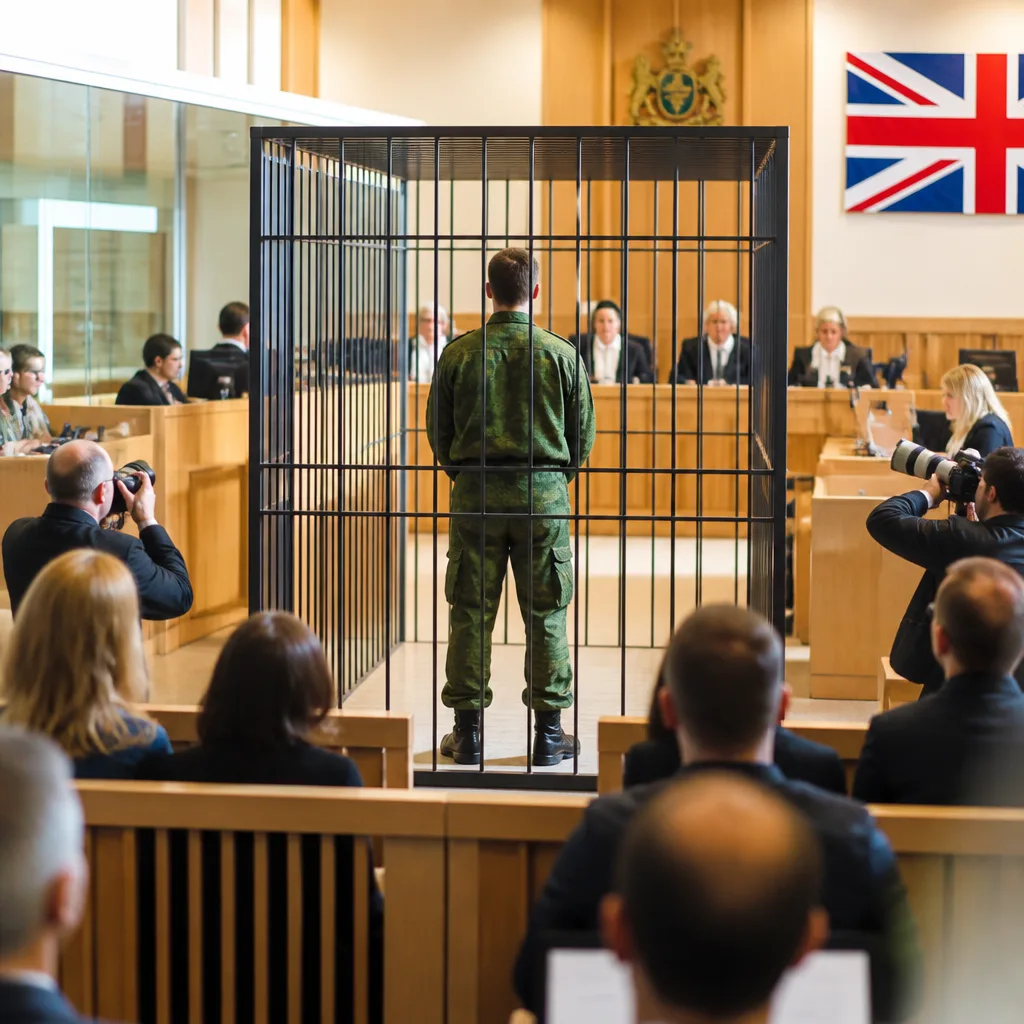
A Syrian court on Tuesday handed a death sentence to ousted president Bashar al‑Assad in a trial conducted in absentia, finding him guilty of war crimes and crimes against humanity arising from the country’s 14‑year conflict.
Verdict, defendants and setting
The judgement also imposed the death penalty on Atef Najib, a maternal cousin of Assad and a former brigadier general who led the Political Security Branch in Daraa province in 2011. Najib was present in court and stood inside a cage wearing a prison uniform as the sentence was read. According to reporting, Assad and his brother Maher fled to Russia in December 2024 after insurgents entered Damascus.
"war crimes" and "crimes against humanity"
The ruling is the first to emerge under the transitional authorities that have begun conducting trials this year of figures from the former government, both in person and in absentia.
What was at issue
Prosecutors brought charges linked to the initial security crackdown in Daraa that preceded the wider uprising and civil war. Najib — the highest‑ranking former official reported to have been detained and tried in these proceedings — was accused of leading the actions in the southern province in 2011 which helped precipitate the conflict.
The trial of Assad was necessarily in absentia: he was not in the courtroom and remains outside Syria. The details released with the verdict name crimes that fall within international definitions of atrocities committed during armed conflict, and the sentences reflect the transitional authorities’ stated aim of pursuing accountability for abuses dating from the outset of the war.
Implications and context
The judgement carries symbolic and practical consequences. Symbolically, it marks a clear denunciation by Syria’s new authorities of key figures from the previous regime. Practically, enforcement of the sentence against an individual living abroad is uncertain: Assad’s reported residence in Russia makes immediate execution unlikely absent international transfer or capture.
The trial comes as part of a broader process by the transitional authorities to address abuses from the conflict. Observers will watch how these domestic proceedings interact with international mechanisms — including inquiries and cases pursued by other states — that have investigated alleged crimes in Syria over the past decade and more.
- Defendants: Bashar al‑Assad (sentenced in absentia); Atef Najib (sentenced in person)
- Charges: war crimes and crimes against humanity related to the 2011 Daraa crackdown and wider conflict
- Context: first rulings under transitional authorities trying former government figures this year
| Defendant | Role | Sentence |
|---|---|---|
| Bashar al‑Assad | Former president (absent) | Death (in absentia) |
| Atef Najib | Former brigadier general; head of Political Security Branch, Daraa (2011) | Death (detained and tried in person) |
As with any high‑profile verdict arising from a recent conflict, questions will be raised about the fairness of procedures, the degree of transparency in the trials and how evidence was obtained and assessed. International legal experts commonly stress that accountability efforts are strengthened when they meet recognised standards of due process, which also improves prospects for cooperation with other jurisdictions and bodies.
For the families of victims and survivors of detention and abuse, such rulings may offer a measure of recognition for long‑standing grievances. At the same time, they have the potential to exacerbate tensions if not accompanied by broader measures of reconciliation and institution building.
This development will also influence diplomatic calculations. States dealing with the Syrian question will have to consider how to respond to the verdict, especially those that host or have relationships with senior figures from the former regime.
The transitional authorities’ announcement marks a significant chapter in Syria’s post‑conflict legal reckoning, but the real‑world effects of the sentence — in particular any prospect of enforcement — remain uncertain.














