Council teams assess risks and act to protect parks, wildlife and homes
Salisbury City Council says wildfire prevention "is everyone’s responsibility" as its Parks and Open Spaces Team completed a targeted programme of risk assessments and preventative works during July and August to reduce the threat of grass and vegetation fires during prolonged dry weather.
The council reviewed guidance from Dorset & Wiltshire Fire and Rescue Service and relevant Government guidance to identify areas of increased risk and to determine proportionate mitigation measures. Officers say the programme aims to protect residents, visitors, wildlife and public spaces while keeping parks and open areas accessible.
"is everyone’s responsibility"
Practical measures introduced across the city
Work carried out by the council includes a range of preventative actions. In locations where open spaces adjoin residential properties, fire breaks have been created. In some areas, dried grass and other vegetation have been cut back or removed to limit the potential for a small, fast‑moving fire to spread.
- Site‑specific fire risk assessments were carried out across city green spaces.
- Fire breaks have been formed where open land meets homes.
- Additional cutting and vegetation management have been undertaken where drought has left grass and scrub particularly dry.
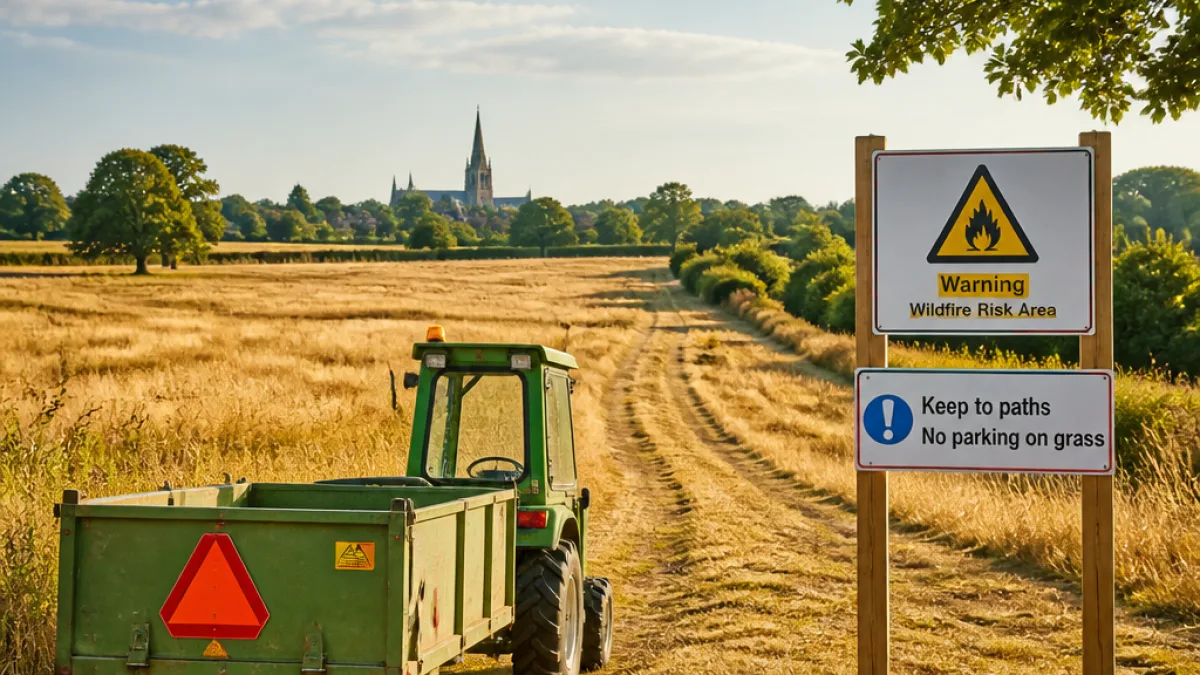
- Warning signage has been installed to highlight heightened fire risk and discourage disposable barbecues and open fires.
The council stresses decisions on additional cutting and vegetation removal were guided by local risk assessments, with an explicit intent to balance fire prevention with biodiversity and habitat protection.
Public asked to stay vigilant
Signage across the city’s parks urges residents and visitors not to light fires or use disposable barbecues in high‑risk conditions, and to report any signs of smoke or fire to the emergency services immediately. The council has reiterated that maintaining access to green spaces remains a priority even while taking steps to reduce fire risk.
Officials say the preventative work seeks to be environmentally responsible, applying measures only where assessments indicate an elevated danger. That approach is intended to preserve meadow areas and wildlife habitats where possible while reducing ignition sources and limiting fuel for potential blazes.
Context and local consequences
Salisbury, like other parts of southern England, has experienced spells of hot, dry weather that increase the vulnerability of grassland and scrub to ignition. Even small fires can threaten nearby properties, disrupt access to recreational spaces and harm wildlife. The council’s recent activity is designed to reduce those risks in the short term and to inform how the city manages vegetation during drier summers going forward.
For residents, the measures mean there may be more visible cutting in some parks and new signage in areas previously left ungrazed or meadow‑like. For those who use green spaces for walking, dog‑walking and leisure, the council requests cooperation with safety notices and requests to avoid open flames while conditions remain tinder‑dry.
Parks officers continue to monitor conditions and say further action will be taken if risk assessments indicate it is necessary. The council’s work follows guidelines from the county fire service and central government, and it forms part of a wider local response to the heightened fire risk this summer.
| Action | Purpose |
|---|---|
| Fire risk assessments | Identify high‑risk sites and tailor mitigation |
| Creation of fire breaks | Reduce spread of fires near homes |
| Additional vegetation cutting | Remove dried fuel while considering biodiversity |
| Signage and public messaging | Raise awareness and discourage open fires |
The council asks anyone who spots a fire to call the emergency services without delay and to follow published guidance to reduce the chances of accidental ignition. Residents with concerns about specific sites can contact the city council to seek further information or to report particularly hazardous areas.
Locally led prevention work like this relies on public co‑operation as well as professional assessment. With hot weather still possible later in the season, the message from Salisbury’s environment team is clear: vigilance and common sense can help protect the city’s precious parks and green spaces from avoidable harm.