Roger Cook, the investigative journalist whose confrontational questioning and long-running television work brought wrongdoing to public attention, has died aged 83, it was reported on Saturday 14 June 2026.
From radio reporter to television investigator
Born to New Zealand parents and brought up in Australia, Cook began his career with the Australian Broadcasting Corporation. By 1968 he had moved to London and joined BBC Radio 4’s The World At One as a reporter and presenter. He went on to work on a range of BBC programmes including PM, Nationwide and Newsnight, developing an approach that would become the hallmark of his journalism.
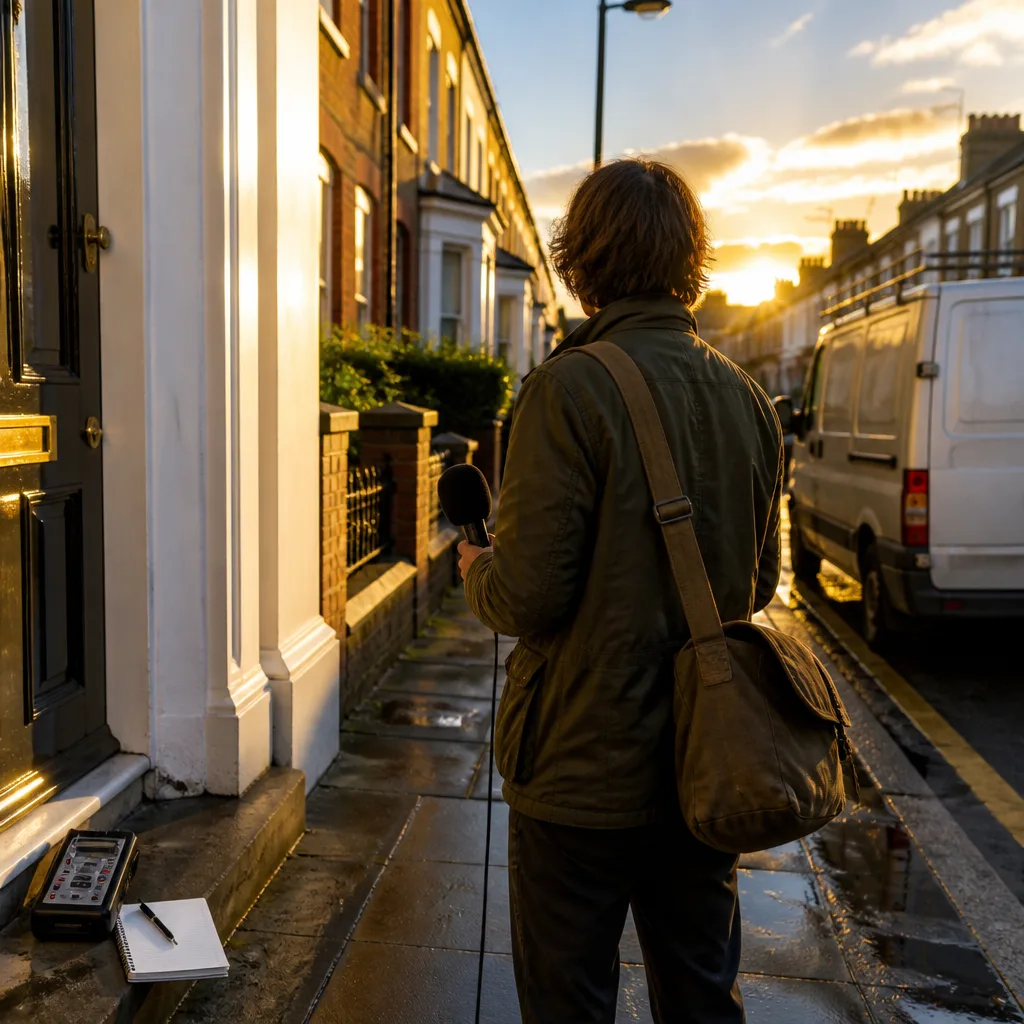
In 1973 Cook created the Radio 4 programme Checkpoint, which sought to expose conmen, organised fraud and official failings. It was during this period that he first deployed the confrontational technique that would come to be known as the doorstep interview — arriving unannounced at a subject’s home or workplace to seek answers on camera.
Risk and resilience
Cook’s work often carried personal risk. In 1981 he was physically attacked by an antiques dealer he confronted, suffering three cracked ribs. He later described the episode with characteristic bluntness, saying:
“Mr Harris invited me to step outside and talk things through, but his means of communication proved to be a metal bar.”
His readiness to put himself in harm’s way for stories, and his persistence in pursuing subjects, made him a polarising but influential figure. Over subsequent decades the doorstep ambush became a widely recognised tactic among investigative teams, shaping television journalism and informing later true-crime documentary makers.
Television prominence and legacy
Cook became best known to millions for bringing investigative work to television audiences. His series attracted substantial viewership and remained on air for many years; one of his most prominent television outings drew to a close in 1999. The format he popularised — direct, confrontational questioning in situ — can be seen in numerous high-profile broadcasts since, and his methods are cited as a formative influence on successive generations of reporters.
Colleagues and those who followed his work have noted both the effectiveness and the controversies of his style: it was unapologetically adversarial, prioritising immediate answers and public accountability. That approach produced exposés of swindles and wrongdoing, but also raised ongoing debates about tactics, safety and the ethics of ambush journalism.
- Early career: Australian Broadcasting Corporation, then BBC from 1968
- Major projects: Creator of Radio 4’s Checkpoint (1973); later best known for television investigations
- Notable incident: Assault in 1981 left him with three cracked ribs
- Television run: High-profile TV work continued until the late 1990s, with a major series ending in 1999
| Year | Event |
|---|---|
| 1968 | Joined BBC Radio 4’s The World At One |
| 1973 | Launched Radio 4 programme Checkpoint |
| 1981 | Suffered assault resulting in three cracked ribs |
| 1999 | Final broadcast of his best-known TV series |
Roger Cook’s death marks the passing of a figure who helped define a strand of investigative broadcasting that aimed to bring alleged wrongdoing into public view and to prompt official scrutiny. While his methods attracted both admiration and critique, his influence on the craft of investigative reporting is widely acknowledged.
As newsrooms and audiences continue to debate how best to balance robust public interest reporting with safety and ethical concerns, Cook’s career will remain a reference point for discussions about accountability, risk and the role of television in exposing harm.