
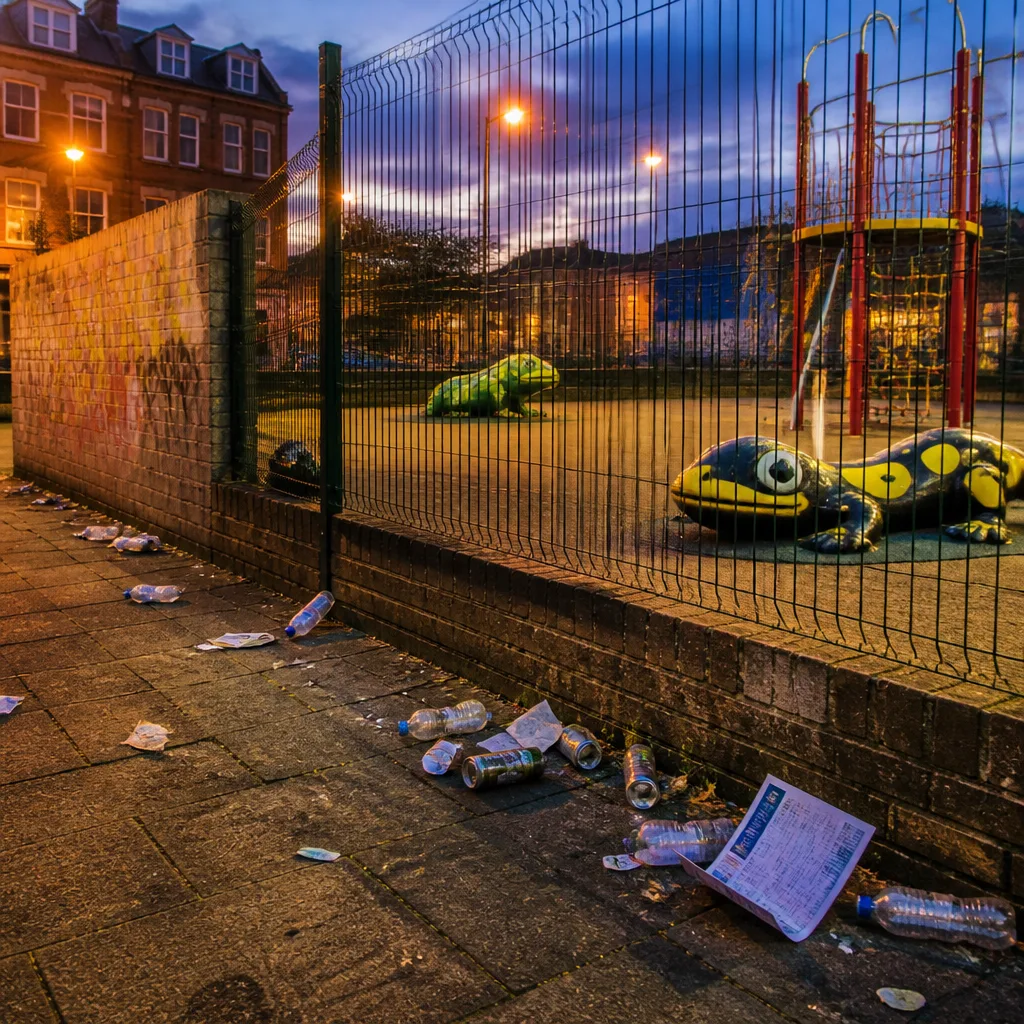
Plans to create a children’s play area at the site of the former bus station in Folkestone have been met with sharp criticism from some residents who say the location has become a crime hotspot and that the proposed facility could exacerbate existing problems.
Local regeneration sparks safety concerns
Folkestone and Hythe District Council (FHDC) is developing the site as part of its ‘A Brighter Future’ programme, which includes new road layouts, planting and what the council describes as a new green heart for the town. Proposals for play equipment — coloured salamander figures, a climbing frame and tube slides — have been submitted to councillors for consideration.
While the council says the scheme is intended to enhance the area and provide a public amenity, some residents say the site’s existing problems make it unsuitable for a children’s play space. The area around Bouverie Square has seen elevated levels of crime, with 36 offences recorded in June, according to local reports.
“A smackhead’s playground, how thoughtful!”
The comment, posted on an FHDC social-media announcement about the proposals, exemplifies the blunt reaction from parts of the community. Other contributors urged resources should first be spent on renovating the old bus station rather than turning it into a public park, warning that the site will attract homelessness, drug use and begging.
Community divided over benefits and risks
Not all responses were negative. Some residents welcomed the changes, saying the redevelopment will improve the appearance of the town. One commenter noted they had never considered the previous bus station attractive but added the council and police must tackle issues such as street drinking and drug-taking to make the scheme successful.
The dispute highlights a familiar tension in regeneration projects: the aspiration to create inclusive public spaces versus concerns that introducing family-focused amenities into areas with entrenched social problems can create conflict and additional policing demands.
- Site: former Folkestone bus station, Bouverie Square.
- Council programme: ‘A Brighter Future’, includes new planting and road layouts.
- Reported crime: 36 offences in June in the area surrounding the proposed park.
Campaigners and councillors will need to balance these competing perspectives before a decision is reached. The council is due to debate the plans at a meeting this evening.
Implications for policing and support services
If approved, the play area will join other public spaces that have required active management to limit antisocial behaviour and to support vulnerable people. The correspondence cited by FHDC’s announcement indicates residents are seeking greater coordination between the council and the police to address street-level issues.
Urban public-space programmes that aim to encourage family use often rely on a mix of environmental design, regular maintenance and outreach services to deter illicit activity and to provide alternatives for people who sleep rough or misuse drugs. Local authorities commonly use a combination of CCTV, increased foot patrols and partnerships with charities to reduce harm while enabling access to community facilities.
| Aspect | Current position |
|---|---|
| Site condition | Former bus station undergoing transformation |
| Proposed facilities | Play equipment: salamander figures, climbing frame, tube slides |
| Local concern | Risk of attracting drug use, street drinking, begging |
Council representatives have described the project as an opportunity to create an attractive public space for residents and visitors. Yet the controversy illustrates the practical challenges councils face when attempting to repurpose urban sites that already attract significant criminal or antisocial behaviour.
Any final decision will involve councillors considering both the regeneration aims and the public-safety concerns raised by residents and will likely prompt further discussion about policing resources and support services in the town centre.














