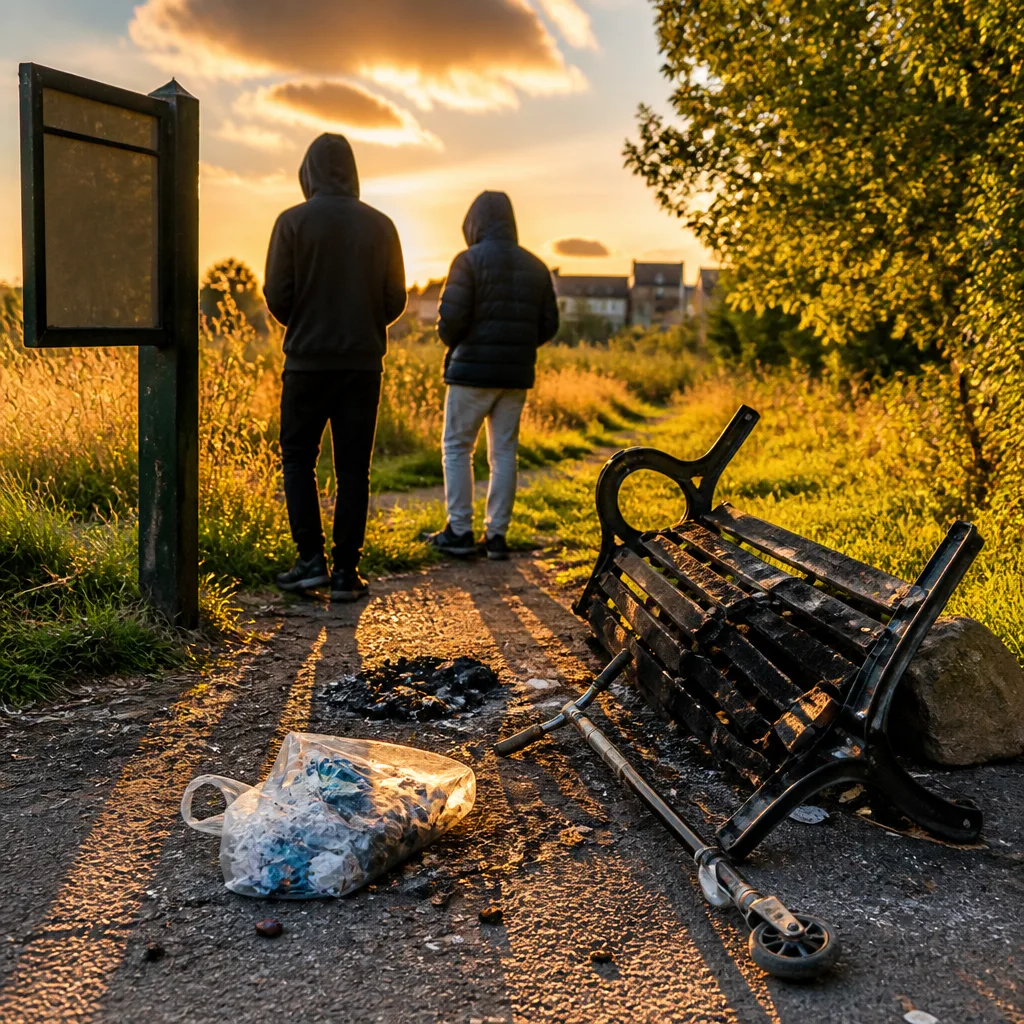
Residents around Clemson's Park in Littleover, Derby, have accused the city council's rewilding of creating conditions that have allowed anti‑social behaviour and drug dealing to increase, including incidents involving youths on scooters and attempts to burn park furniture.
Local anger and competing accounts
People who regularly use the park told reporters the changes to grassing and planting have reduced visibility in parts of the green space, which they believe has been exploited by groups committing low‑level offences. A local community campaigner, representing the group Carlisle Against Crime, said renewed growth has coincided with a rise in problematic activity and warned against a blanket approach to rewilding across the city.
"This is exactly what we feared,"
The campaigner urged the council to consult more closely with communities, arguing that every green space has a distinct character and that management decisions should reflect local priorities. She said residents want the park returned to conditions in which they feel safe walking there in the evening.
Conservation group offers a different perspective
Those promoting the rewilding work contend the longer grass areas are not signs of neglect but deliberate habitats managed to support pollinators and shelter for small fauna. A representative of the community nature group Greener Derby said the space now functions as a de‑facto nature reserve while remaining a valued area for recreation and quiet reflection.
Both sides described the park as important to local life, but they disagree on how best to balance biodiversity aims with public safety.
- Residents' concerns: increased anti‑social behaviour, masked youths on scooters, drug dealing, and damage such as attempts to burn benches.
- Conservation view: longer grass is a managed habitat supporting bees, butterflies, birds, bats and small mammals.
- Community demand: calls for the council to avoid one‑size‑fits‑all policies and to consult on local management decisions.
Implications for policing and local policy
The dispute highlights a recurring dilemma for councils and police: how to reconcile environmental and biodiversity objectives with the duty to keep public spaces safe and usable. Where vegetation provides cover, visibility and natural surveillance are reduced, which residents say can make parks less welcoming and more attractive as locations for criminal or anti‑social activity.
Local campaigners say they have been working with police and the council in the past to reclaim parks from anti‑social behaviour and want that partnership approach to continue. The conservation group maintains that ecological management does not preclude public use but did not set out specific operational proposals for addressing immediate safety concerns.
| Stakeholder | Position |
|---|---|
| Residents / Carlisle Against Crime | Rewilding has increased opportunities for crime; management should be tailored locally |
| Greener Derby (nature group) | Longer grass is purposefully managed habitat supporting wildlife; park remains cherished |
There is no dispute in the accounts published that incidents have occurred in the park; what is contested is whether the ecological management is responsible for the rise in anti‑social activity, and what practical steps should be taken next.
Councils faced with similar disputes across the country have a range of options, from selective trimming and improved lighting to targeted policing and community engagement programmes. Residents are urging Derby City Council to listen to local views and to adapt its approach so that biodiversity goals do not undermine perceptions of safety.
As this is an ongoing local concern, any operational response by the council or police — including changes to habitat management or enforcement activity — will be closely watched by both residents and conservation groups.