
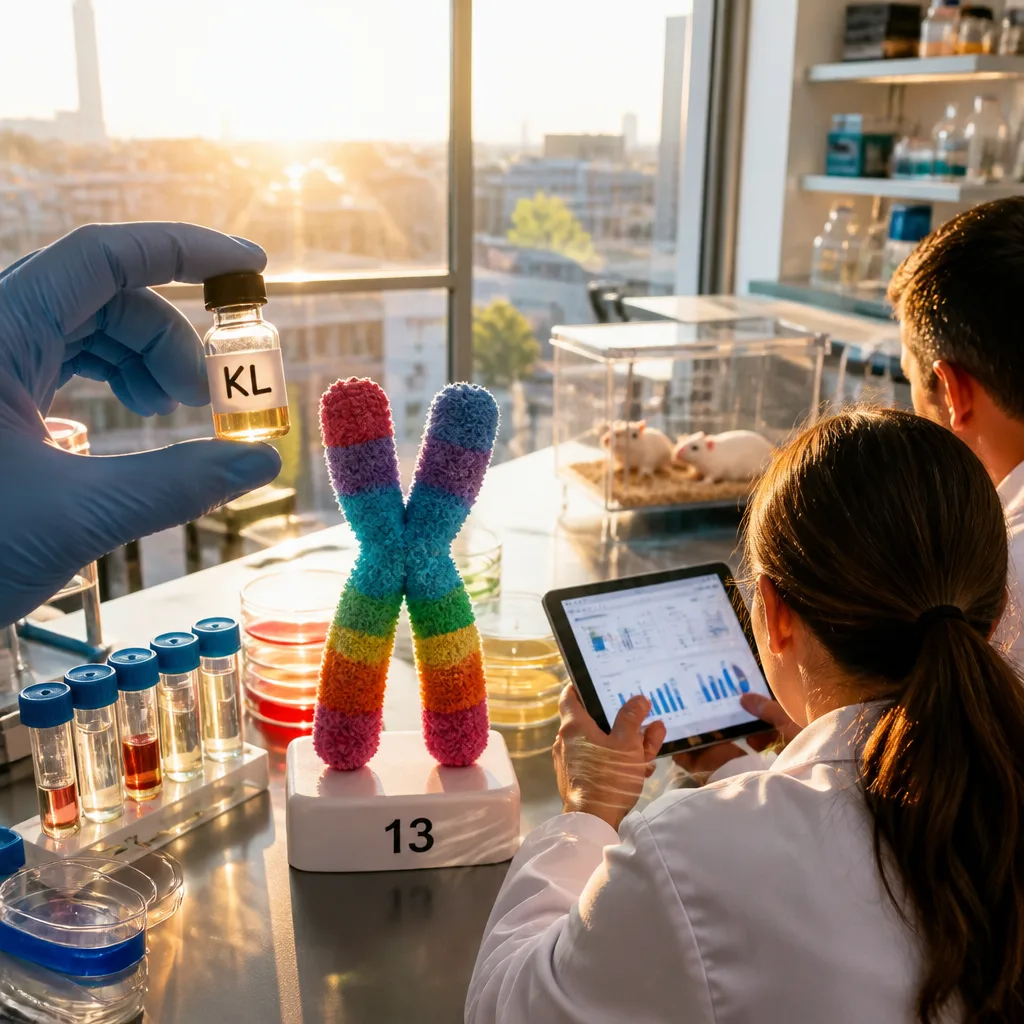
Scientists and entrepreneurs are converging on the Klotho protein as a promising route to preserving quality of life with age. The interest follows decades of laboratory work and recent consumer demand from people tweaking lifestyles and seeking genetic insight into their own ageing risks.
From a lab accident to a consumer obsession
The Klotho gene, located on chromosome 13 in humans, first drew attention in the late 1990s when Japanese researchers discovered that altering the gene in mice produced dramatic ageing effects. Mice lacking the standard Klotho gene exhibited signs of premature ageing and died far earlier than typical lab animals.
| Finding | Result |
|---|---|
| Normal laboratory mouse lifespan | ~2 years |
| Mouse with Klotho gene knocked out | ~2 months |
That striking laboratory result has helped make Klotho one of the buzziest names in anti‑ageing research. The protein is produced naturally in mammals, and particular genetic variants appear to influence circulating levels.
Why people are paying attention
Some members of the public are already acting on genetic information to guide lifestyle choices. In one personal account, a man who took a genetic test in August 2024 found he carried the KL‑VS mutation, a variant thought to occur in perhaps one or two in 20 people. A doctor told him,
"You are a lucky, lucky man."
The KL‑VS variant is associated with higher Klotho levels, and that association has drawn both hopeful individuals and commercial operators to investigate whether boosting Klotho might extend health span in people — not merely extend lifespan in the abstract.
It is worth emphasising that the science is still partial: while mouse experiments were dramatic, translating those findings into safe, effective human therapies is a complex undertaking. Nevertheless, a number of start‑ups and clinicians are jockeying to develop Klotho‑focused interventions, from gene therapies to injectable products, as they seek to become first movers in a growing market.
Consumer trends and clinical certainty
Interest in Klotho sits within a broader cultural shift: many middle‑aged, health‑focused people are moving beyond the question of how long they will live to ask how well they will live in later years. That attitude helps explain why some are prepared to invest in genetic testing and to experiment with interventions that promise to preserve physical and cognitive function.
- Genetic testing can reveal variants like KL‑VS that affect Klotho levels.
- Commercial development is under way, with entrepreneurs positioning therapies to boost Klotho.
- Scientific caution remains important: animal results do not automatically translate to humans.
For readers considering testing or experimental therapies, the balance of potential benefit against uncertainty and cost is central. The current state of knowledge suggests promise, but not yet proven clinical pathways for routine use.
What to watch next
Observers should look for well‑controlled clinical trials and transparent reporting of safety data as the Klotho field advances. Until then, incremental lifestyle changes and evidence‑based healthcare remain the most reliable tools for preserving health as we age. The story of Klotho is a reminder: laboratory breakthroughs can spark excitement and entrepreneurship, but the path from bench to bedside is often long and iterative.
As the public appetite for longevity solutions grows, so too does the responsibility of researchers, regulators and clinicians to separate hopeful hype from therapies that demonstrably improve people’s lives.