
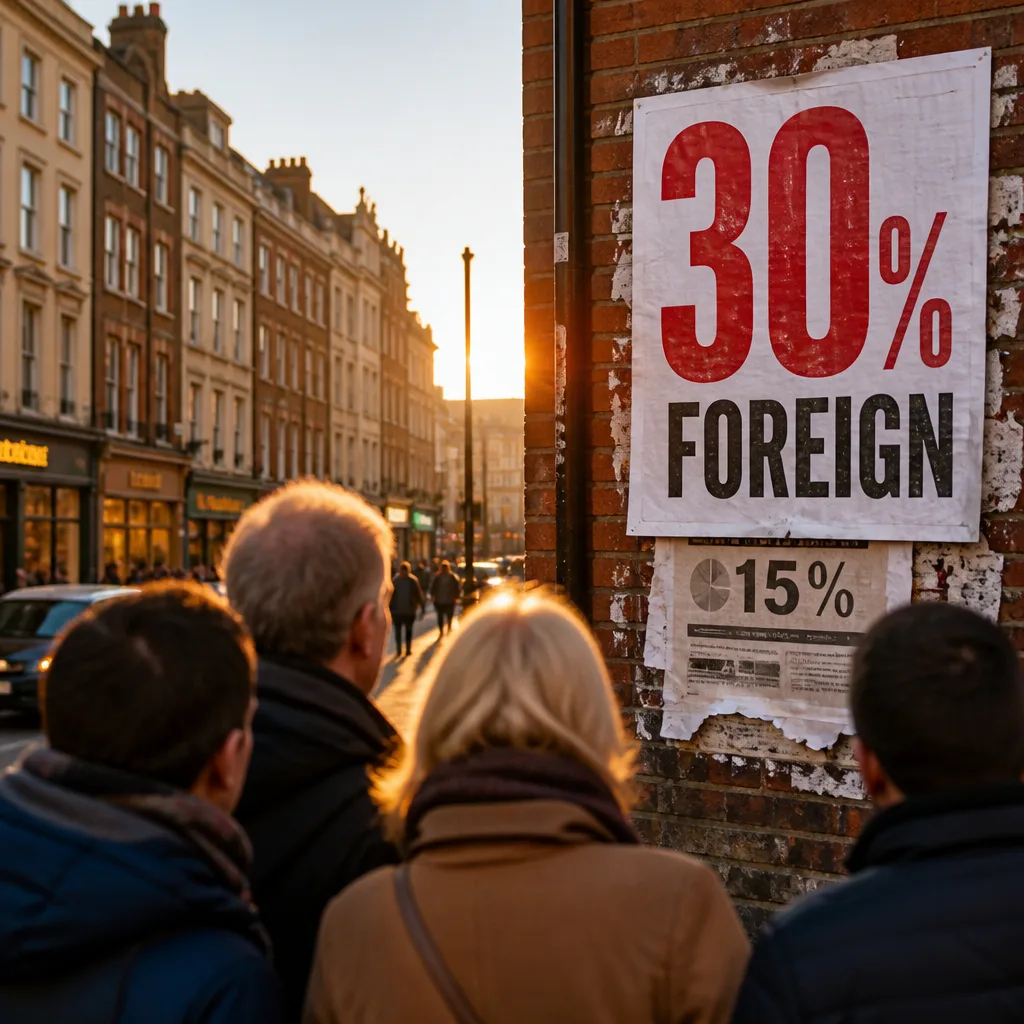
The British public substantially overestimates the proportion of sexual offences and prisoners accounted for by foreign nationals, new research from King’s College London has found, a misperception that the authors say shapes attitudes to policing and criminal justice policy.
Perceptions versus reality
Across two nationally conducted surveys of 1,797 and 2,164 adults, respondents on average estimated that foreign nationals were responsible for 30% of sexual offences — about double the figure shown in official records, which the study puts at 15%. Respondents also guessed that foreign nationals made up 25% of the prison population, while the actual share is closer to 15%.
| Measure | Public estimate | Official figure (study) |
|---|---|---|
| Share of sexual offences by foreign nationals | 30% | 15% |
| Share of prisoners who are foreign nationals | 25% | 15% |
Researchers found the public were incorrect on “nearly every measure” examined, including whether crime rates such as mobile phone theft, domestic burglary, vehicle theft and murder are rising or falling, and on trends in police numbers.
Political differences and consequences
The study — part of a research series titled “Mistaken Britain” — identified notable variations by political allegiance. Supporters of Reform UK were consistently the most likely to hold incorrect beliefs, particularly about the ethnicity of those convicted of serious offences and the proportion of offenders who are foreign nationals.
Academics behind the research warned that erroneous beliefs about crime have real-world effects. Those who overestimate risks were more likely to think the justice system is biased — holding a view of a “two-tier justice” — and were more sceptical of government competence on crime. The study also links misperception with greater public backing for more punitive criminal justice measures.
“They think the risk is higher than it is, that everything is getting worse when many aspects are improving, and that police numbers have fallen when they’ve actually risen,”
The comment above was attributed to Professor Bobby Duffy, director of the Policy Institute at King’s College London, which led the research.
Why the public are misled
Professor Duffy told the researchers there is “no single reason” for the widespread inaccuracies. The study suggests the explanation lies in an interaction between cognitive biases — how people think — and the information environment, including media coverage and political messaging.
- Respondents overstated the involvement of foreign nationals in sexual offending and the prison population.
- Many believed crime had increased when official data shows falls in several offence categories.
- Misconceptions correlated with support for punitive policies and distrust of the justice system.
The report emphasises that correcting public misperception is important because it can influence public consent for policy, electoral choices and the legitimacy afforded to policing bodies. It stops short of prescribing particular remedies but highlights the complexity of tackling entrenched beliefs.
Policymakers and criminal justice stakeholders face the challenge of addressing these gaps between perception and recorded evidence without exacerbating public anxiety. Accurate public understanding, the authors argue, is likely to affect debate on resource allocation for policing, sentencing policy and immigration-related aspects of criminal justice.
The study adds to a growing body of work suggesting that public attitudes about crime are often shaped more by narrative and belief than by statistics — with potential consequences for political debate and reforms in the criminal justice system.














