
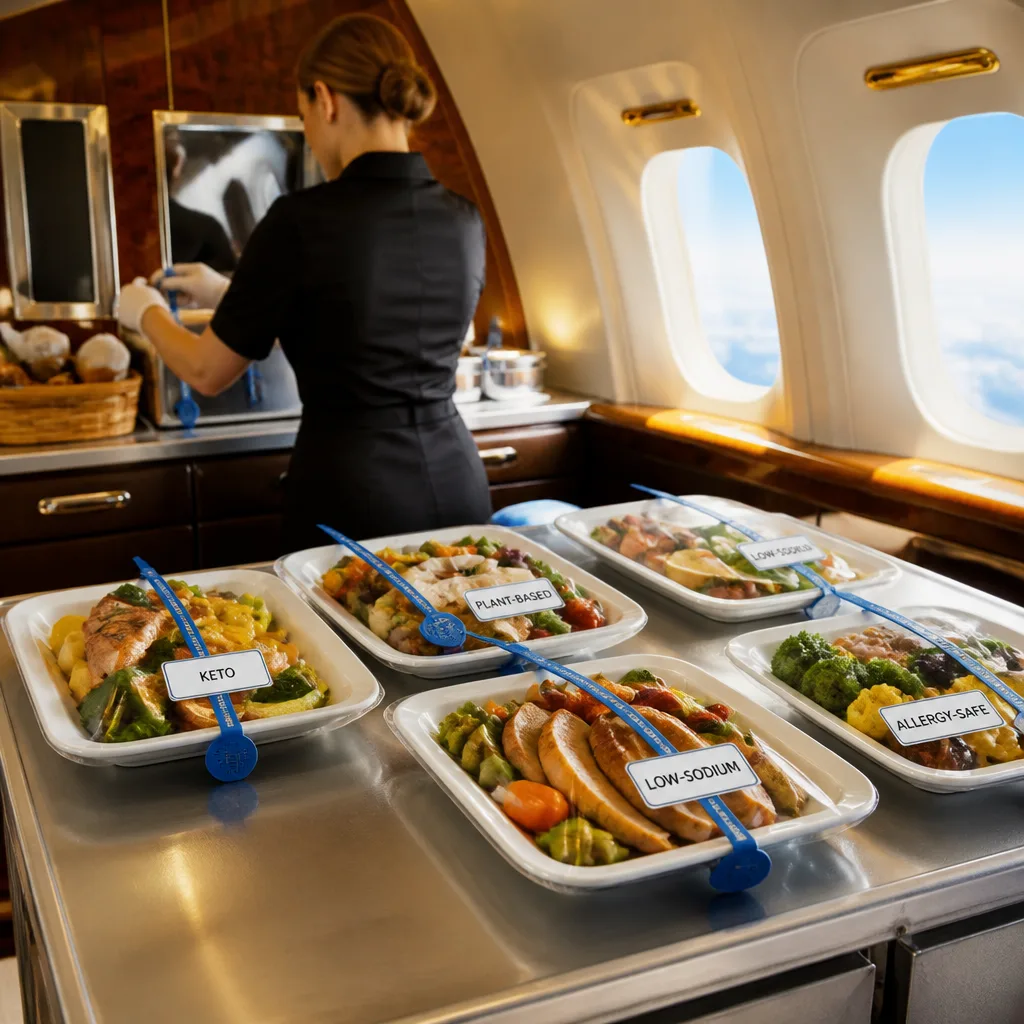
Private aviation is shifting from one-size-fits-all healthy options to highly personalised nutrition, as passengers increasingly expect meals tailored to specific diets and routines. What used to be a standard plate of salad or fruit has given way to requests ranging from keto and low‑carb to high‑protein, low‑sodium, plant‑based and portion‑controlled plates.
Passengers want bespoke meals, not generic health food
The current trend sees customers treating in‑flight catering more like a high‑end restaurant: dishes prepared specifically for the individual, rather than adapted from a standard menu. That expectation brings a layer of complexity for caterers, who must reconcile culinary ambition with the constraints of preparing and serving food at altitude.
Crucially, the term “healthy” no longer has a universal meaning. For one passenger it may mean eggs, avocado and berries; for another it is maintaining a very low carbohydrate intake. The industry therefore faces a dual task: understanding passengers’ habitual nutrition preferences and recognising genuine dietary requirements such as allergies, intolerances and religious dietary rules.
From preference to requirement: safety and logistics
There is an important distinction between preference and necessity. A request for a low‑carb meal is likely a matter of taste or routine; an allergy demands strict controls and precautions. Catering teams must therefore develop processes that prevent cross‑contamination and ensure that an allergen‑free meal remains free from trace exposure during preparation, storage and service.
Delivering tailored dishes at cruising altitude also requires different logistics to those used for standard airline catering. Menus must be planned with storage, reheating capability and service sequence in mind, while preserving flavour, texture and nutritional content. These operational differences are pronounced where private aviation caterers aim to emulate the quality and freshness associated with ground‑based fine dining.
- Dietary diversity: Requests span keto, low‑carb, high‑protein, low‑sodium, plant‑based and portion‑controlled meals.
- Allergies and religious diets: Caterers must apply strict safeguards for passengers with health‑based or faith‑based restrictions.
- Repeat flyers: Regular passengers give caterers advance knowledge of routines and preferences, enabling bespoke menu planning.
Operational considerations for caterers
Because many private flyers are regular customers, caterers can build detailed profiles of individual preferences and dietary restrictions — an advantage not always available in commercial aviation. However, translating that information into consistently safe, high‑quality meals inflight requires investment in processes and training.
Key practical areas include sourcing ingredients that meet specialised nutritional criteria, robust labelling and segregation protocols in kitchens, and service practices that maintain both presentation and safety. For some dietary patterns, such as low‑sodium or plant‑based menus, ingredient selection and seasoning must be carefully managed to preserve taste without compromising the diet’s intent.
| Diet type | Catering consideration |
|---|---|
| Ketogenic / Low‑carb | High fat, low carb ingredients; avoid hidden sugars in sauces |
| High‑protein | Quality proteins that travel well; portion‑control |
| Low‑sodium | Alternative seasonings; careful ingredient sourcing |
| Plant‑based | Umami and texture substitutes; avoid cross‑contact with animal products |
Operationally, caterers must also consider storage space on board, compatibility with in‑flight galley equipment and the timing of service to ensure freshness. The increased demand for personalised nutrition therefore has knock‑on effects across procurement, menu engineering and crew training.
What passengers should know
For those travelling privately and wanting their dietary preferences met, clear communication is essential. If you have allergies, intolerances or strict dietary rules, provide these in advance and confirm how caterers will prevent cross‑contamination. For dietary preferences, consider discussing ingredient preferences and portion sizes so the onboard meal aligns with your usual routine.
As private aviation continues to lean into bespoke hospitality, the dining experience in the sky is becoming as nuanced as ground‑based cuisine — but delivering that level of service requires meticulous planning behind the scenes. Passengers benefit from greater choice and quality; caterers must adapt procedures and logistics to keep pace.














