
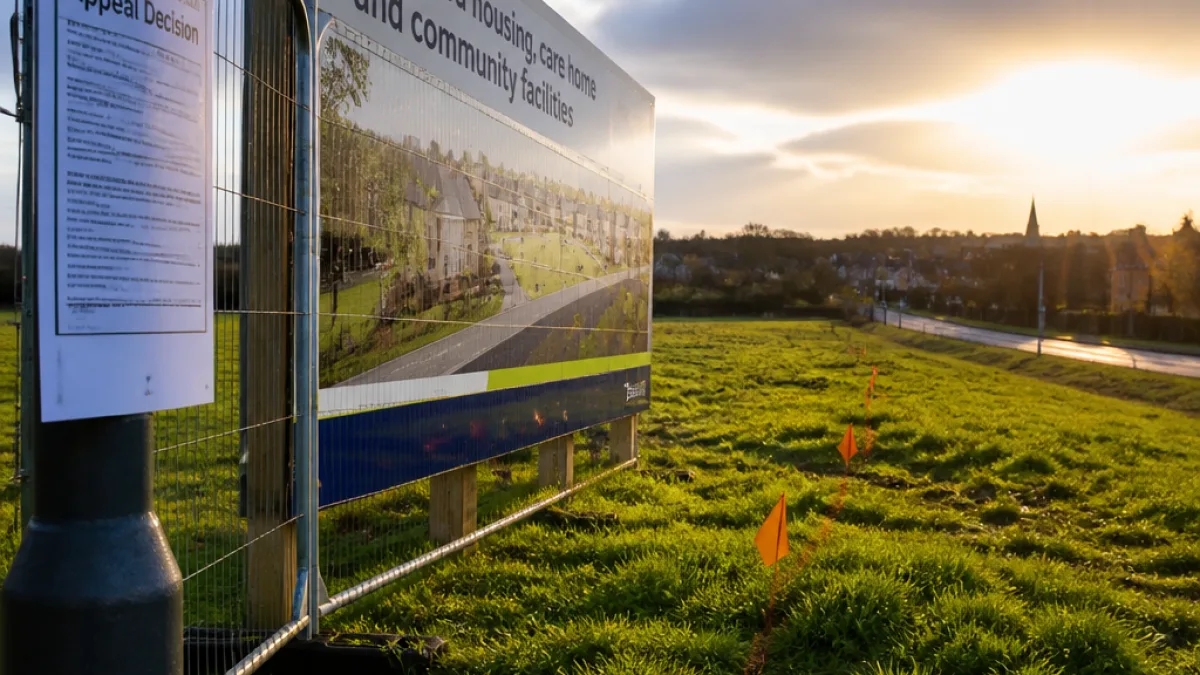
The Planning Inspectorate has granted permission for a major housing and care scheme on open countryside at Broughton, reversing a decision by Preston City Council and clearing the way for up to 167 homes, a 72‑bed care home and new community facilities on a 25‑acre site off Whittingham Lane.
Inspector sides with developer against council
The decision follows an appeal by Wain Homes after the council voted to refuse the application around eight months earlier. Councillors had concluded the land was not suitable for housing, would harm the gap between Broughton and Preston and would raise highway safety concerns. Officers had recommended refusal and the council’s vote reflected those findings.
However, the planning inspector found otherwise. While accepting the site sits outside the Central Lancashire Core Strategy 2010–2026 and the emerging Central Lancashire Local Plan 2034–2041, the inspector concluded the scheme would not materially affect the area of separation between Broughton and Preston and that the impacts on the strategic and local road network were acceptable.
"The inspector did not think that Wain Homes’ scheme would impact the area of separation between Broughton and Preston,"
The approval covers a mixed package of development on land south of Whittingham Lane and west of James Towers Way. Key elements include a 50,600 sq ft care home, a 4,300 sq ft community hall and up to 167 dwellings made up of 119 market homes and 58 affordable units. The care home will be managed by the Eric Wright Group’s Wrightcare Developments.
Community contributions and site uses
The inspector gave weight to the local benefits put forward by the developer. Those include a community centre, allotments, and land to be transferred to local organisations. Under the approval:
- land for the community centre and allotments will be sold to Broughton Parish Council for a nominal fee;
- a parcel of land will be handed to the nearby primary school for extra parking and a forest school;
- a 72‑bed care home will be provided to address local nursing care needs.
The inspector noted an existing care home is already under construction in Broughton, but judged the local demographic pressures and an ageing population meant further nursing care capacity carried significant weight.
What the numbers mean
On paper, the scheme will add a substantial package of new accommodation and community infrastructure. The approved elements are summarised below.
| Element | Quantity |
|---|---|
| Site area | 25 acres |
| Homes (total) | Up to 167 |
| Market homes | 119 |
| Affordable homes | 58 |
| Care home size | 50,600 sq ft / 72 beds |
| Community hall | 4,300 sq ft |
For residents of Broughton and adjacent parts of Preston, the scheme will change the character of what is now open countryside. New housing, a care facility and community buildings will bring more people, traffic and demand on services to an area which the council previously judged unsuitable for development.
Local consequences and questions
The inspector’s findings are likely to re-open debates about how and where Preston grows. Supporters will point to the delivered affordable housing, care capacity and community assets. Opponents will ask whether existing schools, health services and roads can cope and whether greenfield land should be sacrificed when the site was not allocated in local plans.
Key immediate consequences include:
- Land transfers to the parish council and the primary school, which bring community benefit but also ongoing maintenance responsibilities;
- the presence of a sizeable new care home run by Wrightcare, which will affect local health and social care provision;
- additional traffic on Whittingham Lane and nearby routes, which the inspector judged acceptable but which residents and councillors will watch closely.
Preston City Council will now need to respond to the inspector’s decision and the practical steps required to implement the scheme, while local campaigners and parish councillors will consider next steps as construction proposals come forward. The approval sets a clear precedent on how appeals can overturn local planning votes when national inspectors weigh benefits against policy protections for open land.
The decision is a reminder that planning outcomes are not solely decided in council chambers: the appeals process can and does reshape the map of growing towns and their surrounding countryside.












