
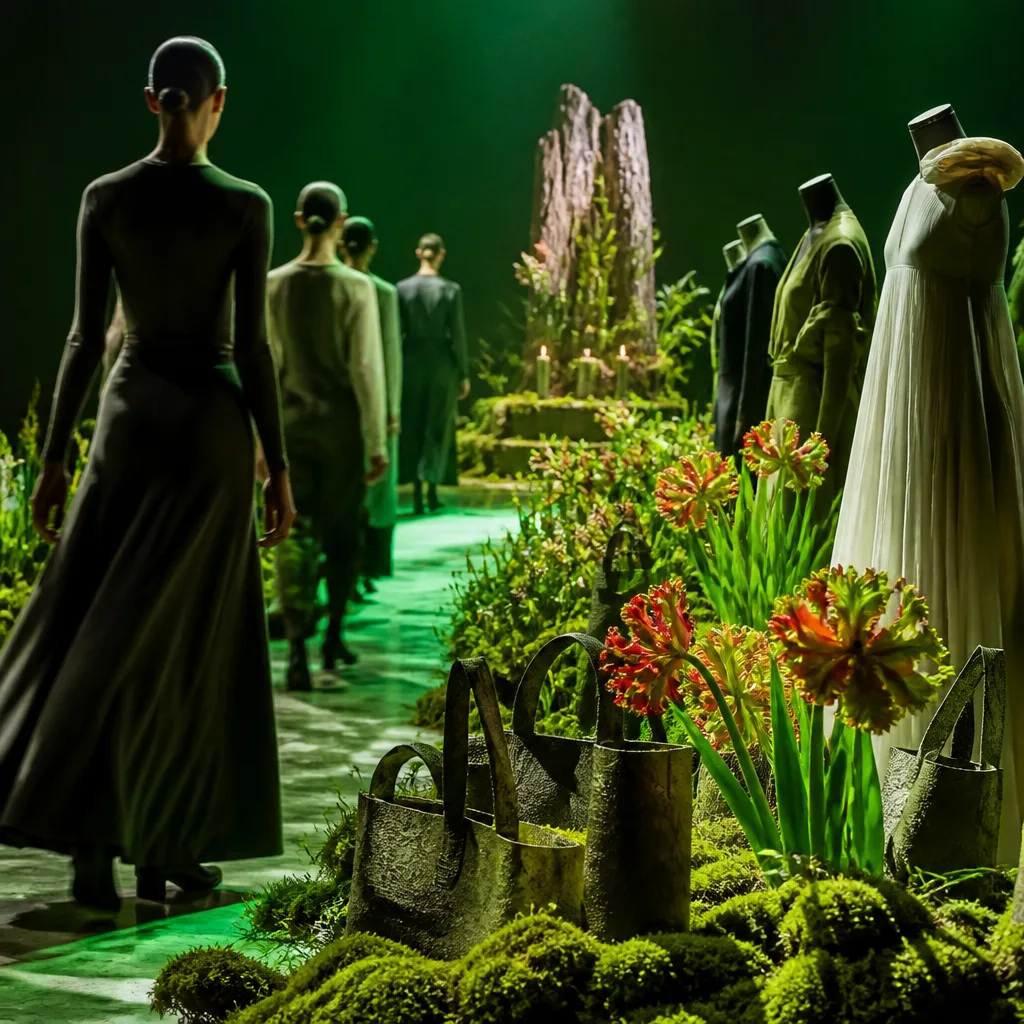
New York Fashion Week opened a window on Spring 2027 with collections that blended mythic, nature-led storytelling and a renewed focus on wearable details. Across shows, designers married romantic, forest-like aesthetics with practical touches — a palette and mood that could shape the coming season on both the high street and in independent boutiques.
Deity, grief and the forest nymph
Several designers at the event used classical or natural motifs to frame their collections. Cult Gaia, Monse and Sandy Liang were among those whose presentations drew attention for the way they combined texture, colour and silhouette.
At Cult Gaia the collection carried the title “Behest” — a word the label described as the Persian term for heaven. The collection was directly shaped by the designer’s personal experience: the death of a grandmother prompted an exploration of loss and transformation. By pairing more structured materials with fluid fabrics and a restrained palette of charcoal and vivid pinks, the show aimed to turn grief into a vehicle for renewed visual energy.
“Behest” — the Persian word for heaven
Unbound femininity and botanical textures
Monse presented what it called “Unbound Femininity”, a collection leaning into contrasts between toughness and fragility. Designers Laura Kim and Fernando Garcia used an earthy yet playful colour mix — notably greens and ballerina pinks — and referenced botanical forms to give the clothes a tactile, layered feel. One specific influence cited was the parrot tulip, a cultivar known for its fringed petals; Monse translated that jagged, fringed texture into garments that look intentionally imperfect while remaining polished.
Function meets fashion
Sandy Liang continued the trend of mixing utility with style. The label’s Spring 2027 offering showcased functional accessories and practical silhouettes, including a renewed focus on bags worn across the body — a reminder that utility continues to find favour in fashion circles. The collection demonstrated how accessories once considered purely practical, such as fanny packs, have been reimagined as deliberate style choices.
- Cult Gaia — Collection titled Behest; inspiration: personal loss and heavenly imagery; palette: charcoal, vivid pinks.
- Monse — Unbound Femininity; inspiration: botanical textures (parrot tulip); palette: greens and pinks, rugged-fragile contrasts.
- Sandy Liang — Emphasis on functional fashion; practical accessories reintroduced as style statements.
What unites these shows is a blending of narrative and wearability. Designers are telling stories — of grief, nature and femininity — but they are also mindful of how garments will be worn, layered and adapted in everyday life. For consumers, that means next spring’s look may be as much about texture and layering as it is about statement colour or novelty shapes.
| Designer | Collection title / theme | Key inspiration |
|---|---|---|
| Cult Gaia | Behest | Personal loss; Persian concept of heaven; structured vs fluid textures |
| Monse | Unbound Femininity | Parrot tulip; rugged-fragile contrasts; green and pink palette |
| Sandy Liang | — | Functional accessories; practical styling |
For British shoppers and retailers, the shows are a reminder that next spring may favour tactile fabrics, mixed textures and accessories designed for everyday use. Expect to see interpretations — from high-street blends of greens and pinks to more artisanal takes on fringe and layered construction — arriving in stores as the season approaches.
These shows also underline a broader shift: fashion continuing to mine personal narrative and natural motifs while remaining mindful of utility. Translation into real-world wardrobes will depend on price points and retail willingness to adapt runway touches into wearable collections, but the mood is clear — Spring 2027 wants to feel both rooted and useful.














