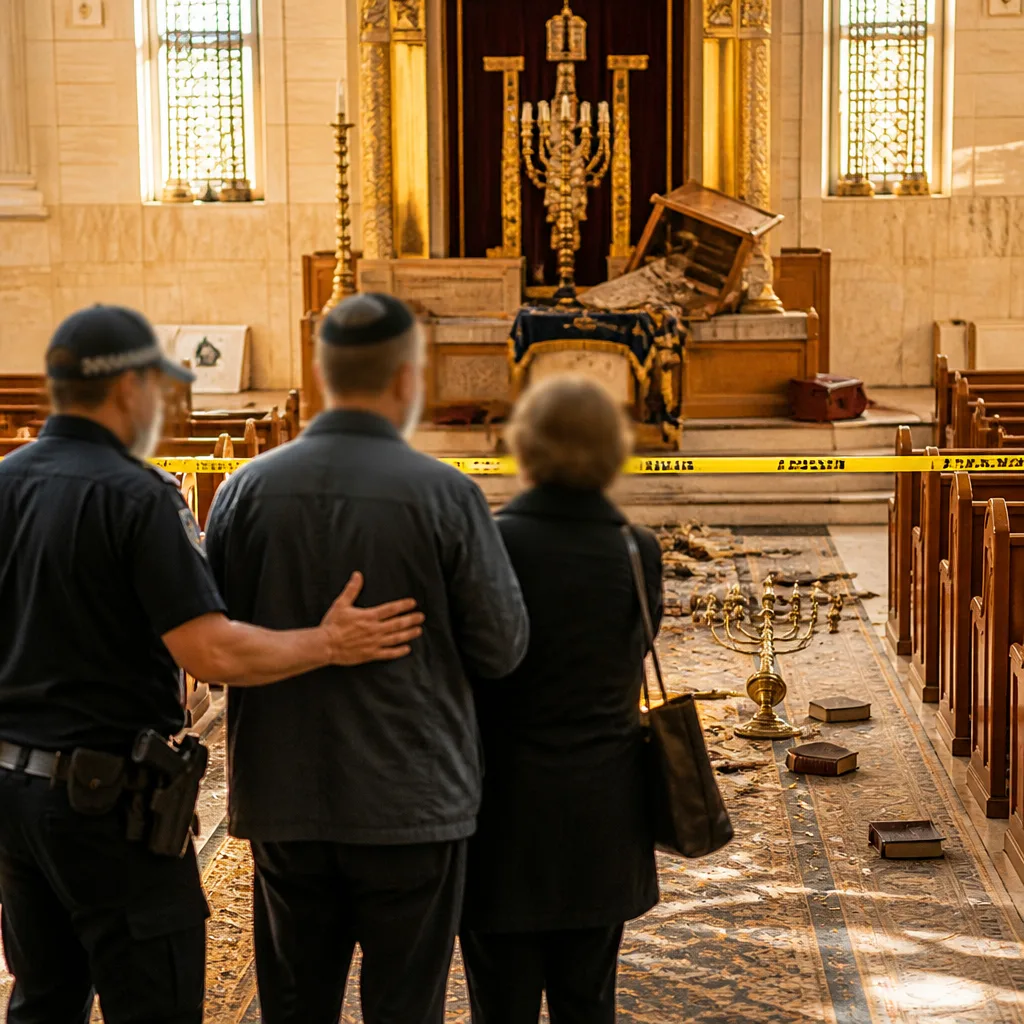
A 46-year-old Bronx man was charged on Tuesday with federal hate crimes after an incident at Central Synagogue in Midtown Manhattan in which prosecutors allege he disrupted evening services, damaged ritual objects and injured two people.
Federal complaint lodged in Southern District of New York
The complaint filed by the US Attorney’s Office for the Southern District of New York (SDNY) sets out three counts: two counts of committing hate crimes and one count of damage to religious property resulting in injury. The defendant, identified by prosecutors as Larry Montes, 46, had previously faced state charges brought by the Manhattan district attorney's office.
Montes was arrested following the incident, and is being held on $10,000 bail, according to court records. It was not immediately clear when he would first appear before a federal magistrate.
Allegations of conduct during services
Prosecutors say Montes rose during Friday evening services and approached the front of the synagogue while shouting a phrase that referenced God. He is then alleged to have knocked over and broken two candles and their holders, and to have struck a woman, causing a cut to her lip and bruising to her arm. When confronted by a security guard, the complaint says, he headbutted the guard and used a racial slur.
- Disrupted synagogue service and approached the front of the sanctuary
- Broke two candles/candle holders
- Allegedly struck a woman (reported injuries: cut lip, bruised arm)
- Allegedly headbutted and verbally abused a security guard
"I am Hashem," the complaint records the defendant as having shouted, a phrase that carries religious significance in Judaism.
From state to federal prosecution
The matter was initially the subject of state-level accusations including criminal mischief and attempted assault charged as hate crimes by Manhattan prosecutors. Federal authorities in SDNY have now brought separate counts under statutes that address bias-motivated violence and damage to religious property. The shift from state to federal proceedings is not uncommon in cases where alleged conduct implicates civil-rights protections and where federal prosecutors determine there is a winnable case under federal hate-crime laws.
Court filings indicate the US Attorney’s Office believes the alleged conduct targeted individuals because of their religion and affected a house of worship, elements that can elevate charges to the federal level. The filing does not determine guilt; the allegations remain to be tested in court.
Community and legal implications
Incidents alleged to be motivated by religious bias often draw close scrutiny from both law enforcement and community groups, and can prompt discussion about security at synagogues and other houses of worship. Federal involvement in prosecutions may also reflect broader policy priorities to address antisemitic and other bias-motivated attacks through civil-rights statutes.
At this stage, the complaint and subsequent court appearances will define the path of the case. Defence counsel, if appointed or retained, and federal prosecutors will address pre-trial matters before any determination on the merits is reached.
| Alleged charge | Count(s) |
|---|---|
| Hate crimes | 2 |
| Damage to religious property resulting in injury | 1 |
Prosecutors and court officials have not yet provided a timetable for the defendant’s initial federal court appearance. The case remains at an early procedural stage, and reporting restrictions and normal judicial processes govern what information is made public as the matter progresses.
The allegations are subject to proof in court; the defendant is entitled to the presumption of innocence unless and until convicted.