
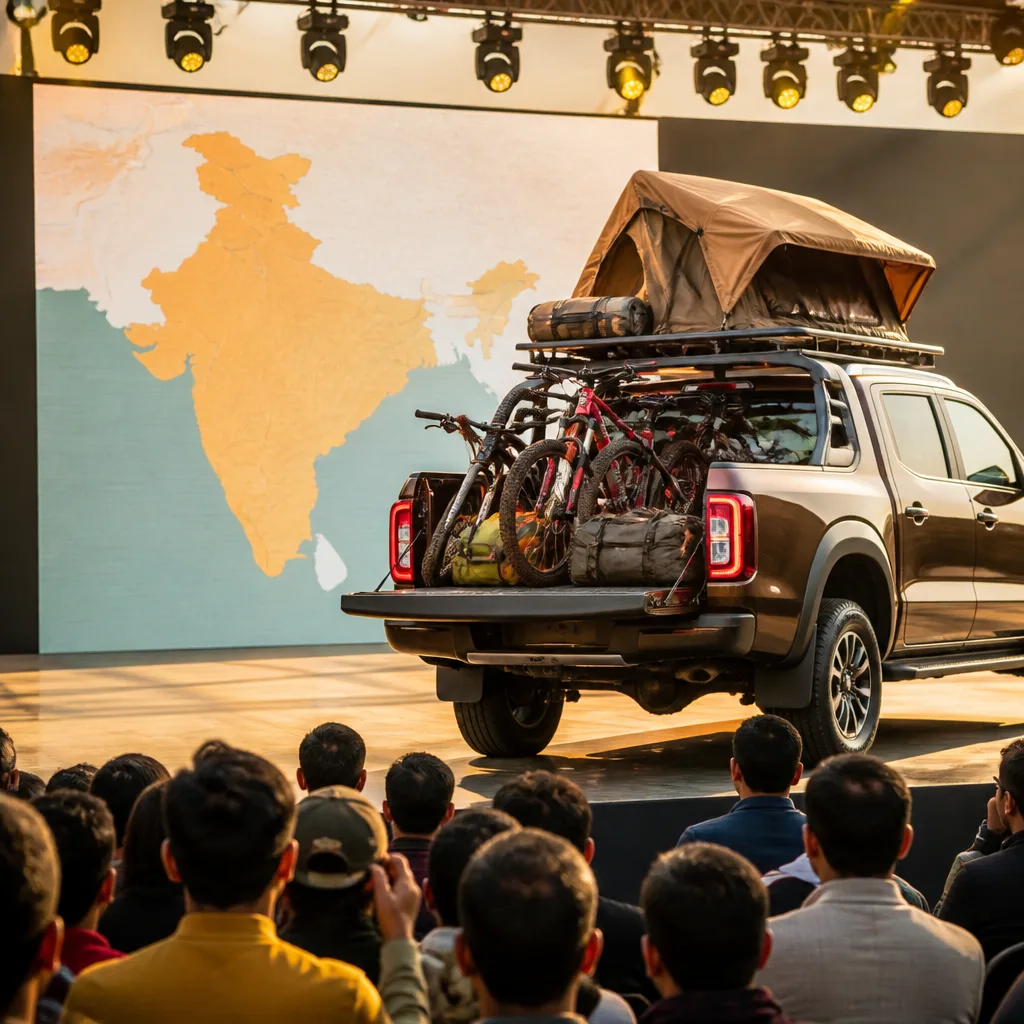
Mahindra & Mahindra’s planned launch of the Scorpio‑N‑based Global Pik Up on 14 August could help transform India’s small but growing lifestyle pick‑up segment, with industry analysts and company officials saying the category may rise from roughly 4,000–4,500 units today to about 10,000 annually over the next few years.
Why the market might swell
The forecasted growth requires an additional 5,500–6,000 sales a year — roughly 450–500 extra vehicles per month — and will depend on shifts in buyer behaviour as much as on product availability. Analysts point to a number of factors driving demand:
- Leisure trends: rising interest in overlanding, camping and recreational travel is prompting buyers to choose vehicles that can carry bicycles, camping kits and other bulky gear separately from passengers.
- Dual‑use appeal: pick‑ups can serve both as lifestyle vehicles and for practical work uses among resort owners, contractors and small businesses.
- Competition and positioning: Isuzu is credited with pioneering the lifestyle pick‑up in India, while Toyota has premiumised the segment with the Hilux. Mahindra aims to bring a competitive price‑and‑feature package that could lure customers from the larger premium‑SUV market rather than only shifting existing pick‑up buyers.
Industry officials expect the production version of the model, previewed earlier as the Global Pik Up Vision concept, to begin commercial roll‑out across markets including India, Australia, South Africa and parts of South America during 2026–27.
Barriers remain
Despite upside potential, there are clear obstacles to rapid expansion. Large overall dimensions, urban manoeuvrability concerns, and acquisition and taxation costs still deter many mainstream buyers. The category remains an enthusiast niche in India — for now.
Official sales benchmarks underline the scale of the challenge. Toyota currently leads the segment: the Hilux sold about 3,740 units (figure cited by industry sources). To reach an annual total near 10,000 units, Mahindra and other manufacturers will need to unlock substantial new demand rather than simply shuffle existing numbers between brands.
| Metric | Current / Expected |
|---|---|
| Current annual market size | 4,000–4,500 units |
| Target annual market size | ~10,000 units |
| Additional units required | 5,500–6,000 units |
| Monthly incremental sales needed | 450–500 units |
What consumers should watch
For buyers considering a lifestyle pick‑up, the forthcoming Mahindra model will be important to watch on price and equipment. Industry officials believe Mahindra could attract buyers from the premium‑SUV bracket — typically vehicles in the ₹20–30 lakh range — if the Global Pik Up’s price‑to‑feature balance proves persuasive. That shift would represent a broadening of the segment beyond dedicated enthusiasts.
From a practical standpoint, prospective owners should assess urban suitability, running costs and the tax implications of pick‑up ownership in their state. For those who regularly transport outdoor kit, or who need a vehicle for both work and leisure, the segment’s growing choice may deliver genuine new options.
The Global Pik Up’s commercial rollout next year across multiple markets also signals Mahindra’s intent to compete internationally with established players. Whether this will be enough to push the Indian lifestyle pick‑up market towards the 10,000‑unit mark depends on how quickly mainstream buyers are convinced to switch from SUVs to pick‑ups — and on the degree to which pricing, features and ownership costs align with their expectations.














